
Latest posts
-
Joker Allocation: Fill a Sequence Gap or Save It for a Set?

Compare declaration requirements, natural outs, completion distance, and point risk before assigning a Joker to a sequence or set.
-
Middle-Card Connectivity: A Better Indian Rummy Opening-Hand Test

Use a connectivity score to compare flexible middle cards with isolated cards during Indian Rummy opening-hand evaluation.
-
A Three-Turn Opponent Observation Framework for Indian Rummy
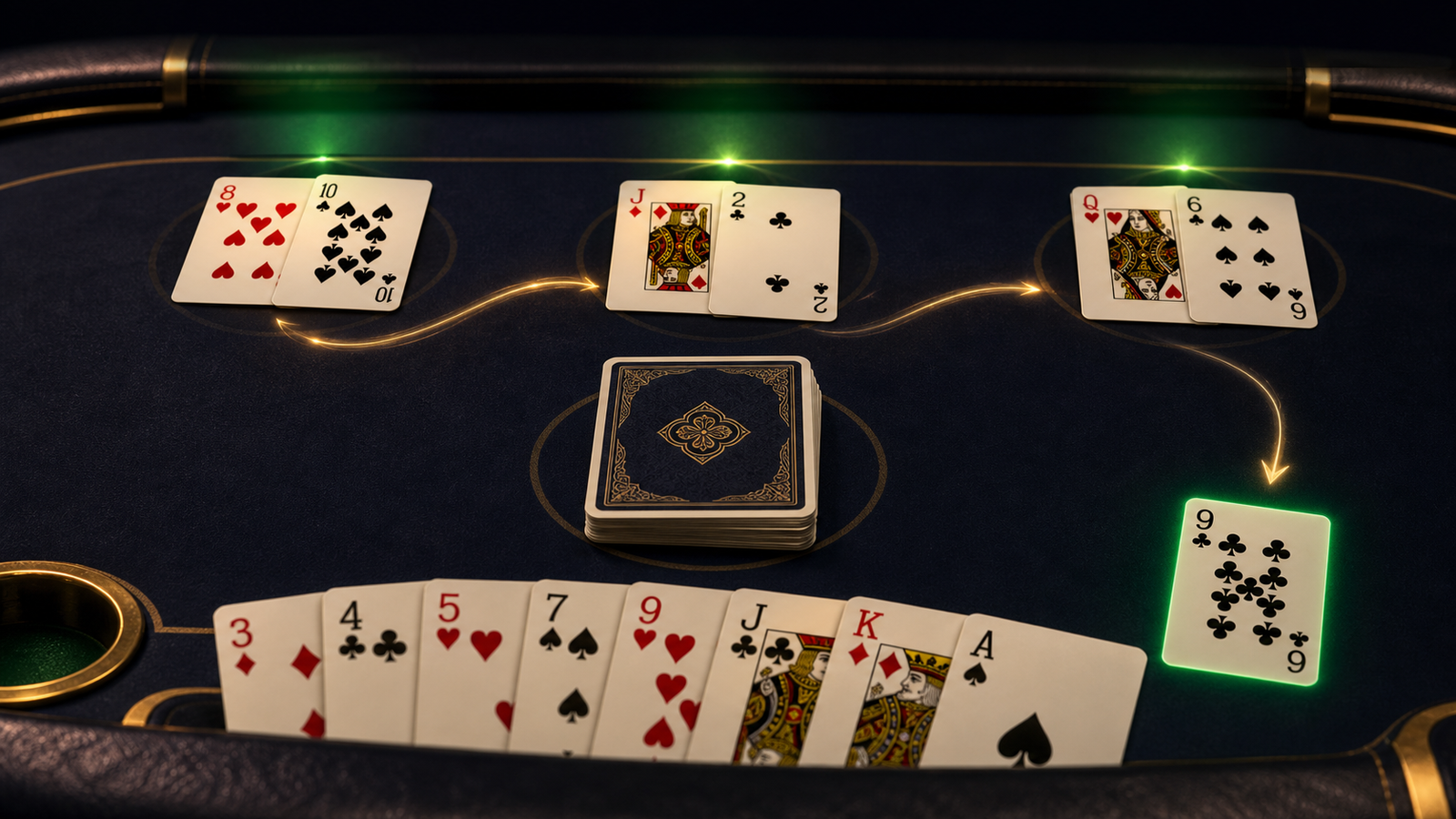
Use a three-turn observation framework to separate a single noisy action from a useful pickup-and-discard pattern.
-
Sequence or Set? What to Build After a Pure Sequence
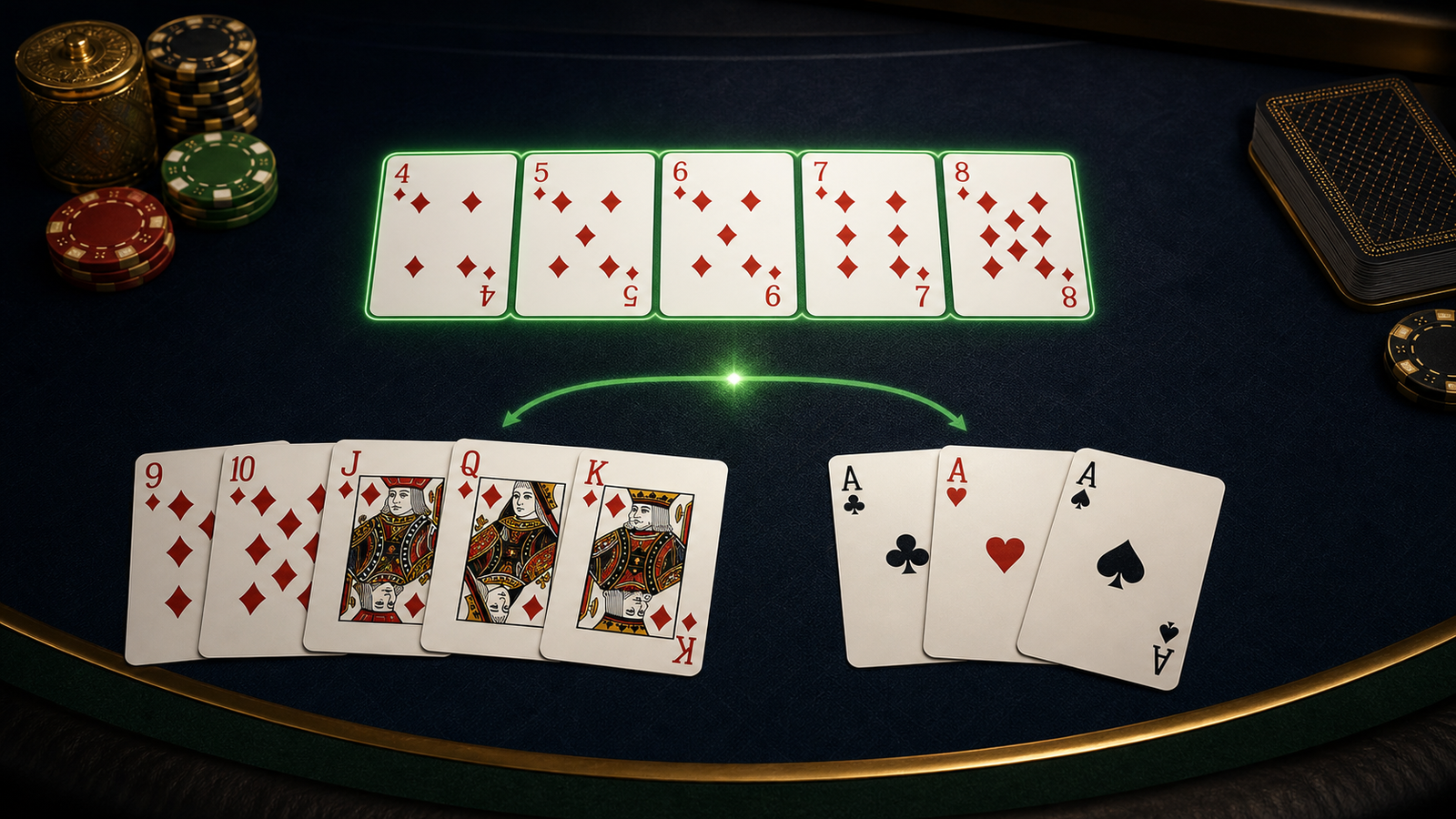
Compare connectors, Joker use, point exposure, and completion distance before choosing a sequence or set after your pure sequence.
-
Two-Route Hand Planning for Indian Rummy Beginners

Learn how a main route and a controlled backup route can keep an Indian Rummy hand flexible without collecting too many loose cards.
-
When to Pick from the Discard Pile in Indian Rummy

Learn when a visible discard completes useful structure, when it reveals too much, and when the closed deck preserves flexibility.
-
High-Card Sequence vs Point Risk in Indian Rummy

Learn when a connected high-card run deserves patience and when isolated picture cards should be released to reduce point exposure.
-
Duplicate Cards in Indian Rummy: Keep, Split, or Discard?

Learn how duplicate-rank cards can support different suits, compete for hand space, and change value as visible cards and sequence paths develop.
-
When to Break a Pair in Indian Rummy: A Decision Guide

Use connectivity, point risk and discard evidence to decide whether an ungrouped pair still deserves space in your Indian Rummy hand.
-
Open-Ended vs Inside Sequence Draws in Indian Rummy

Learn why open-ended same-suit runs usually offer more useful connectors than inside-gap runs, and how to apply that insight without chasing cards blindly.