


Open Pile or Closed Pile? Price the Information Before You Draw
A face-up discard offers certainty, but taking it also shows the table which rank and suit interested you. The useful question is whether the card fixes a real hand problem now.
Summary: Protect the natural pure sequence first. Then compare the visible card’s immediate role, the loose points it removes, and the information exposed by the pickup. Prefer a closed-pile draw when the discard only supports a weak possibility. This framework improves discipline but cannot guarantee a result.
What the information cost means
The open pile shows a known card. If you pick it, opponents can infer that its rank or suit may fit your hand. The closed pile hides the card and reveals less about your plan, but its value is uncertain. Information is only one factor. A visible card that completes a required sequence can be worth taking despite the signal.
A six-question draw check
- Lock the strongest natural pure-sequence route.
- Name the exact group the visible discard would enter.
- Check whether it completes that group now or merely creates another gap.
- Count the loose points removed by taking and regrouping.
- Note what rank or suit interest the pickup may reveal.
- Choose the closed pile when the visible card has no clear immediate job.
Example: a certain completion versus an unknown draw
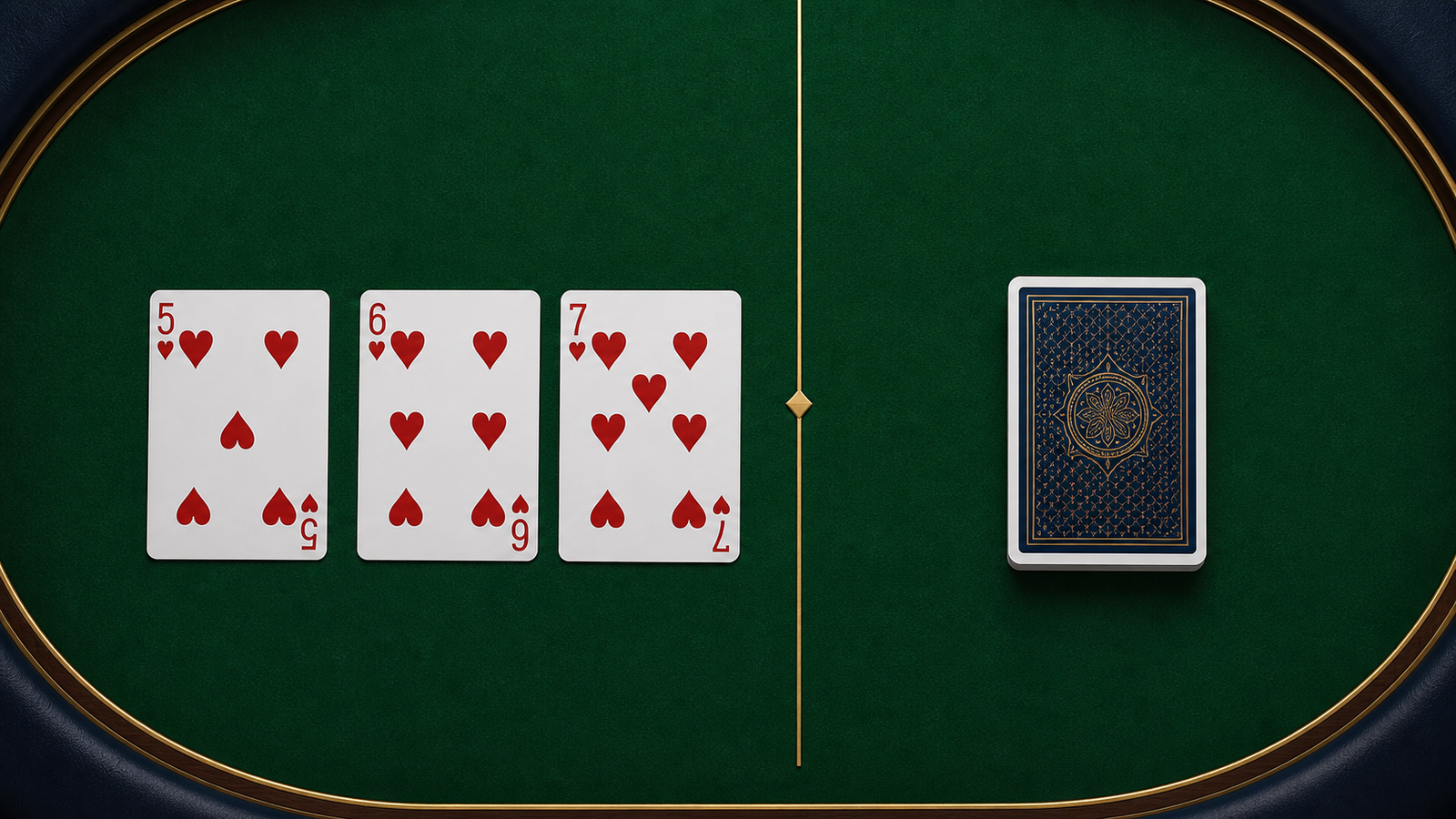
Suppose you hold 5H-6H, a completed 3C-4C-5C pure sequence, and other unfinished groups. If 7H is on top of the open pile, taking it completes a natural second sequence immediately. The pickup reveals interest in hearts, but the structural gain is concrete. If the visible card were 9H instead, it would not complete 5H-6H and could add another loose card. A closed-pile draw may then preserve flexibility.
Rules and table details to confirm
Common 13-card Indian Rummy requires at least two sequences, including at least one pure sequence. The top open-pile card and one closed-pile card are typical draw choices, but pickup restrictions, first-turn procedures, deck count, Joker rules and scoring caps can vary. Check the active table rules. Gin Rummy uses a different meld and deadwood system.
Use this check as a planning tool, not a promise. Adults should keep session and budget limits and stop when play is no longer comfortable.
FAQ
Should I always take a discard that matches my suit?
No. Take it when it has a clear role, preferably completing or materially improving a required group.
Does picking from the open pile reveal my whole hand?
No. It reveals interest in one visible card, but opponents still cannot know your complete arrangement.
Can this draw check guarantee a win?
No. It organises a decision but cannot control the closed pile, opponents or declaration timing.
Glossary
- Open pile: The face-up discard pile whose top card may be available under the active rules.
- Closed pile: The face-down stock from which the next card is unknown.
- Information cost: The limited clue about rank or suit interest revealed by taking a visible discard.
Responsible play note
Indian Rummy is a skill-based card game, but no article, checklist, or tournament routine can guarantee results. Use these guides to improve decisions, keep time and budget limits, and follow the laws and table rules that apply in your location.