

Use a Short Discard Memory Window at the Rummy Table
Table observation works best when it stays modest. A short record of visible discards can improve a decision, but it cannot reveal the closed pile or an opponent’s full hand.
Summary: Track the latest few visible discards by rank and suit. Use them to review whether a natural route looks less available, whether a loose high card still has support, and what your own pickup may reveal. Treat every inference as provisional. Observation can reduce avoidable errors but cannot guarantee an outcome.
What belongs in the memory window
Record only public events you actually saw: the card discarded, its rough order, and any visible open-pile pickup allowed by the table. Do not turn that record into a claim about hidden cards. A card seen once in the discard pile is evidence that one copy is no longer unseen, not proof that a whole rank or suit is unavailable.
A practical observation routine
- Keep the most recent three to five visible discards in mind.
- Notice ranks and suits that connect to your unfinished natural groups.
- Separate direct evidence from guesses about an opponent.
- Update one decision, such as route priority or high-card release.
- Reset the window as new public cards appear instead of carrying stale assumptions.
Example: update, do not overreact
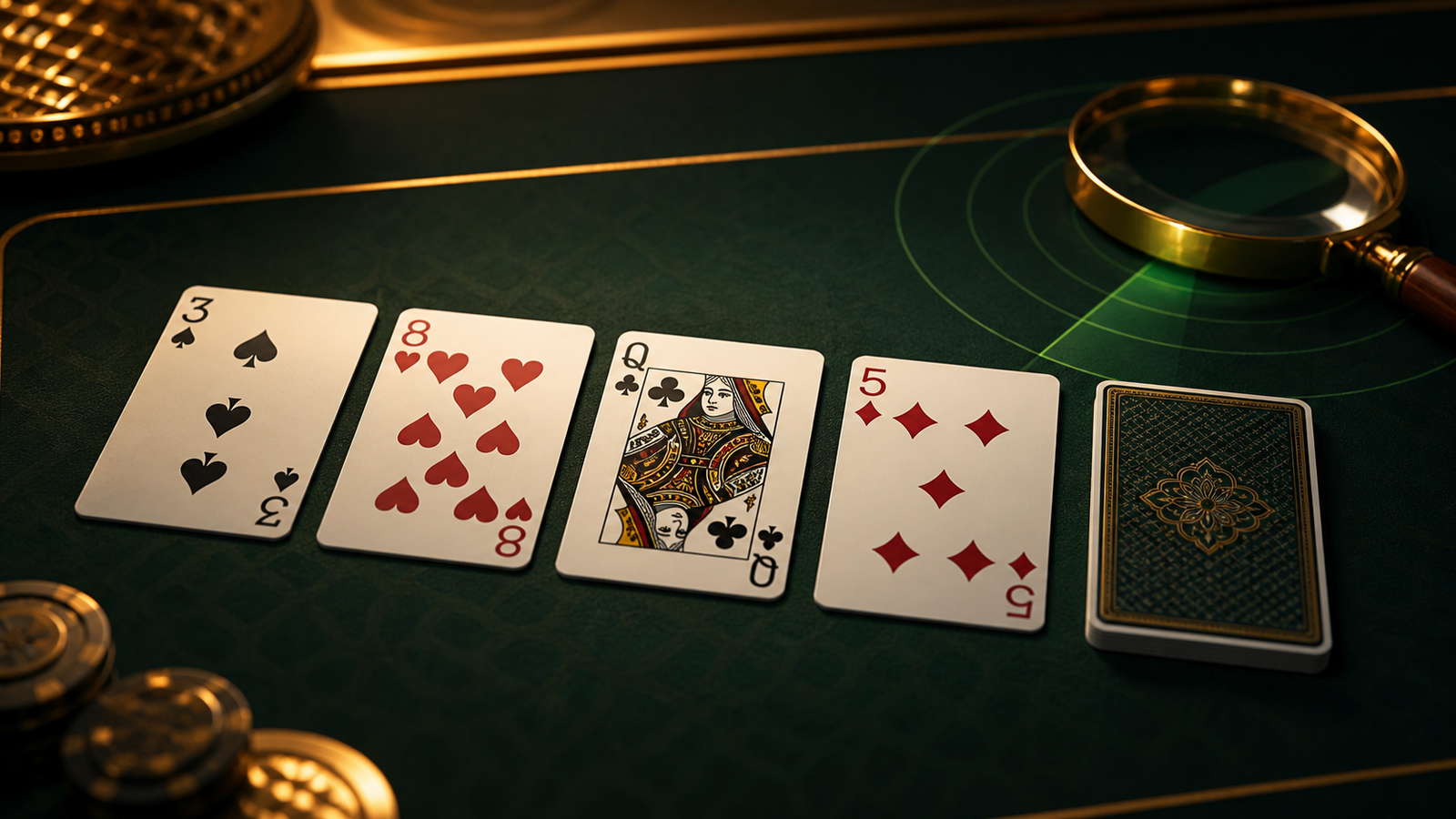
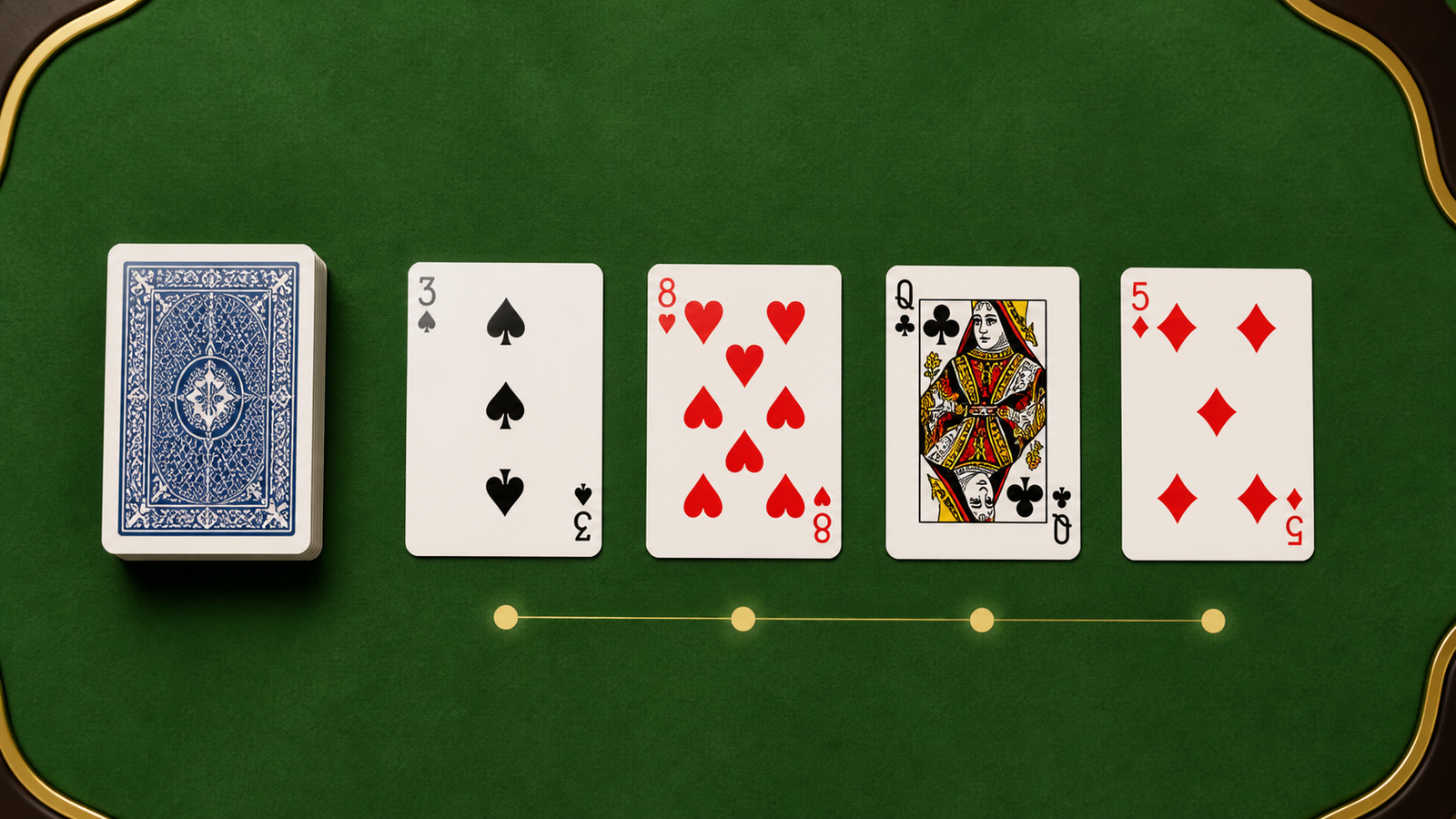
Suppose the visible order is 3S, 8H, QC and 5D. If you hold 6D-7D, the discarded 5D removes one possible natural extension from the unseen pool, but 8D may still complete the run. The QC says little about diamonds. Keep the evidence narrow: adjust the route’s practical value slightly rather than abandoning it as impossible.
Avoid false certainty
Multiple decks, printed Jokers, wild Jokers and duplicate ranks can change how much one visible discard matters. Table rules also differ on open-pile access and first-turn procedures. Confirm the active rules and never mix Gin Rummy deadwood logic with Indian Rummy declarations.
Protect the mandatory pure sequence first, then use the memory window to re-rank unfinished groups and loose cards. Observation supports a decision; it does not predict the result. Adults should use time and budget limits and never chase losses.
FAQ
How many discards should a beginner track?
A short window of three to five visible cards is often more useful than an inaccurate attempt to remember everything.
Does one discarded card make my sequence impossible?
No. Other natural extensions, duplicate decks or Joker-supported groups may remain, depending on the active rules.
Can discard tracking reveal an opponent’s hand?
No. It provides limited public evidence, not certainty about hidden cards.
Glossary
- Memory window: A short rolling record of the latest visible table events.
- Public evidence: A card or action that all players could observe at the table.
- Provisional inference: A working conclusion that should change when new visible evidence appears.
Responsible play note
Indian Rummy is a skill-based card game, but no article, checklist, or tournament routine can guarantee results. Use these guides to improve decisions, keep time and budget limits, and follow the laws and table rules that apply in your location.