
Build a Backup Route Without Breaking Your Pure Sequence
Once a natural pure sequence is complete, rebuilding it for every attractive draw creates unnecessary risk. The better task is to protect it and rank the remaining natural routes.
Summary: Lock the completed pure sequence unless a rule-valid declaration requires a different arrangement. Compare each backup route by missing cards, usable ends and loose points. Keep one primary route and one secondary route, then review them after each draw. This framework improves structure but cannot guarantee a result.
Why a completed pure sequence is an anchor
Common 13-card Indian Rummy requires at least two sequences, including at least one pure sequence made without Joker substitution. A completed natural run already satisfies the hardest fixed condition. Breaking it may turn a valid group into two unfinished problems, so any rearrangement needs a clear structural gain rather than a vague hope.
A five-step backup-route check
- Set aside the completed natural pure sequence.
- Group the remaining cards by suit and equal rank.
- Mark routes that need one natural card before routes needing two.
- Prefer open-ended same-suit routes when the visible evidence does not block them.
- Compare loose point exposure, choose a primary backup, and reassess after every draw.
Example: protect one run and rank two routes
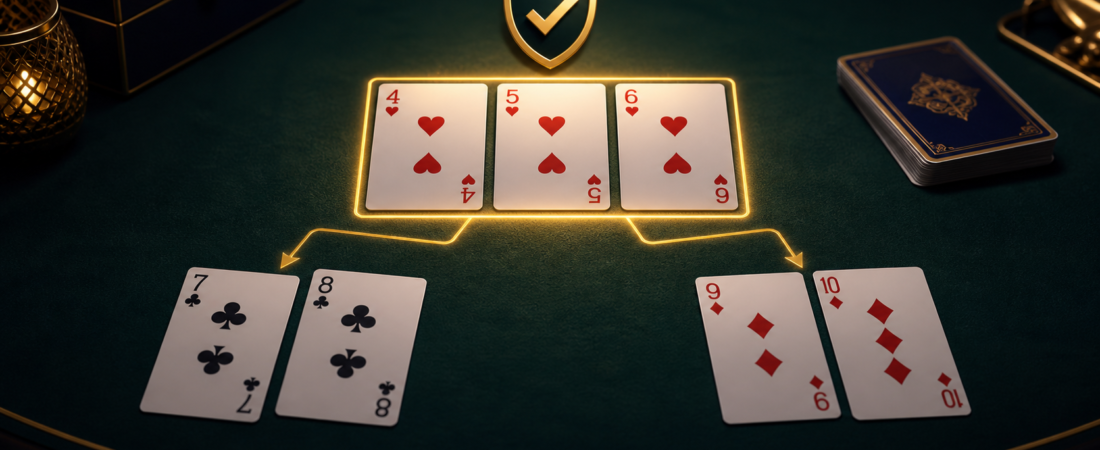
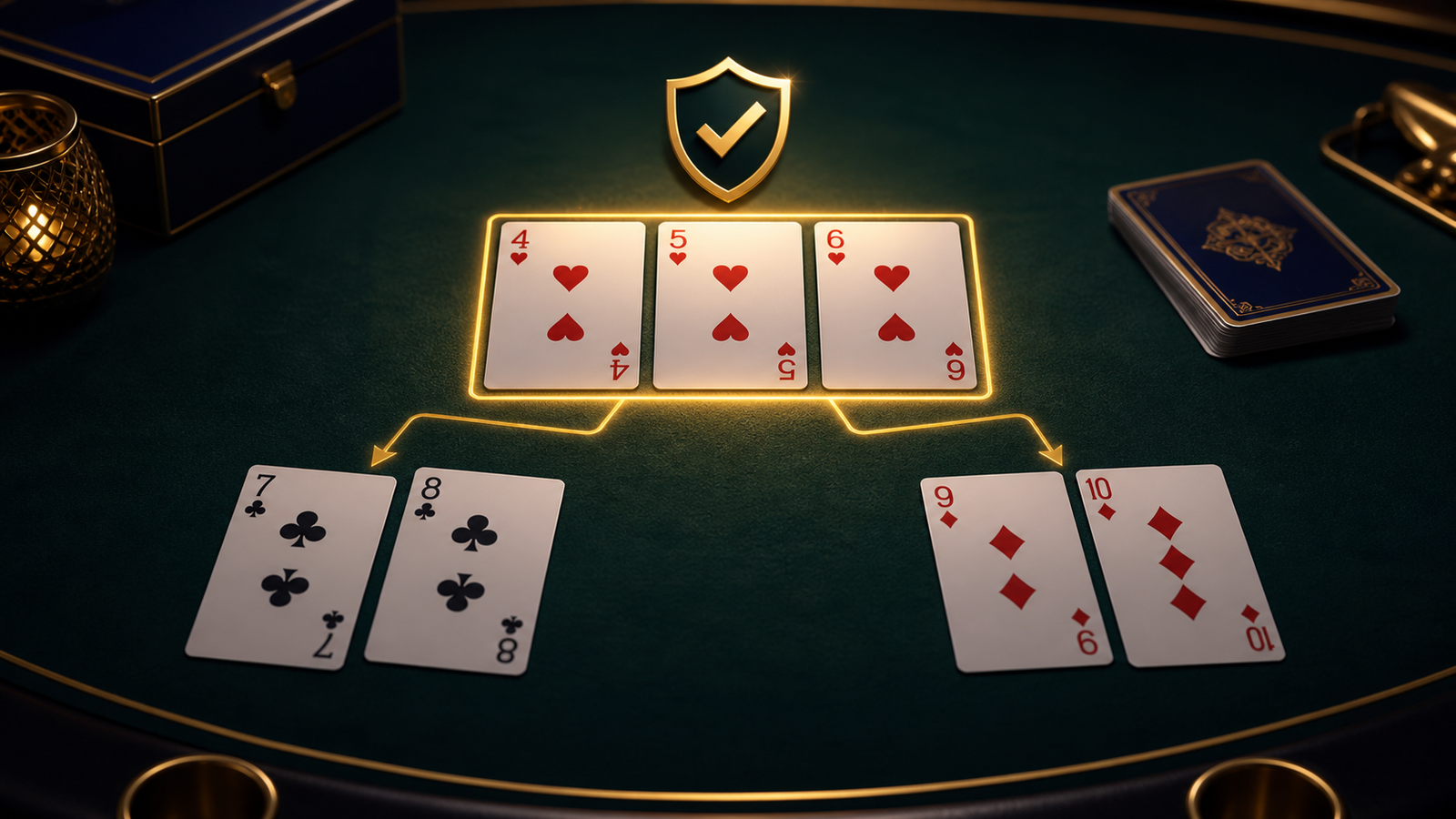
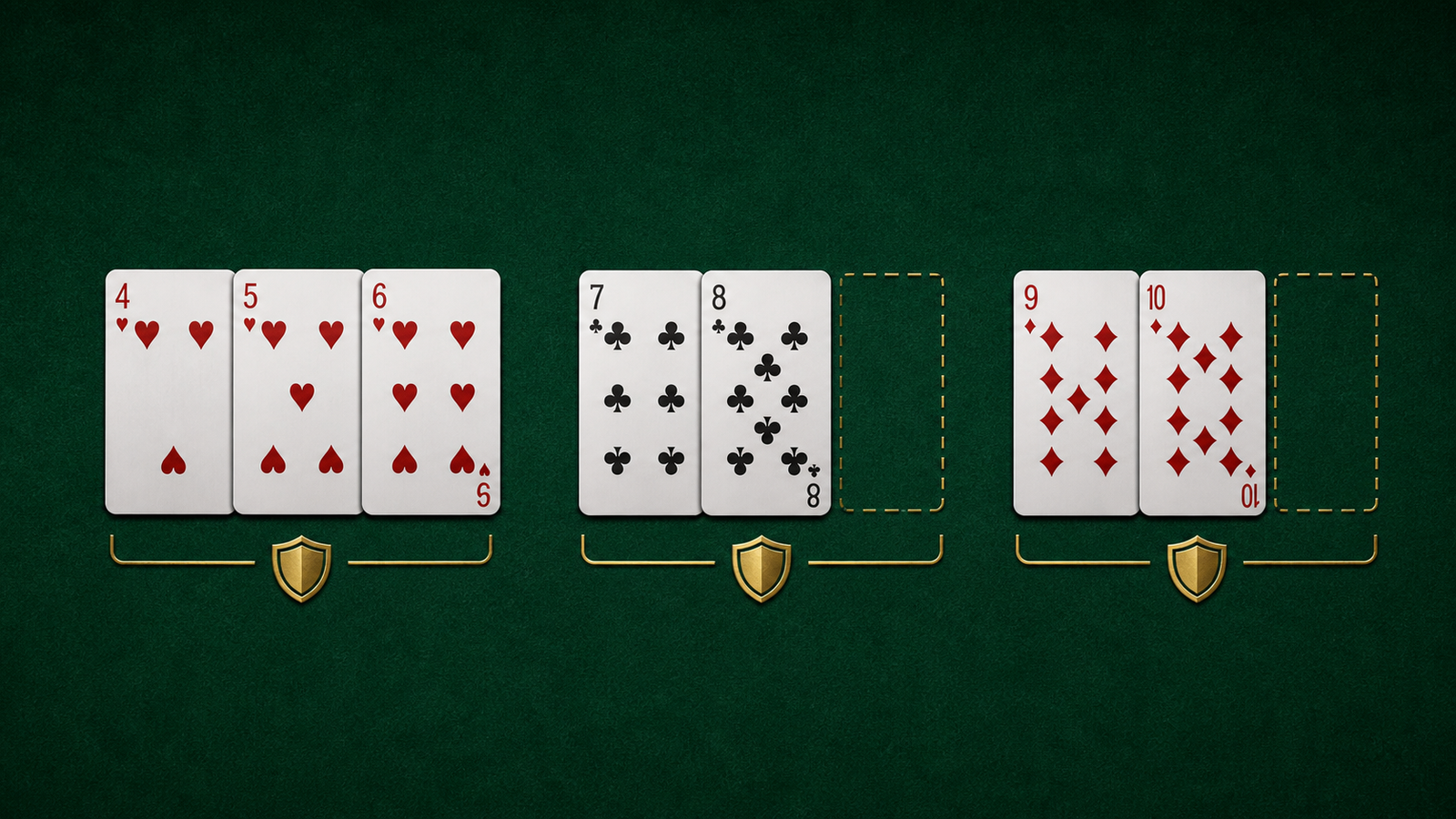
Suppose 4H-5H-6H is complete, while 7C-8C and 9D-10D remain unfinished. Both pairs need one same-suit neighbour. The club route can accept 6C or 9C; the diamond route can accept 8D or JD. Neither is certain, and visible discards may change their practical value. Keep the heart run intact, rank the two pairs using current evidence, and release unrelated cards before dismantling the only completed pure sequence.
Rules and limits to confirm
Sequence length, deck count, Joker selection, duplicate-card handling, scoring caps and declaration controls can vary by table. Check the active rules. Gin Rummy uses melds, knocking and deadwood, so its structure should not be applied to Indian Rummy.
A backup plan cannot control later draws or opponents. Adults should keep session and budget limits and stop when play is no longer comfortable.
FAQ
Should I ever break a completed pure sequence?
Only when a carefully checked rearrangement produces a stronger rule-valid hand without losing the required natural sequence.
Is an open-ended pair always the best backup?
No. Visible cards, point exposure and other valid groups can make a different route more practical.
Can a backup route guarantee a declaration?
No. It organises the hand but cannot control future cards or opponents.
Glossary
- Pure sequence: Three or more consecutive same-suit cards formed without Joker substitution.
- Backup route: A provisional natural group that may become the second required sequence or another valid group.
- Open-ended route: A consecutive same-suit pair that may extend naturally at either end.
Responsible play note
Indian Rummy is a skill-based card game, but no article, checklist, or tournament routine can guarantee results. Use these guides to improve decisions, keep time and budget limits, and follow the laws and table rules that apply in your location.