
One Middle Card, Two Routes: Test Sequence Dependency in Indian Rummy
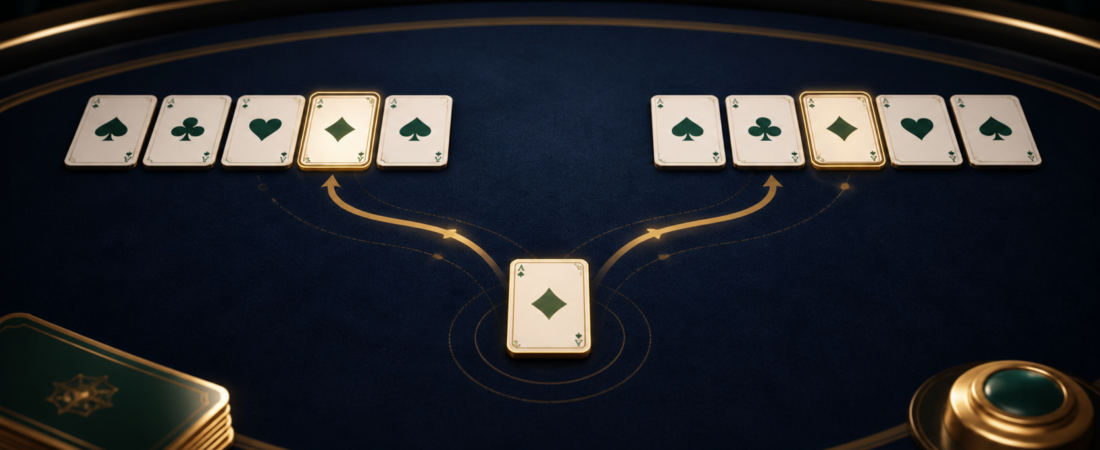
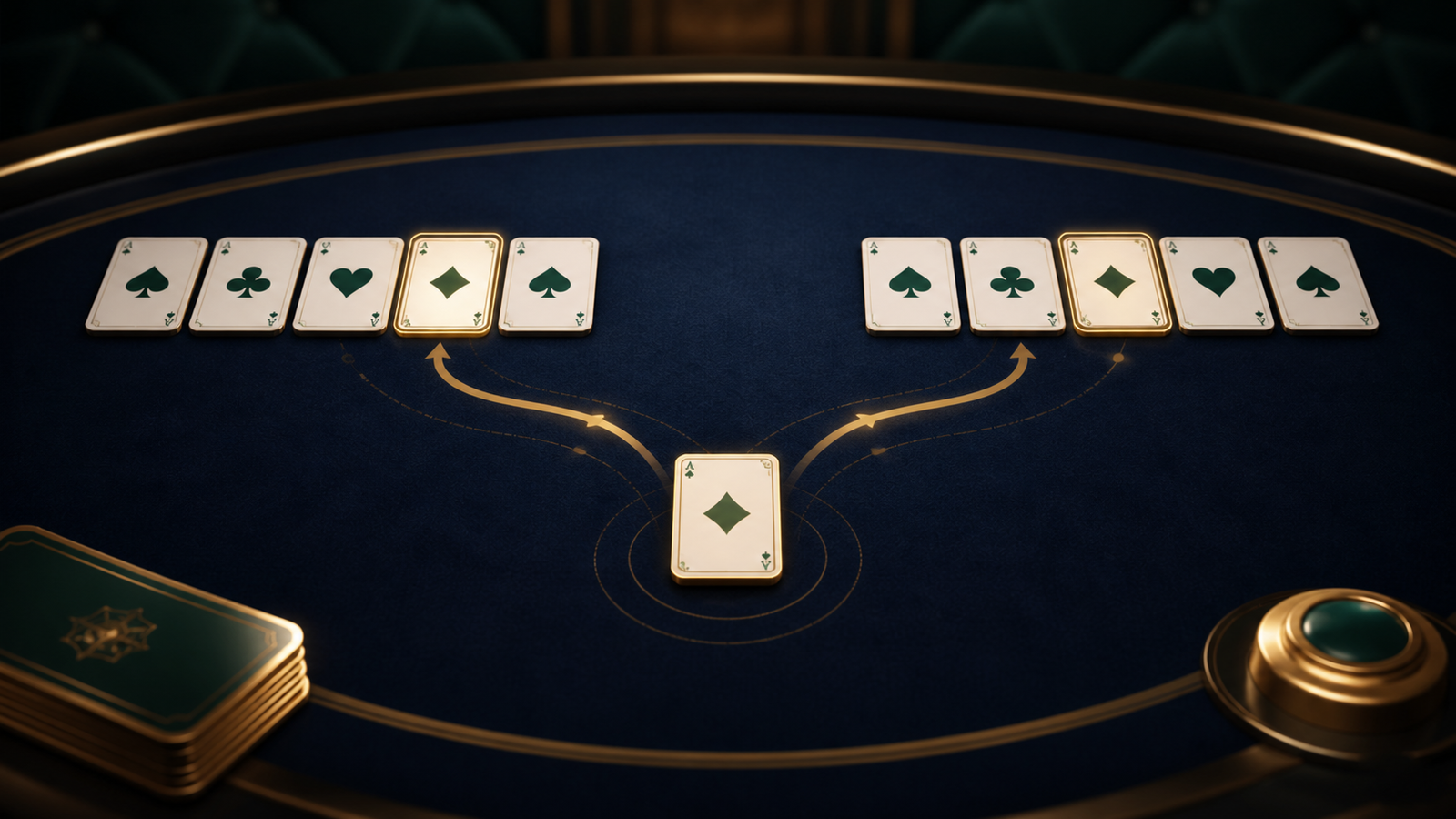
A connected middle card can look twice as useful because it appears in two possible runs. At declaration, however, that physical card can belong to only one final group.
Summary: Identify the shared middle card, remove it mentally, and note which candidate groups collapse. Protect a natural pure-sequence route first, then compare completion distance, alternative natural cards, and loose-point exposure. This test helps organise a hand but cannot guarantee a result.
What centre-card dependency means
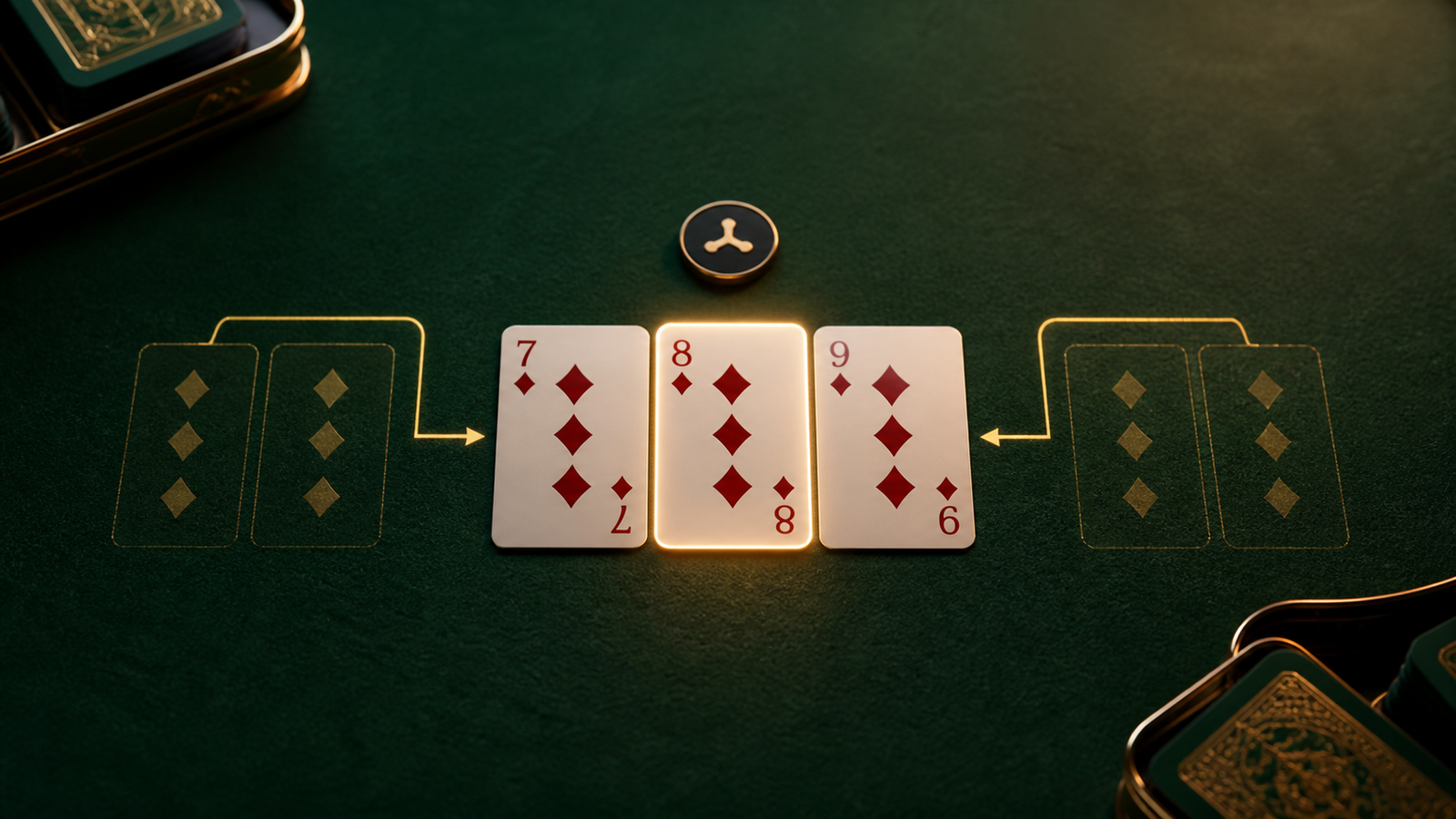
Consider 6D-7D-8D-9D. During planning, 7D-8D-9D is already a natural run, while 6D-7D-8D is another possible run. The 8D appears in both descriptions, but it cannot be counted in two final groups. The useful question is not how many patterns you can see. It is which valid arrangement remains after every physical card receives one role.
A six-step dependency check
- Sort the hand by suit and mark completed natural runs.
- Circle any physical card that appears in two candidate groups.
- Remove that card mentally and record which routes break.
- Protect the strongest natural pure-sequence route.
- Compare the remaining routes by natural completions and loose points.
- After each draw, group every card once before choosing the discard.
Example: keep the completed run or chase the extension
Suppose the hand has 6D-7D-8D-9D, 3C-4C-5C, two queens of different suits, and loose cards. The club run can serve as the pure sequence. The diamond cards can stay together as a four-card natural sequence; splitting them merely to display 6D-7D-8D and 7D-8D-9D would reuse cards and is invalid. If another group needs 8D in a provisional plan, compare that idea with the already complete diamond run before moving it.
Rules that stay fixed and details that can vary
Common 13-card Indian Rummy requires at least two sequences, including at least one pure sequence. Each physical card can appear in only one declared group. Deck count, wild-Joker selection, scoring caps, duplicate-card handling, and the declaration interface can vary, so check the active table rules. Gin Rummy uses a different meld and deadwood system.
Use the test as a planning aid, not a promise. Adults should set time and budget limits and stop when play is no longer comfortable.
FAQ
Can one card count in two Indian Rummy sequences?
No. One physical card can belong to only one final group in a declaration.
Should I always keep the longer natural run?
Not automatically. Protect the pure sequence first, then compare declaration needs, alternative natural cards, and point exposure.
Does the dependency test guarantee a win?
No. It reduces grouping mistakes but cannot control future draws or an opponent’s hand.
Glossary
- Centre card: A natural card positioned between nearby same-suit ranks and involved in more than one candidate run.
- Dependency: The extent to which a candidate group stops working when one shared card is assigned elsewhere.
- Final group: The single sequence or set to which a physical card is assigned at declaration.
Responsible play note
Indian Rummy is a skill-based card game, but no article, checklist, or tournament routine can guarantee results. Use these guides to improve decisions, keep time and budget limits, and follow the laws and table rules that apply in your location.