Which High Card Goes First? Build an Exit Order in Indian Rummy
A loose king may carry the same common capped point value as a queen or jack, yet the best discard depends on structure. One high card may have a live same-suit route while another has none.
Summary: First protect the pure sequence and other completed groups. For each unmatched high card, list its same-suit neighbours, equal-rank partners and visible blockers. Release the card with high point exposure and the weakest realistic route, then review the order after every draw. This reduces avoidable points but cannot guarantee an outcome.
Why rank alone is not enough
Under common Indian Rummy scoring, a king, queen and jack usually carry 10 points each, while number cards carry face value. A loose king is not automatically worse than a loose queen if the king already has useful same-suit neighbours or equal-rank partners. Protect completed groups and the mandatory pure-sequence route before comparing unmatched cards.
Build a practical exit order
- Separate completed sequences and valid sets.
- Lock the natural pure sequence.
- List every unmatched card and its current point exposure.
- Count same-suit neighbours and equal-rank partners already held.
- Use visible discards only as evidence, not certainty about unseen cards.
- Rank the weakest high-point route first for release.
- Rebuild the order after each draw.
Example: compare structure before points
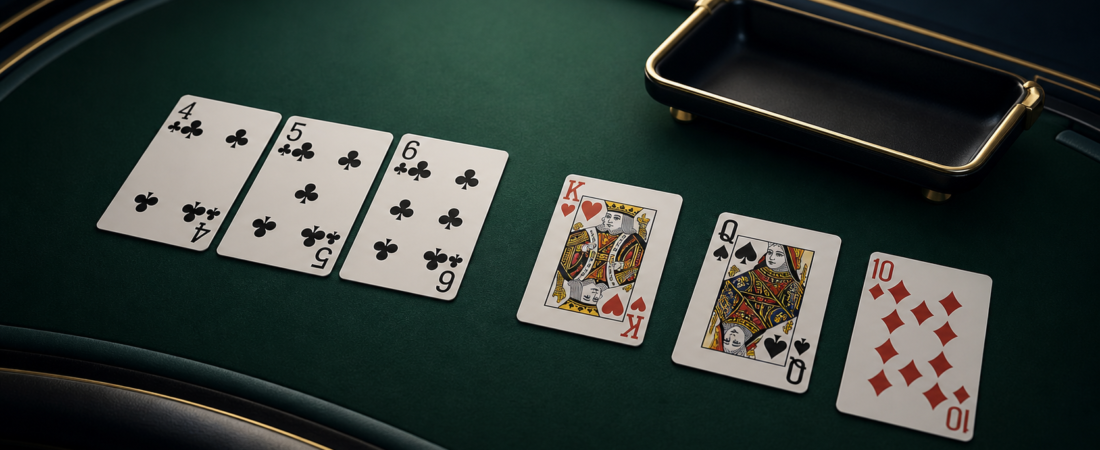
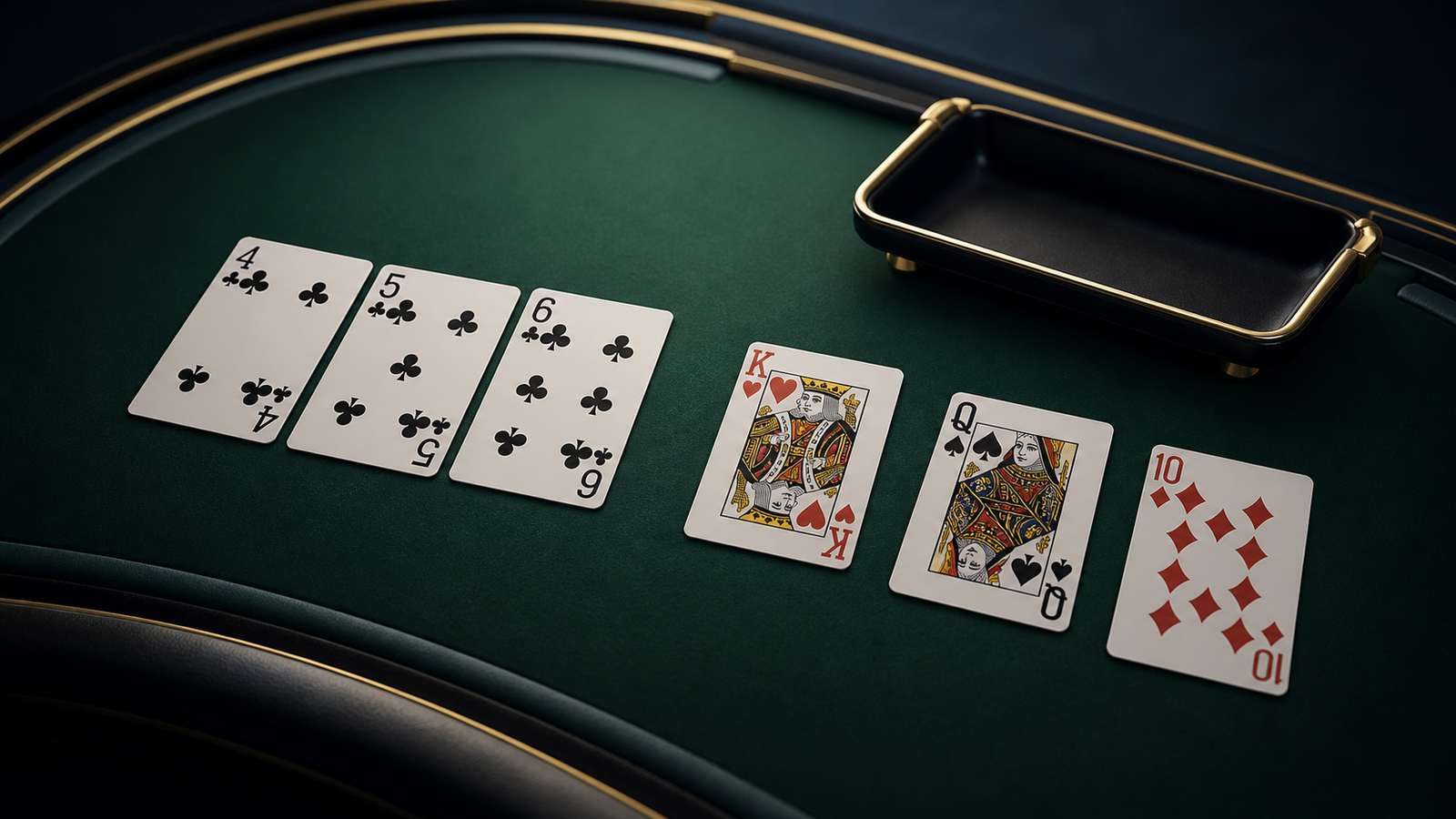
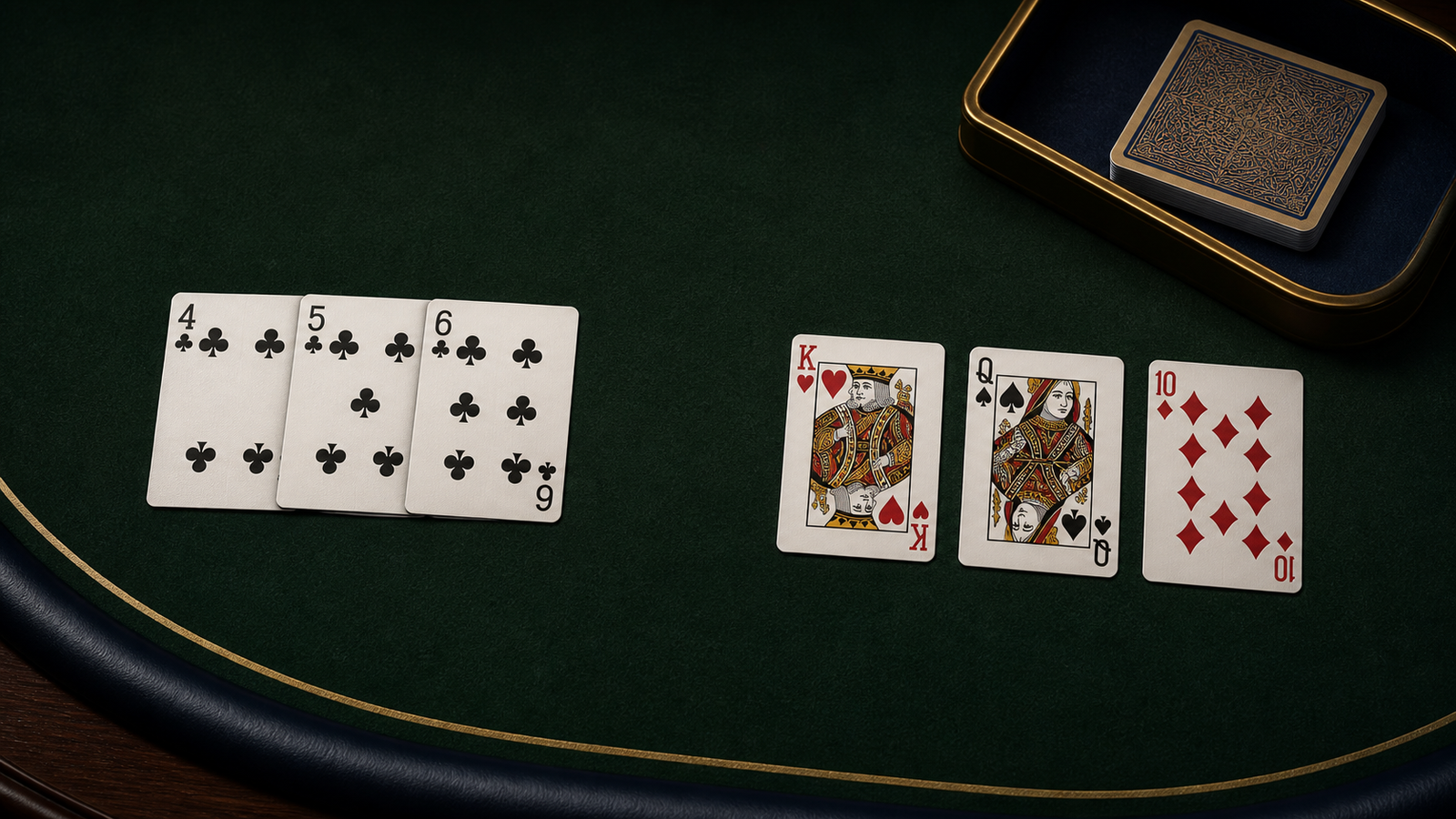
Suppose 4C-5C-6C is your pure sequence. KH, QS and 10D are loose. If you also hold 9D, the 10D has a natural same-suit route. If no hearts sit near KH and no other kings are held, KH has less current structure than 10D. QS may move up or down the exit order if a nearby spade or another queen arrives. On the present evidence, KH is the first release candidate even though QS carries the same common capped value.
Scoring details can vary
Many 13-card Indian Rummy tables count aces and face cards at 10 points and number cards at face value, but maximum loss, drop values, Joker treatment and declaration penalties can vary. Confirm the active table rules before applying a point-reduction plan. Gin Rummy deadwood and knocking rules are different.
Point reduction limits exposure; it does not promise a result. Adults should set time and budget limits and never chase losses.
FAQ
Should the highest rank always be discarded first?
No. Compare point exposure with current sequence or set structure and visible evidence.
Are king, queen and jack worth the same points?
They commonly count 10 points each in 13-card Indian Rummy, but verify the active table rules.
Does reducing high cards guarantee a better result?
No. It can limit exposed points but may also release a useful card, and it cannot control later draws.
Glossary
- Point exposure: The points an unmatched card may add if the hand ends before it forms a valid group.
- Exit order: A provisional ranking of loose cards for future discards.
- Visible blocker: A useful card already seen in the open pile, reducing but not eliminating its unseen availability.
Responsible play note
Indian Rummy is a skill-based card game, but no article, checklist, or tournament routine can guarantee results. Use these guides to improve decisions, keep time and budget limits, and follow the laws and table rules that apply in your location.