
Latest posts
-
Count Your Routes Before Choosing an Opening-Hand Plan

Sort the opening hand by suit, count realistic natural routes and choose a plan that protects the pure sequence without overcommitting.
-
Invalid Declaration Check: Audit Every Group in Order
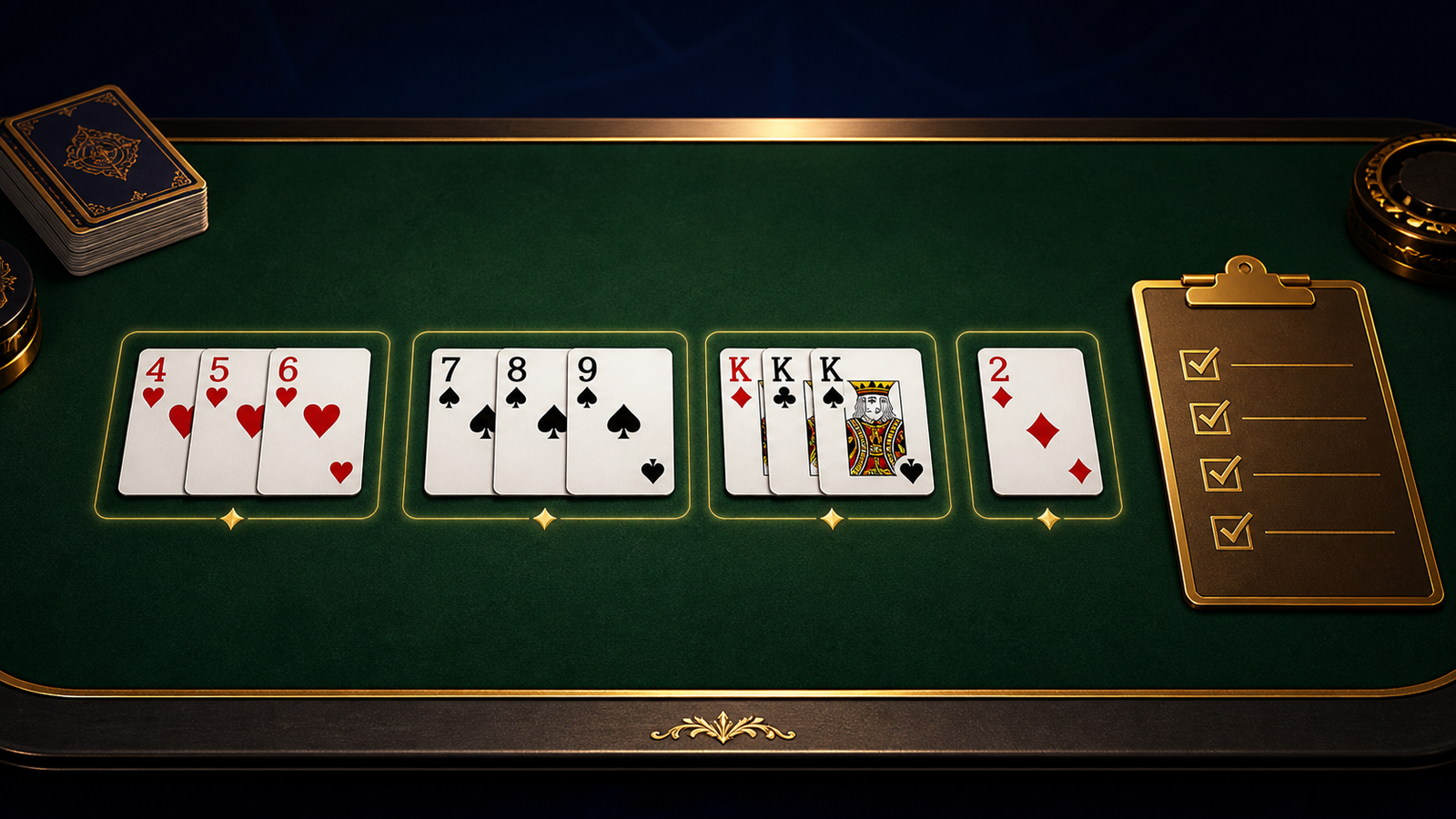
Check the card count, pure sequence, second sequence and every remaining group before tapping Declare in Indian Rummy.
-
Use a Short Discard Memory Window at the Rummy Table

Remember a small, useful window of visible discards and use it as evidence, not certainty about hidden cards.
-
Build a Backup Route Without Breaking Your Pure Sequence

Keep the completed pure sequence intact, then rank natural backup routes instead of repeatedly dismantling your safest group.
-
Which High Card Goes First? Build an Exit Order in Indian Rummy

Do not discard by rank alone. Compare each loose high card’s structure, realistic connections and point exposure before choosing an exit order.
-
Open Pile or Closed Pile? Price the Information Before You Draw

Take a visible discard only when its immediate structural value outweighs the information you reveal and the alternatives you give up.
-
Drew a Joker? Recheck the Pure Sequence Before Regrouping

A useful Joker can tempt you to rebuild too quickly. Lock the natural pure sequence, then audit every other group.
-
One Middle Card, Two Routes: Test Sequence Dependency in Indian Rummy

Check what breaks when one middle card supports two possible runs, then protect the route your declaration needs most.
-
The Card You Wanted Arrived: Regroup Before You Discard

A useful draw can still create overlap. Place it once, rebuild every group and verify the discard before declaring.
-
Two Draws, No Progress? Reset Your Indian Rummy Hand Plan

Use a two-draw review to retire weak routes, protect the pure sequence and give flexible cards a clearer job.