

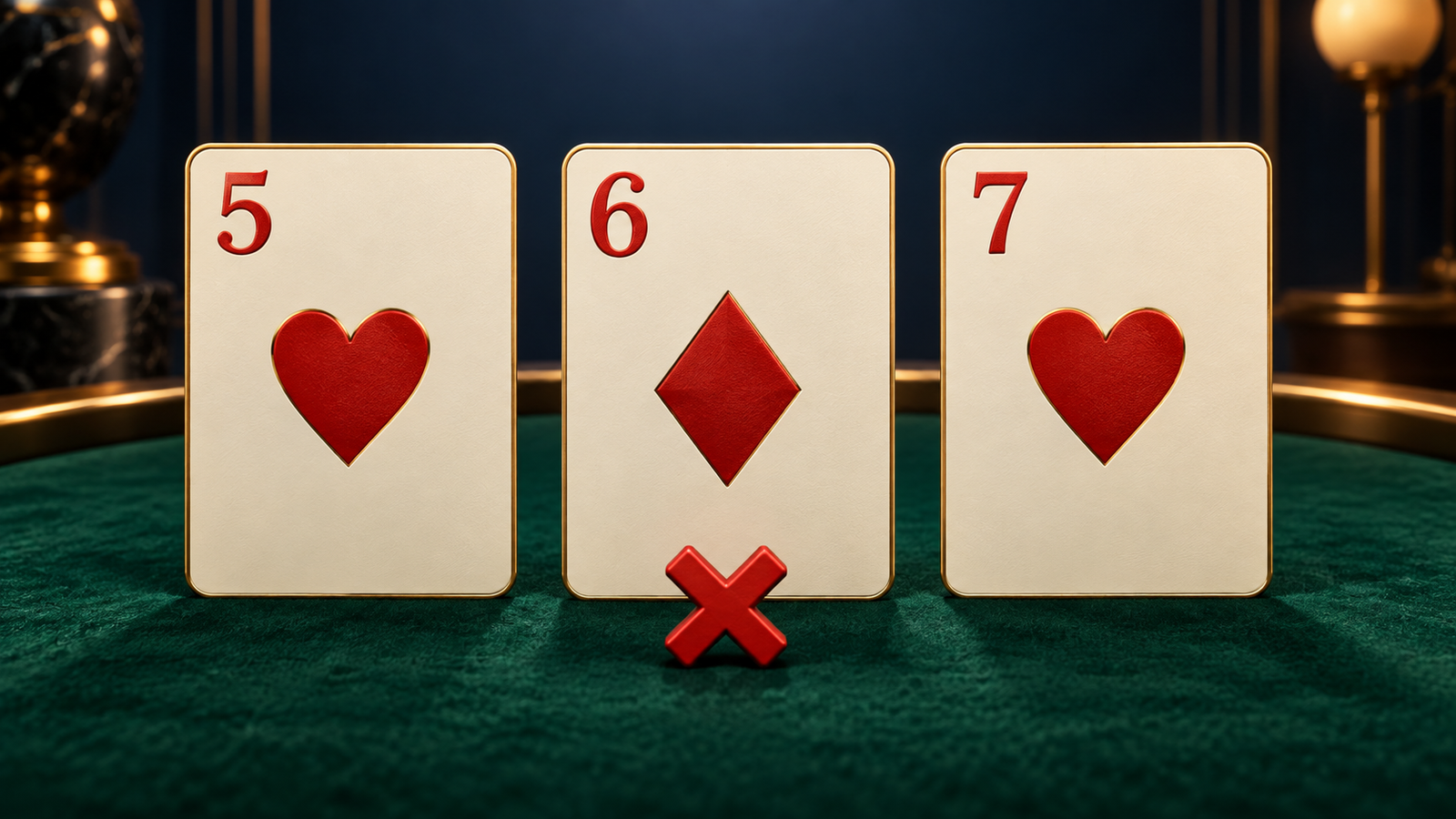
Same Colour, Different Suit: Check Your Rummy Sequence
A red six between a red five and seven can still break a sequence. Read the suit symbol on every card, not just its colour.
Summary: Hearts and diamonds are different suits even though both are red. A natural sequence needs consecutive ranks of the same suit, so 5H-6D-7H is not a natural sequence.
Read the symbol as well as the number
Cards can look connected when their numbers are consecutive and their colours match. Colour is not a suit. Hearts and diamonds are both red; clubs and spades are both black. Each pair still contains two different suits.
The Indian Rummy rules guide defines a sequence through consecutive ranks of the same suit. For the examples here, treat every shown card as natural and assume none of the listed ranks is the designated wild Joker. That assumption matters: a card acting as a Joker needs a separate substitution check.
Compare 5H-6D-7H with 5H-6H-7H
H means hearts and D means diamonds. In 5H-6D-7H, the ranks five, six and seven are consecutive, but the six is a diamond. Under the natural-card assumptions, this is not a sequence. It is not a set either, because the ranks are different.
Replace 6D with a separate physical 6H and the group becomes 5H-6H-7H. Now the ranks are consecutive and every suit is hearts, so this group is a pure sequence under the example rules. That validates this group, not the rest of the 13-card hand.
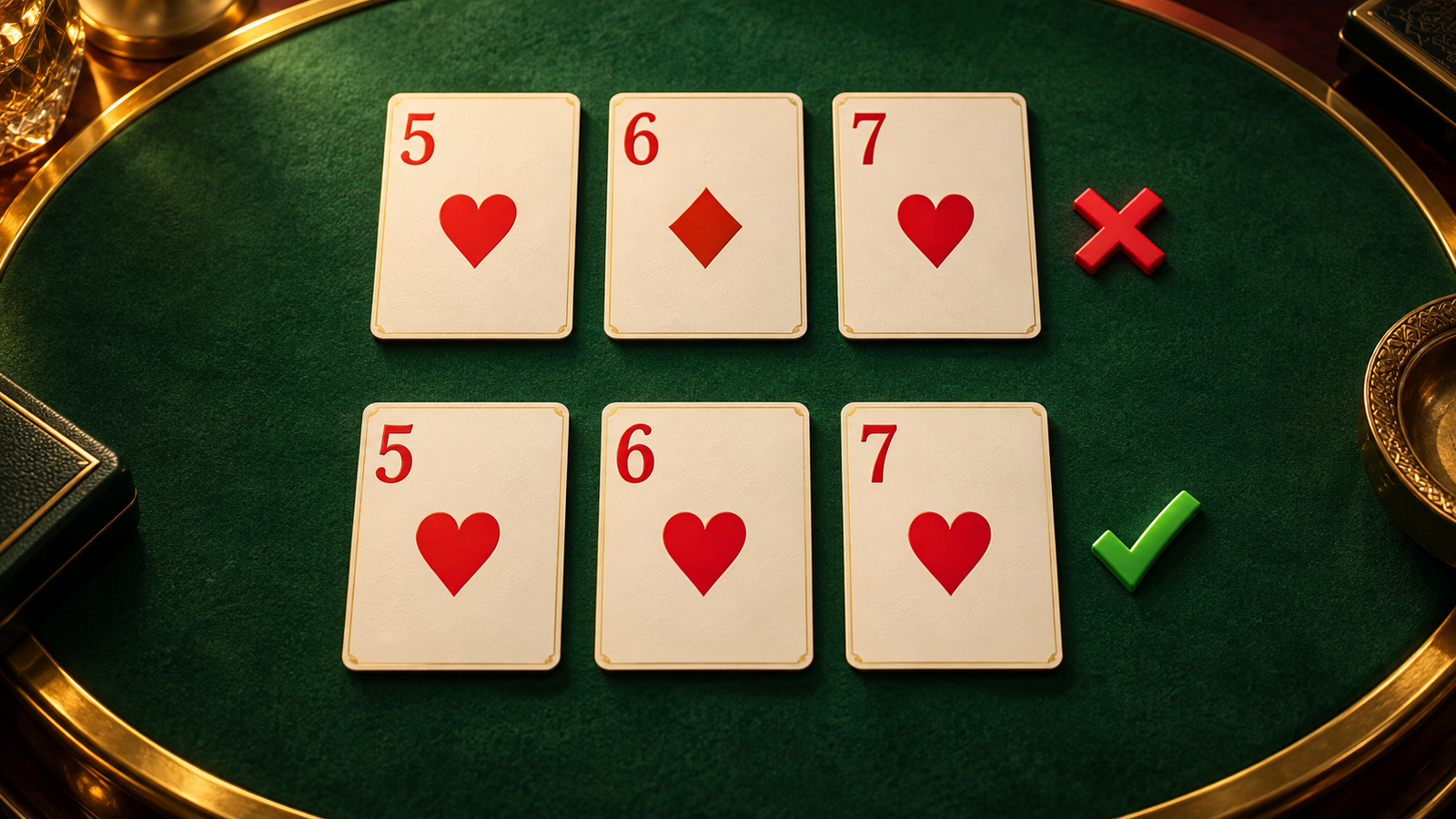
The comparison illustrates a replacement, not permission to rename 6D as 6H. If you do not hold the needed natural card or a permitted substitute, moving the existing cards around cannot supply it.
Keep the odd suit visible while planning
When sorting a practice hand, separate hearts from diamonds before comparing ranks. Put 5H and 7H together as an incomplete heart route and leave 6D visible with the diamonds. This prevents the red six from looking like a completed connector.
Do not discard 6D simply because it fails this heart route. It might help a diamond sequence or a permitted set elsewhere in your actual hand. Check its other role first. The two-pass sorting guide explains how to inspect sequences and sets without losing track of a card.
Check black cards and Joker roles separately
The same visual error occurs with 5S-6C-7S: spades and clubs are both black, but 6C is not the natural six of spades. Use the shape of the symbol instead of relying on a colour block in the interface. Where available, a clearer card display can help you read symbols; check the actual app options rather than assuming a particular feature exists.
If the table designates sixes as wild Jokers, the role of 6D needs a fresh check under those table rules. It might act as a substitute, but do not call a mixed-suit substituted group pure just because all cards are red. This article’s natural-card example deliberately excludes that case. See the Joker comparison guide for the distinction.
Practise a rank-and-suit readout
- Read each rank from left to right.
- Name the suit symbol on each physical card.
- Check that the natural ranks are consecutive and the suits match.
- Identify any actual Joker substitution separately.
- Keep unmatched cards visible and inspect their other uses.
- Check the whole hand and the active declaration rules before declaring.
In a practice session, say “five of hearts, six of diamonds, seven of hearts” aloud. Then compare it with the all-heart version. Reading the full card names makes the mismatch explicit without guessing from colour. A single correct sequence still cannot guarantee a win.
18+ only. Practise responsible play, set time and budget limits, take breaks and do not chase losses. Follow local laws and the active table rules. Read the responsible gaming guide.
FAQ
Can hearts and diamonds form one natural sequence because both are red?
No. They are different suits. The natural cards of a sequence must have consecutive ranks in the same suit.
Is 5H-6D-7H a set?
No. The ranks differ, so it is not a set. Under the stated non-Joker assumptions, it is not a sequence either.
Should I always discard the card with the odd suit?
No. Check whether it supports another valid group and consider the rest of the hand before choosing a discard.
Glossary
Responsible play note
Indian Rummy is a skill-based card game, but no article, checklist, or tournament routine can guarantee results. Use these guides to improve decisions, keep time and budget limits, and follow the laws and table rules that apply in your location.