


Pure Sequence vs ‘Pure Set’: What Indian Rummy Rules Actually Require
Indian Rummy gives purity a specific job: it describes the mandatory natural sequence, not a separate declaration category called a pure set.
Summary: First secure a same-suit consecutive pure sequence without Joker substitution. Then validate sets by matching rank, distinct suits and the active table’s Joker and duplicate-card rules. A natural set can be useful, but it does not replace the required pure sequence or the second sequence. Check each group independently and use responsible limits; correct grouping cannot guarantee an outcome.
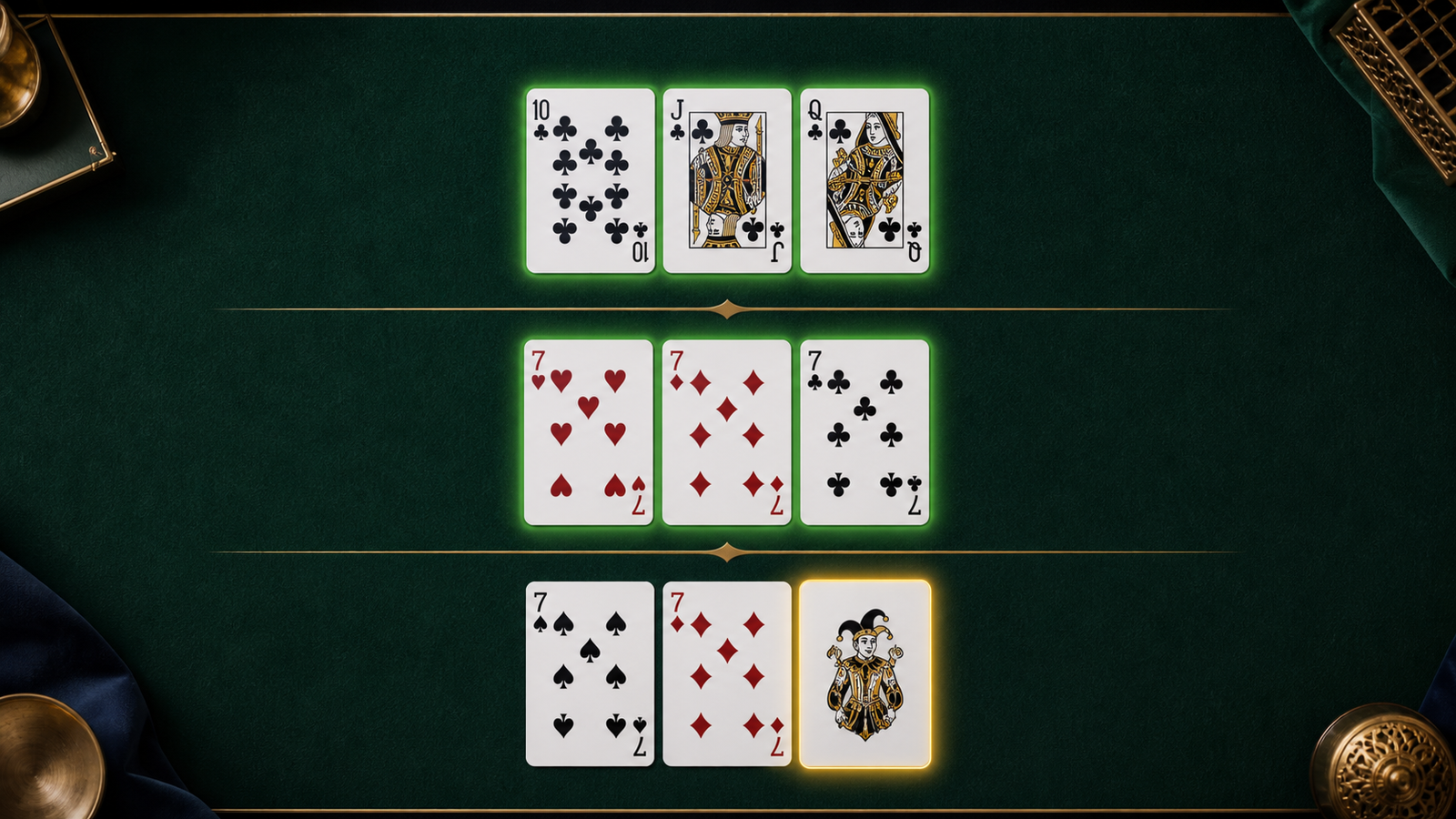
Test the pure sequence
Use consecutive cards of one suit without Joker substitution.
Test the set
Match rank and check suit, duplicate and Joker rules.
Keep two sequences
A set cannot replace the declaration’s second sequence.
Validate separately
A valid set does not repair an invalid sequence.
What pure means in Indian Rummy
Common 13-card Indian Rummy requires at least two sequences, and at least one must be a pure sequence. A pure sequence uses consecutive cards of the same suit without a Joker substituting for a missing card. That natural run satisfies a specific declaration requirement.
Players sometimes call a set made without a Joker a pure set. The phrase can describe the cards informally, but it is not a substitute for the mandatory pure sequence. The set still has to pass the active table’s set rules.
Sequence and set decision framework
- Find a natural same-suit run of at least three consecutive cards for the pure-sequence route.
- Confirm the hand has a second valid sequence, which may be pure or impure under the table rules.
- For each set, match the rank and check that the natural cards use permitted suits.
- Check how the active platform treats Jokers and duplicate same-suit copies in a set.
- Do not move a pure-sequence card into a set unless another pure route remains valid.
- Preview every group before declaring and fix unmatched cards.
- Keep time and budget limits and never treat correct grouping as a promised result.
Example: natural run and two seven groups
Suppose you hold 10C-JC-QC, 7H-7D-7S and a printed Joker. The clubs form a natural pure sequence. The three sevens form a natural same-rank set using different suits. If another incomplete group needs the Joker, place it only where the active table rules permit.
The seven set does not count as the second required sequence. You still need another valid sequence elsewhere in the 13-card hand. Calling the seven group a pure set does not change that declaration structure.
Common rule mix-ups to avoid
Do not combine same-suit consecutive logic with same-rank set logic. Do not assume every platform accepts the same number of Jokers or duplicate same-suit cards in a set. And do not borrow Gin Rummy terms such as knocking or deadwood for an Indian Rummy declaration.
Related guides: compare the sets and sequences guide, printed Joker strategy and the declaration-ready hand audit.
FAQ
Does Indian Rummy require a pure set?
The standard declaration requirement is a pure sequence. A set must be valid, but a natural set does not replace the pure sequence.
What makes a sequence pure?
It contains consecutive cards of one suit without a Joker substituting for a missing card.
Can a valid set replace the second sequence?
No. A common 13-card Indian Rummy declaration needs at least two sequences, including at least one pure sequence.
Can a Joker be used in a set?
Many tables permit Joker-assisted sets, but the exact composition and duplicate-card rules can vary, so confirm the active validator.
Glossary
- Pure sequence: A consecutive same-suit run completed without Joker substitution.
- Set: A valid group of cards sharing one rank, subject to suit, Joker and duplicate-card rules.
- Second sequence: The additional sequence required alongside the pure sequence in a common valid declaration.
Responsible play note
Indian Rummy is a skill-based card game, but no article, checklist, or tournament routine can guarantee results. Use these guides to improve decisions, keep time and budget limits, and follow the laws and table rules that apply in your location.