
Pause Before Declare: A Final-Turn Indian Rummy Check
The card you draw may complete the hand, but the declaration is only ready after one discard and a fresh check of all 13 remaining cards.
Summary: Pause at two separate moments: after the draw, when the hand temporarily has 14 cards, and after the discard, when 13 cards remain. Confirm a natural pure sequence, a second valid sequence, legal remaining groups and one use for every physical card. Check Joker roles again instead of trusting the previous layout. The pause can prevent avoidable declaration errors, but it does not guarantee the outcome of a deal.
Check after the draw
Identify the new card’s role before moving any established group.
Choose one discard
Release one genuinely loose card without breaking required structure.
Regroup the hand
Count the remaining cards and place each physical card once.
Validate before declare
Recheck both sequences, sets and every Joker role.
Why the last draw is not the last check
In common 13-card Indian Rummy, a settled hand has 13 cards. A normal draw creates a temporary 14-card hand, and one discard returns it to 13. A useful draw can complete a sequence or set, but the hand still needs a legal discard and a complete regrouping before declaration.
Rushing from the draw to the declare control can hide a broken pure sequence, a duplicated mental assignment or a Joker left in the wrong role. Treat the final turn as a short audit, not as proof that the hand is already valid.
Final-turn pause checklist
- After drawing, count the temporary 14 cards and identify what the new card completes.
- Choose one discard that does not break the pure sequence or required second sequence.
- Count 13 cards after the discard.
- Confirm at least two valid sequences, including one natural pure sequence.
- Check every set for equal rank, permitted suits and Joker treatment under the active rules.
- Place each physical card in exactly one final group and review the interface validator.
- Declare only when every check passes, and keep fixed time and budget limits.
Example: a useful draw still needs a discard
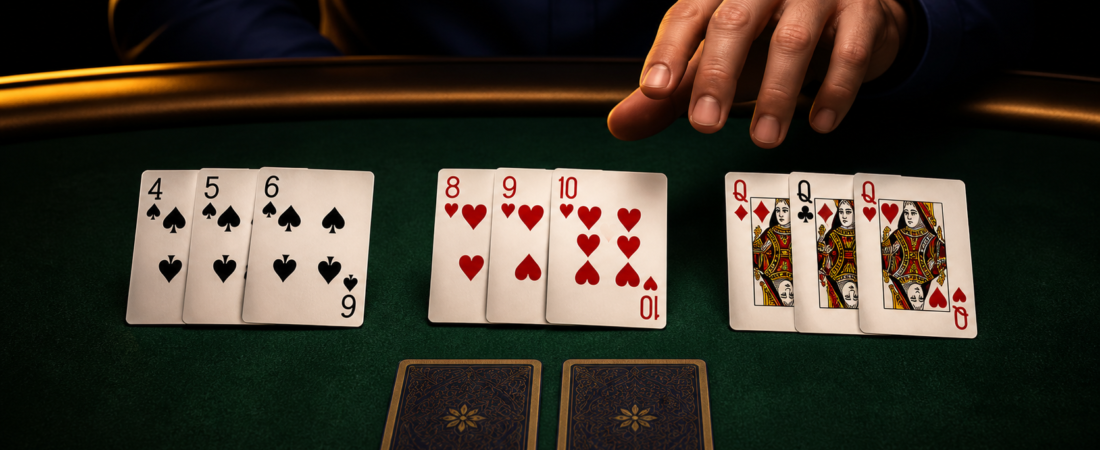
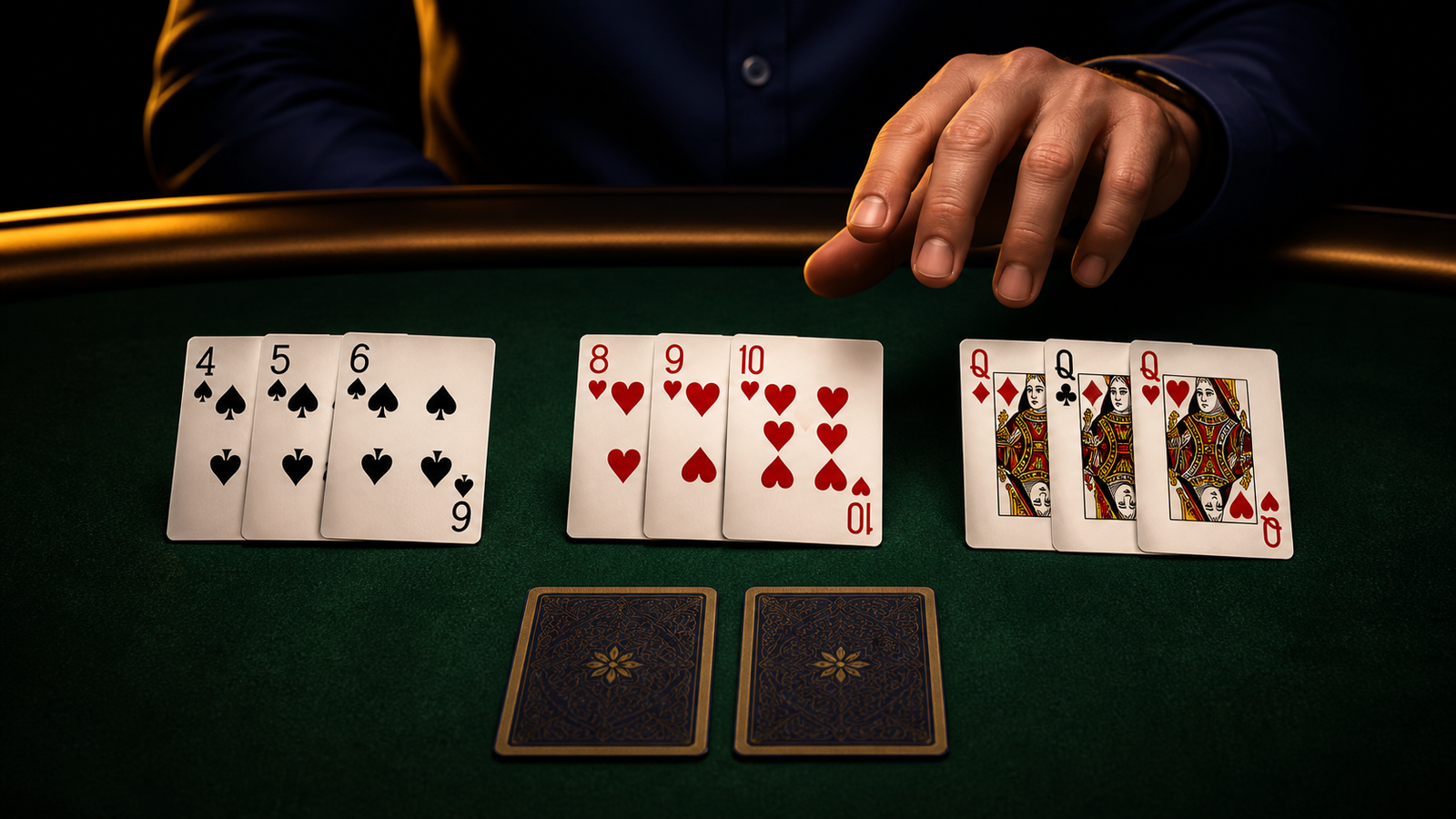
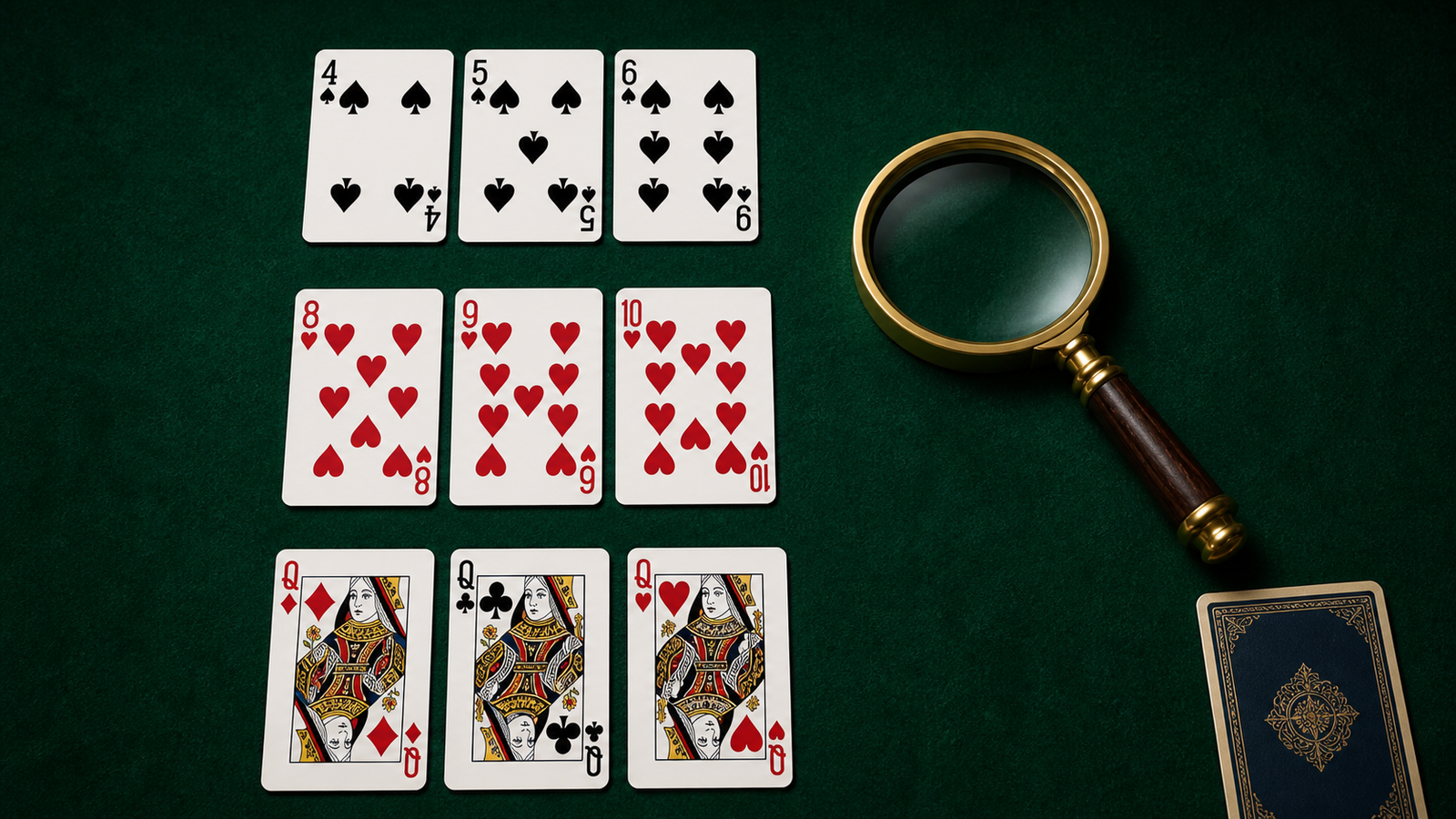
You hold 4S-5S-6S as a pure sequence, 8H-9H with a Joker, three queens in different suits and other loose cards. Drawing 10H can replace the Joker and create the natural 8H-9H-10H sequence. The Joker becomes available, but the hand now contains 14 cards.
Assign the freed Joker only where it forms a valid group, choose one loose card to discard, then count and regroup the remaining 13 cards. Do not declare merely because the heart sequence improved. Every other card still needs a legal final home.
Platform differences and related checks
Declaration screens, automatic sorting, printed and wild Joker validation, deck count and penalty handling can vary by platform. Read the active table rules and use the table validator where available. Do not mix Gin Rummy knocking or deadwood rules with Indian Rummy declarations.
Related guides: use the declaration-ready hand audit, 13-or-14 card count check and invalid declaration checklist.
FAQ
Should I declare immediately after drawing a useful card?
No. Make the required discard, count the remaining cards and validate every final group first.
How many cards should remain after the final discard?
In common 13-card Indian Rummy, the hand returns to 13 cards after the draw-and-discard turn, subject to the active table rules.
Can a final-turn checklist prevent every invalid declaration?
No. It reduces avoidable mistakes, but the active rules, interface and final grouping still determine validity.
Glossary
- Temporary 14-card hand: The hand state immediately after a normal draw and before the turn’s discard.
- Final regroup: The arrangement of all remaining cards after the discard and before declaration.
- Declaration audit: A check of card count, required sequences, sets, Joker roles and one-time card assignment.
Responsible play note
Indian Rummy is a skill-based card game, but no article, checklist, or tournament routine can guarantee results. Use these guides to improve decisions, keep time and budget limits, and follow the laws and table rules that apply in your location.