
13 or 14 Cards? A Turn-by-Turn Indian Rummy Card-Count Check
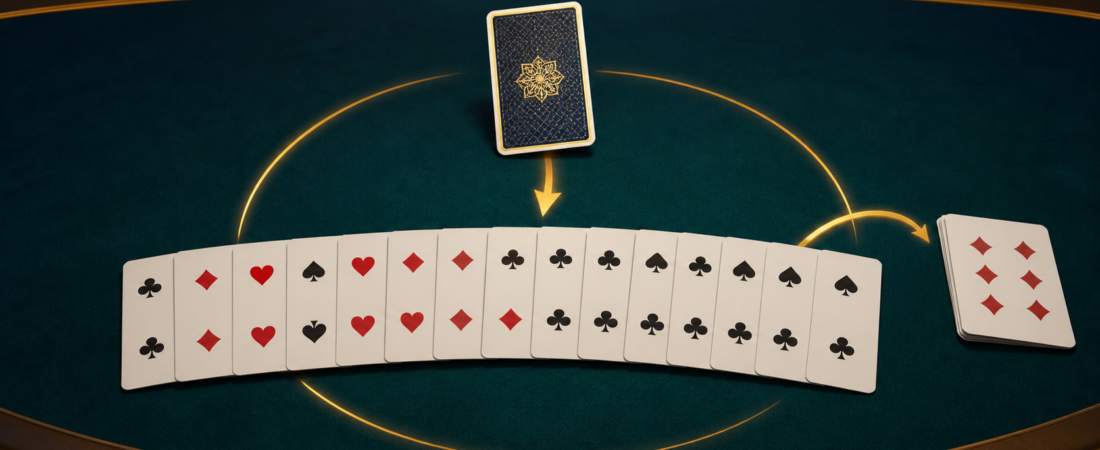
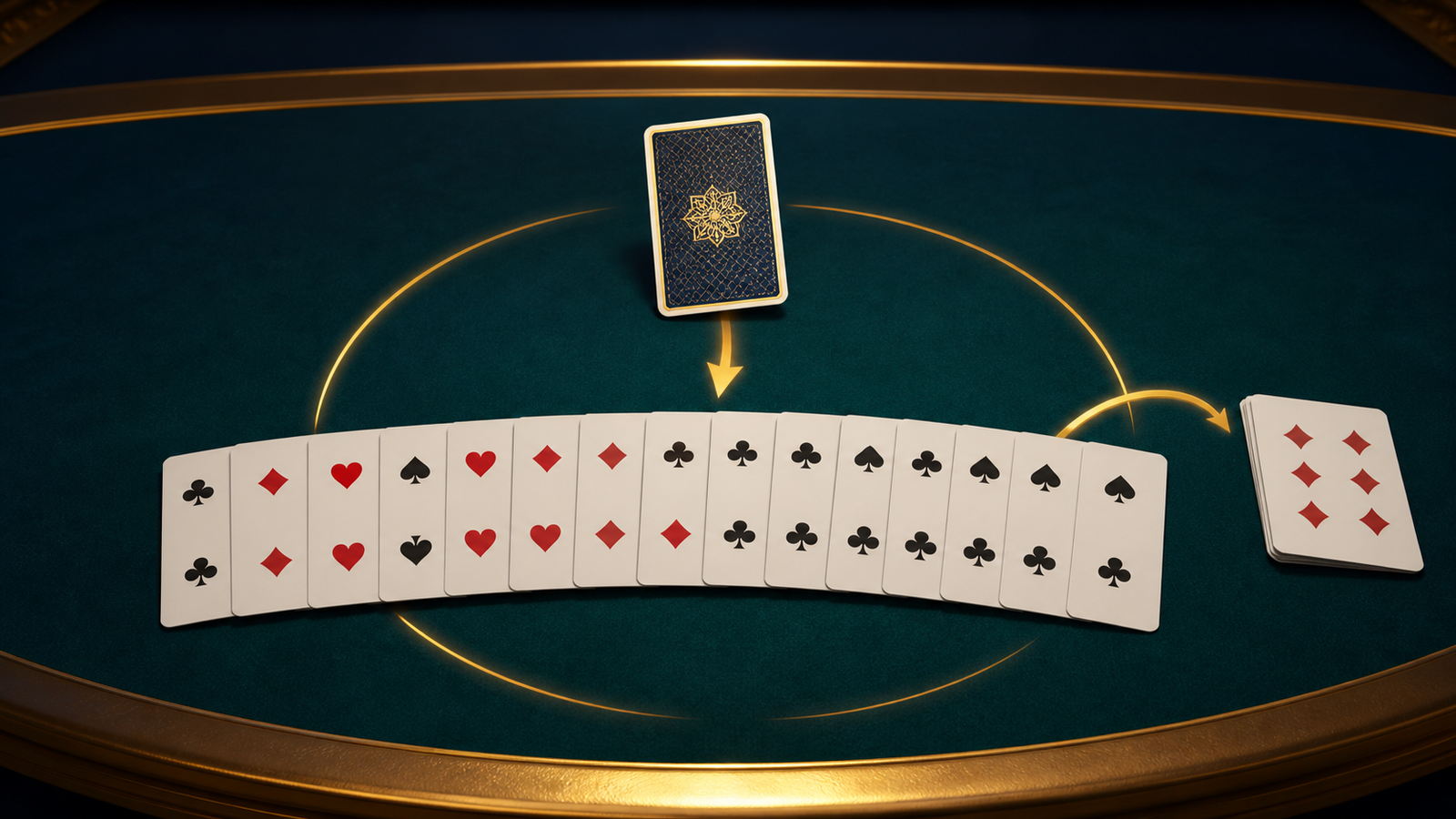
The hand count changes during a normal turn, so the useful question is not only how many cards you hold, but when you are counting.
Summary: A common 13-card Indian Rummy hand starts with 13 cards. Drawing temporarily raises the count to 14, and discarding returns it to 13. Count at these three moments, keep every card in one visible group and use the table validator before declaring. Interfaces and special turn conditions can vary, so confirm the active rules. This check prevents avoidable mistakes but cannot guarantee an outcome.
Before the draw
Your settled hand normally contains 13 cards.
After the draw
The selected card temporarily becomes the 14th card.
After the discard
Releasing one card returns the hand to 13.
Count every group
Make sure each physical card appears once before declaration.
Why the count changes during a turn
In common 13-card Indian Rummy, each player begins with 13 cards. On a normal turn, you draw one card from the closed deck or open pile. Your hand then contains 14 cards until you discard one. The discard completes the turn and brings the hand back to 13.
This rhythm helps beginners separate a temporary 14-card working hand from the final 13-card arrangement. It also gives you a quick way to notice an ungrouped card before using the declaration control.
Three-moment card-count checklist
- Before drawing, confirm the settled hand shows 13 cards.
- Draw exactly one card using the active table control.
- With 14 cards visible, compare the new card with every sequence and set route.
- Choose one card to release and check that it is not part of the mandatory pure sequence.
- After discarding, confirm the hand has returned to 13 cards.
- Before declaring, place every physical card in exactly one group and use the table preview or validator.
- Follow the active platform rules and keep fixed time and budget limits.
Example: the temporary 14th card changes the plan
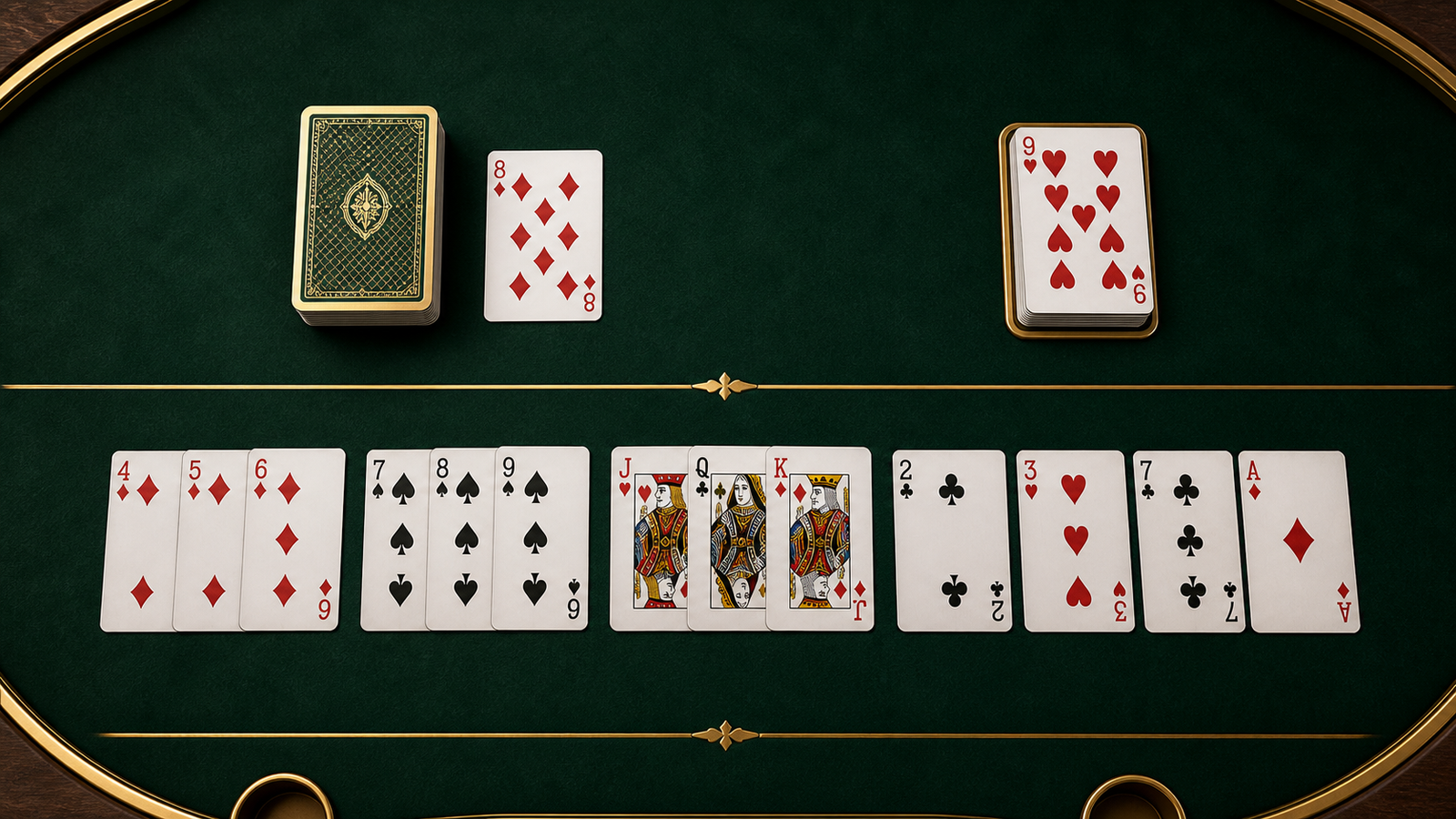
Suppose your 13-card hand contains 4H-5H, 8S-9S-10S, three queens of different suits and loose cards. You draw 6H, which becomes the temporary 14th card. Now 4H-5H-6H forms a natural pure sequence. Keep that group intact, compare the remaining routes and discard one card that does not improve a valid sequence or set.
After the discard, count again. The hand should contain 13 cards, and no card should appear in two imagined groups. The new pure sequence improves structure, but it does not guarantee the result of the deal.
Declaration and platform checks
A valid declaration in common 13-card Indian Rummy needs at least two sequences, including at least one pure sequence formed without Joker substitution; the remaining cards must be arranged in valid sequences or sets. A correct total count does not fix an invalid group. Table interfaces, deal variants and special turn handling can differ, so follow the displayed validator. Gin Rummy uses different hand sizes and meld rules and should not be used for this check.
Related guides: review how to play 13-card Rummy, the sets and sequences guide and the invalid declaration checklist.
FAQ
How many cards are in a 13-card Indian Rummy hand?
A settled hand normally has 13 cards. After drawing, it temporarily has 14 until one card is discarded.
Can I declare just because my card count is correct?
No. Every card must also be arranged in valid groups, including the required sequences and at least one pure sequence.
Should one card be counted in two possible groups?
You may compare provisional routes, but one physical card can belong to only one final group at declaration.
Does a card-count check guarantee a valid result?
No. It catches a basic hand-state mistake; group validity, table rules and the deal outcome still need separate checks.
Glossary
- Settled hand: The 13 cards held before a draw or after the turn’s discard.
- Temporary 14th card: The card added by the draw before one card is discarded.
- Declaration validator: The table interface that checks the submitted card groups under the active rules.
Responsible play note
Indian Rummy is a skill-based card game, but no article, checklist, or tournament routine can guarantee results. Use these guides to improve decisions, keep time and budget limits, and follow the laws and table rules that apply in your location.