
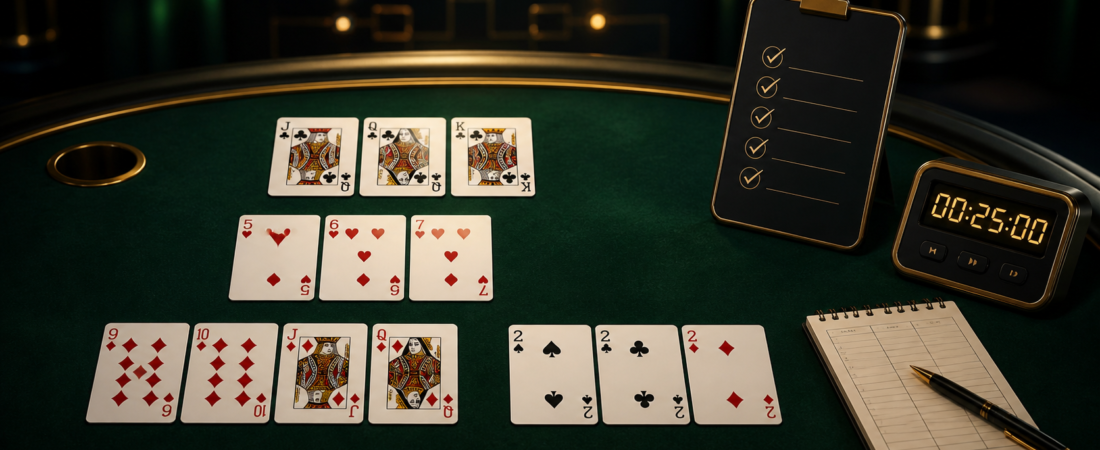
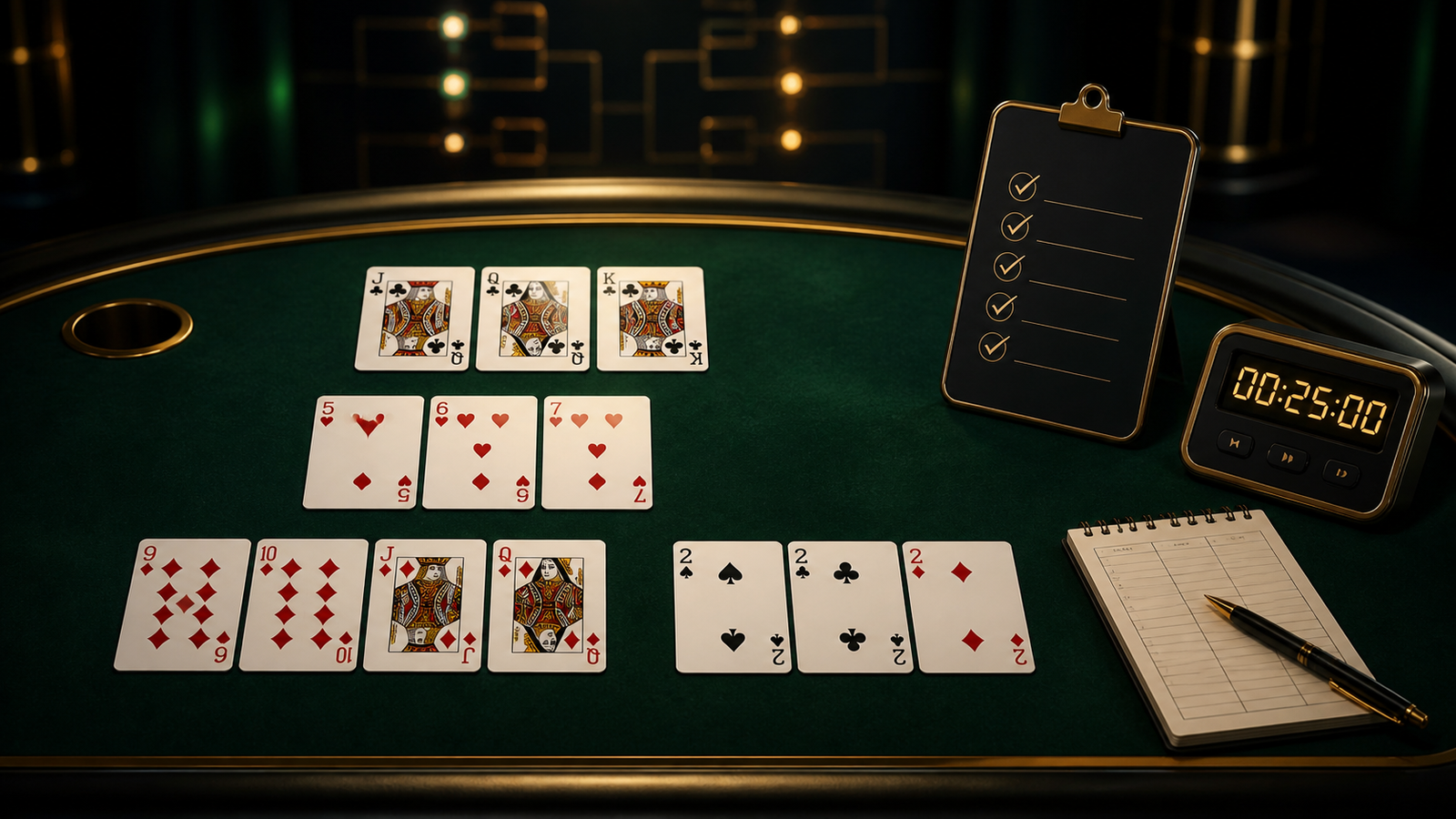
Practice This Declaration Checklist Before a Rummy Tournament
Tournament preparation is easier to test in a quiet practice hand than under a turn timer. A short declaration routine helps you catch card-count and group-validity mistakes before they become rushed decisions.
Summary: Practise the same order every time: verify a natural pure sequence, confirm a separate second sequence, validate each set under the active rules, and count all 13 cards once. Review the scoring and drop rules before the event rather than assuming every table works the same way. Preparation reduces avoidable errors, but it cannot guarantee tournament results.
Build a repeatable declaration order
In common 13-card Indian Rummy, start by finding at least two sequences, including one pure sequence made without Joker substitution. Check the remaining sequences and sets only after that natural requirement is clear. Using the same order in practice reduces the chance of overlooking the pure sequence when the timer is running.
Recount every physical card
Lay out the candidate declaration and count all 13 cards once. A card cannot belong to two groups in the final arrangement. Check same-suit order in every sequence and same-rank, different-suit structure in each natural set, subject to the active platform rules.
Review tournament-specific rules
- Confirm scoring, point caps and elimination format.
- Check drop options and any round-specific restrictions.
- Review printed and wild Joker treatment.
- Locate the declaration control before the first hand.
- Set session and budget limits that apply throughout the event.
Example: find the loose card before declaring
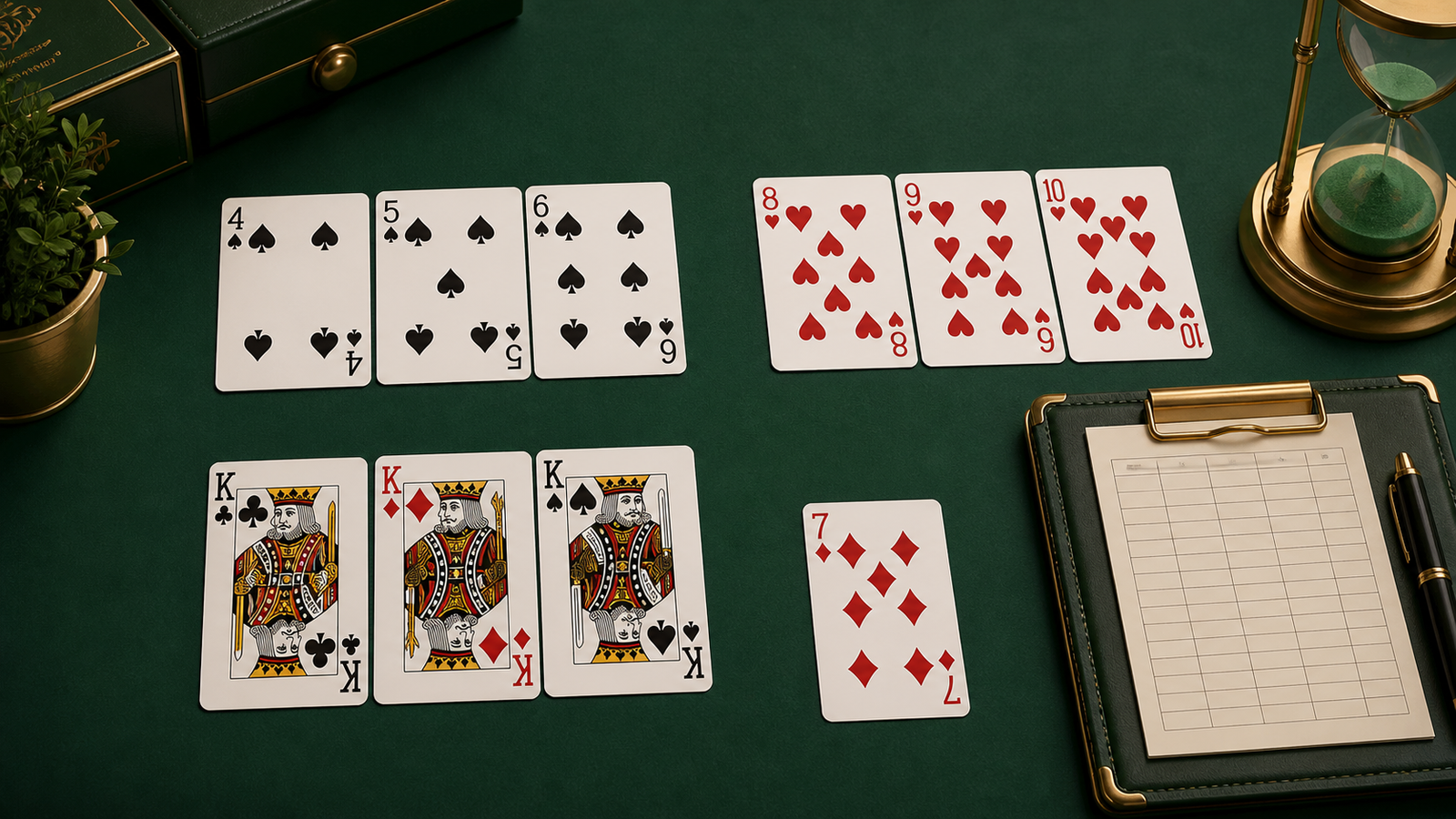
Suppose 4S-5S-6S is the pure sequence, 8H-9H-10H is the second sequence and KC-KD-KS is a valid three-suit set. A separate 7D is still loose. The grouped cards may look orderly, but the hand is not ready until every remaining card belongs to another valid group. The final recount exposes that loose card before a declaration attempt.
Rules and tournament formats can differ, so read the active Indian Rummy rules. Adults should take breaks, keep session and budget limits, and never chase losses. See the responsible gaming guide.
FAQ
What should I check first before an Indian Rummy declaration?
Confirm the natural pure sequence first, then verify a separate second sequence and every remaining legal group.
Why recount all 13 cards after grouping the hand?
The recount catches loose cards, duplicated use and groups that looked complete during rearrangement but do not cover the full hand.
Can a practice checklist guarantee a tournament result?
No. It can reduce avoidable declaration mistakes, but draws, opponents, timing and later decisions remain uncertain.
Glossary
- Declaration audit: A final check of sequence requirements, set validity and full-hand card count before declaring.
- Loose card: A card that does not belong to any valid group in the proposed declaration.
- Tournament format: The active event rules for scoring, rounds, drops, advancement or elimination.
Responsible play note
Indian Rummy is a skill-based card game, but no article, checklist, or tournament routine can guarantee results. Use these guides to improve decisions, keep time and budget limits, and follow the laws and table rules that apply in your location.