
Open Discard or Closed Deck? An Indian Rummy Pickup Decision Guide
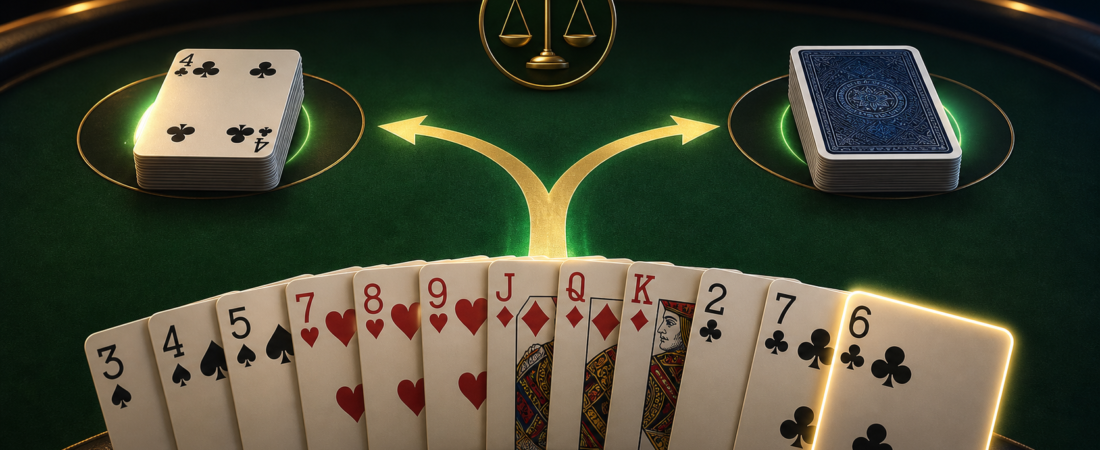
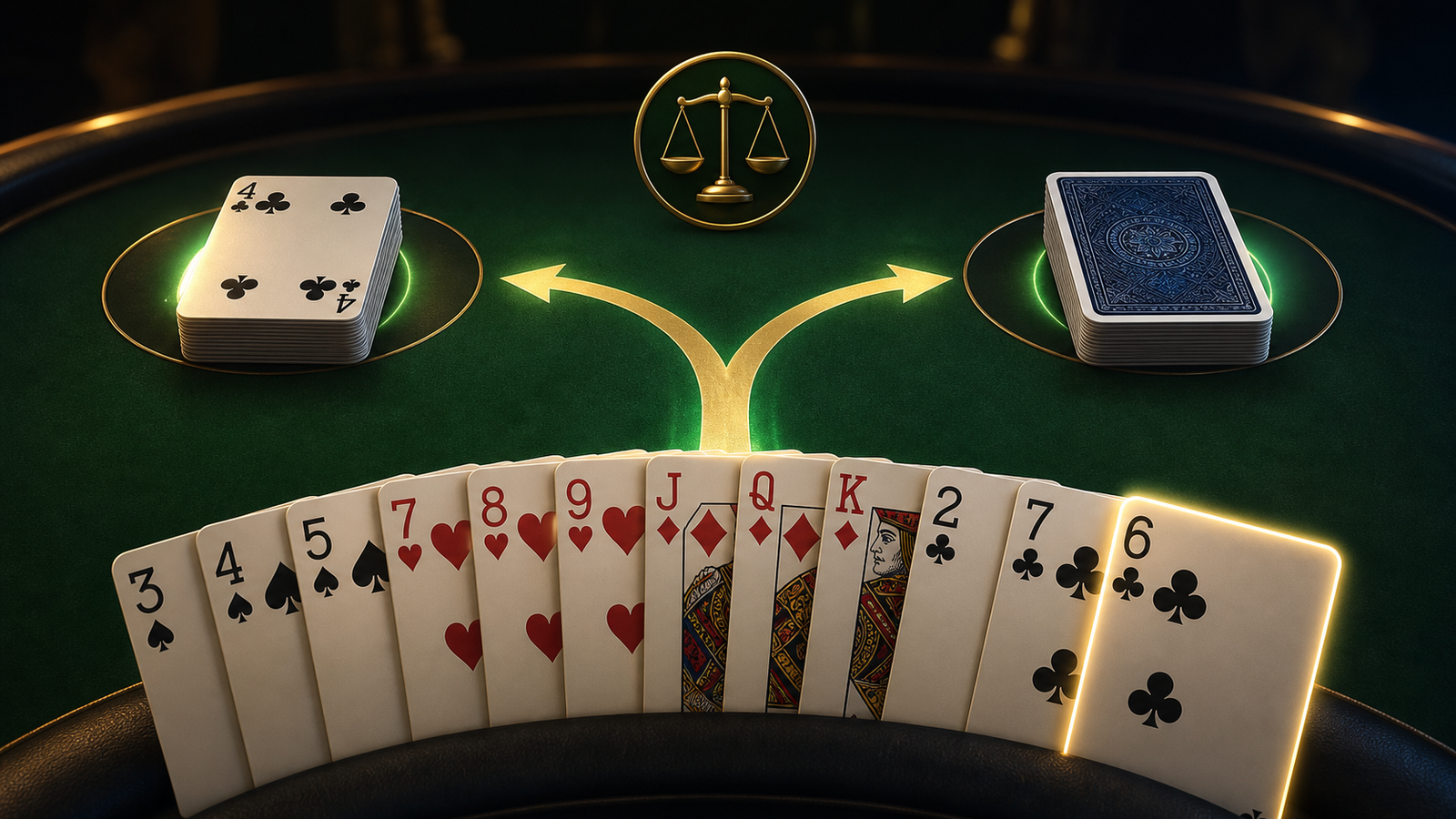
An open discard is valuable only when its immediate structural gain is worth revealing part of your plan.
Summary: Take the open card when it completes or materially strengthens a declaration-critical group, especially a pure-sequence route. Otherwise the closed deck may preserve flexibility and reveal less information. Visible play is evidence, not certainty, and no pickup rule guarantees results.
Measure the gain
Prefer an open card that completes a legal group or creates a strong natural route.
Protect purity
Give extra weight to a card that completes the mandatory natural pure sequence.
Price information
An open pickup tells opponents that the rank or suit matters to your hand.
Plan the release
Know which card you will discard before taking the visible card.
What changes when you pick from the open pile
In common 13-card Indian Rummy, a turn normally begins by drawing from the closed deck or taking the top visible discard, subject to the active table rules. The open card gives certainty, but the pickup is visible and may signal the suit, rank or group you are building. The closed deck hides your intent but offers an unknown card.
The stable declaration goal remains at least two sequences, including at least one pure sequence. Platform draw restrictions, timers and scoring can differ, so confirm the table rules.
Open-discard pickup checklist
- State exactly which legal group the open card improves.
- Prioritise a card that completes a natural pure sequence or required second sequence.
- Compare the improvement with your strongest alternative routes.
- Check whether the pickup merely duplicates a card without a clear role.
- Consider what the visible pickup reveals to the next players.
- Choose the card you will release before completing the draw.
- Re-sort after the turn and keep firm time and budget limits.
Example: immediate sequence value beats vague flexibility
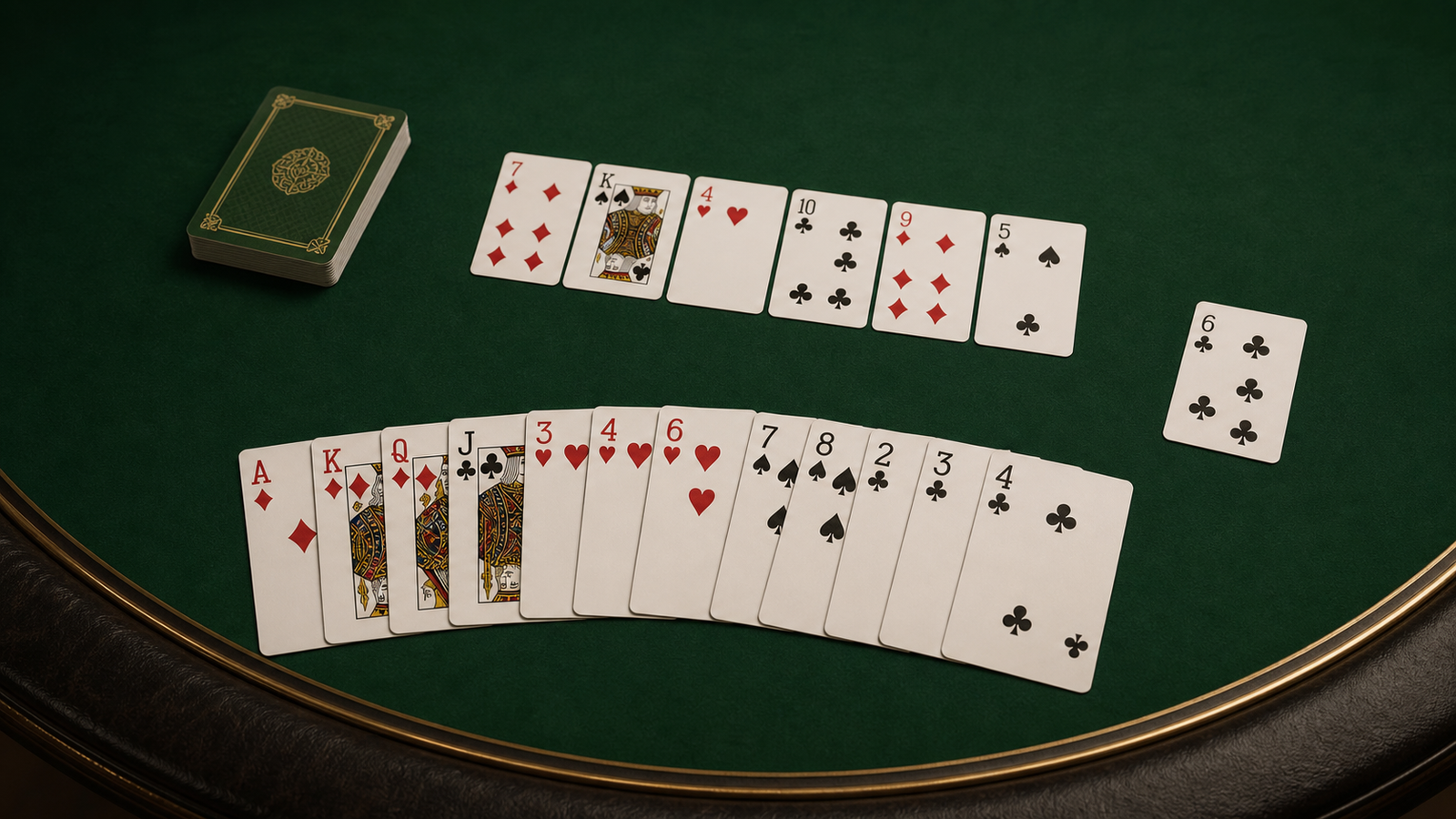
Suppose you hold 4C-5C and the top open discard is 6C. Taking it immediately creates 4C-5C-6C, a natural sequence that may satisfy the pure-sequence requirement. That clear structural gain can outweigh the information cost. By contrast, taking 6C only because you hold an unrelated 6D creates no complete set and may simply add another loose card.
Before picking 6C, decide which weaker card leaves the hand. This prevents a useful draw from turning into an unfocused discard.
When the closed deck is the disciplined choice
Prefer the closed deck when the open card offers only a speculative pair, duplicates a route already covered, or forces you to expose a plan without completing anything. Do not infer an opponent’s exact hand from one pickup or discard. Gin Rummy draw and deadwood strategy is different and should not be mixed with Indian Rummy declaration rules.
FAQ
Should I always pick an open card that matches my suit?
No. Take it only when it creates a meaningful legal route and you have a sensible discard plan.
Is an open pickup best for completing a pure sequence?
It can be especially valuable when it naturally completes the required pure sequence without Joker substitution.
Does taking from the closed deck improve my odds?
Not automatically. It preserves information but the card is unknown; compare that uncertainty with the open card’s immediate value.
Can this checklist guarantee a win?
No. It reduces avoidable pickup mistakes but cannot control draws, opponents or timing.
Glossary
- Open pile: The visible discard pile whose top card may be available to draw under the active rules.
- Closed deck: The face-down draw pile that provides an unknown card.
- Information cost: The strategic clue revealed when a player visibly selects a discard.
Responsible play note
Indian Rummy is a skill-based card game, but no article, checklist, or tournament routine can guarantee results. Use these guides to improve decisions, keep time and budget limits, and follow the laws and table rules that apply in your location.