
First Discard Decision Framework for Indian Rummy Beginners
Your first discard sets the tone for the hand. A clear framework helps beginners avoid throwing useful connectors or holding risky high cards too long.
Summary: Before the first discard in Indian Rummy, identify your pure sequence path, separate loose high cards, check whether a Joker improves a weak group, and choose the discard that least helps opponents. This responsible play framework improves decisions, but it never guarantees a result.
Sequence path
Protect the best natural same-suit run before chasing sets or risky side plans.
High-card risk
Loose A, K, Q, J, and 10 cards need a reason to stay in the hand.
Joker value
Use Jokers to support weak groups after the pure sequence path is clear.
Safe discard
Avoid gifting obvious connectors that match visible open-pile activity.
The 30-second first-discard scan
Start by separating the hand into natural connectors, Joker-supported options, pairs, and loose high cards. In 13-card Indian Rummy, the stable priority is to form at least one pure sequence without Joker substitution. The first discard should support that structure instead of being a rushed throwaway.
Decision framework before you throw
- Mark the strongest pure sequence path, even if it is only two connected cards.
- Keep middle connectors when they can grow in two directions.
- Question every loose high card that is not joining a sequence or set.
- Use a Joker only where it improves a legal impure group.
- Check visible pickups before discarding cards near that rank or suit.
- Confirm platform-specific drop values, point caps, and declaration penalties before play.
Example hand: keep structure over emotion
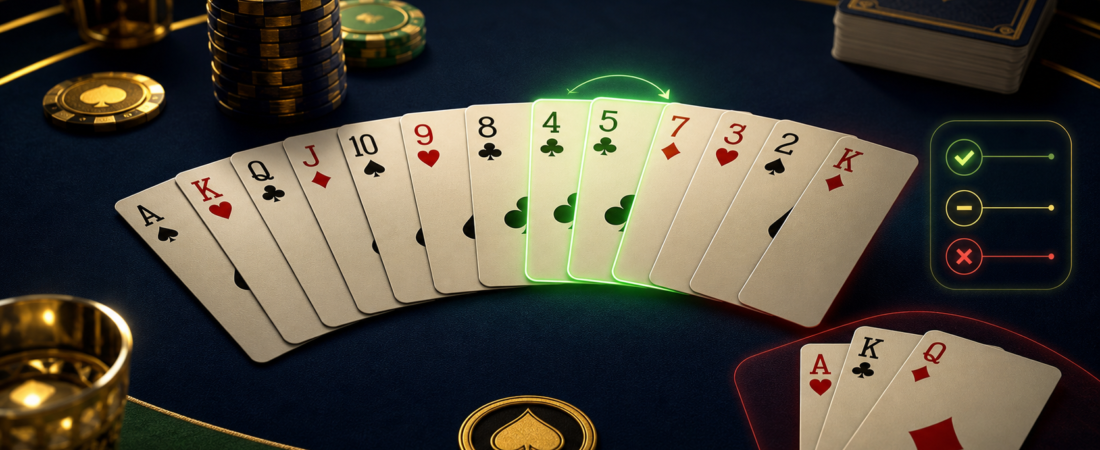
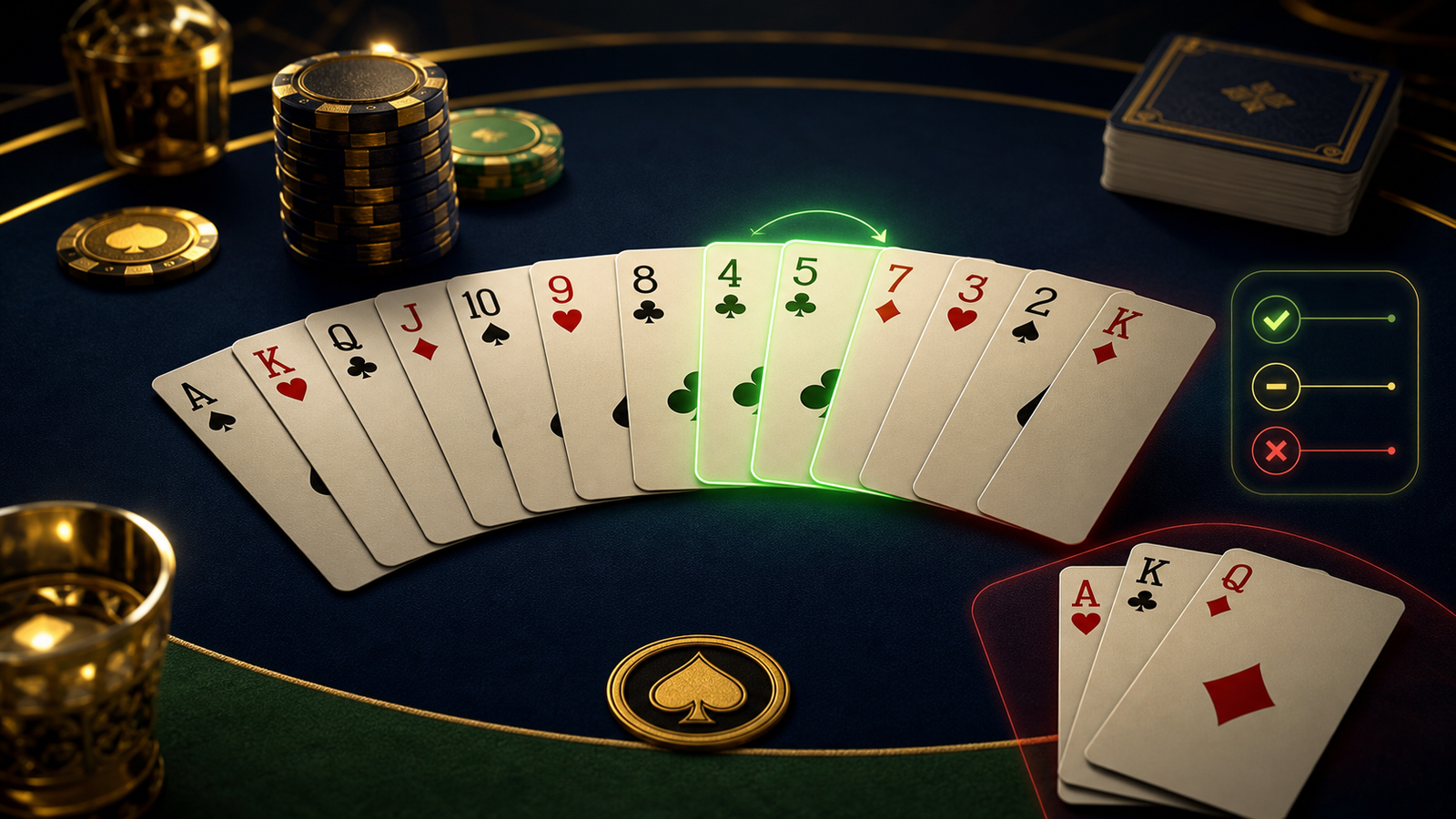
Suppose you hold 4♣ 5♣, 8♥ 9♥ 10♥, K♦ Q♦, printed Joker, 2♠, 7♦, A♣, and 3♠. The heart run is already a pure sequence, while 4♣ 5♣ can become another natural run. K♦ Q♦ may connect with J♦ or 10♦, but if no plan appears, one high card may become the safer early discard. The printed Joker should support a weak group, not distract from the natural sequence foundation.
Stable rules vs table differences
The pure sequence requirement and sequence/set grouping logic are stable Indian Rummy ideas. Exact drop values, table limits, time controls, and scoring details can vary by platform. Gin Rummy terms such as deadwood belong to a different ruleset and should not be used as a direct guide for Indian Rummy declarations.
FAQ
What should I discard first in Indian Rummy?
There is no universal card to discard first. Start by protecting your pure sequence path, then consider loose high cards, Joker value, and whether the discard may help opponents.
Should beginners discard high cards immediately?
Not always. A high card that connects to a strong sequence path may be useful, but loose high cards increase point exposure when they have no clear role.
Can a first-discard framework guarantee a win?
No. It can reduce avoidable mistakes and support disciplined decisions, but cards, draws, and opponent choices still affect results.
Glossary
- Pure sequence: A same-suit consecutive run made without using a Joker as a substitute.
- First discard: The first card you release after evaluating the opening hand structure.
- Point exposure: The penalty risk created by loose high-value cards if the hand ends before you finish grouping.
Responsible play note
Indian Rummy is a skill-based card game, but no article, checklist, or tournament routine can guarantee results. Use these guides to improve decisions, keep time and budget limits, and follow the laws and table rules that apply in your location.