
Discard Timing Strategy in Indian Rummy
Good discards are not only about which card you throw. Timing matters too. Learn when to hold a risky card, when to release it, and when a discard can protect your larger plan.
Summary: Discard timing helps you reduce deadwood without giving opponents an easy sequence. A smart player watches open-pile pickups, suit patterns, and endgame pressure before deciding whether a card is safe to release.
Why discard timing changes the hand
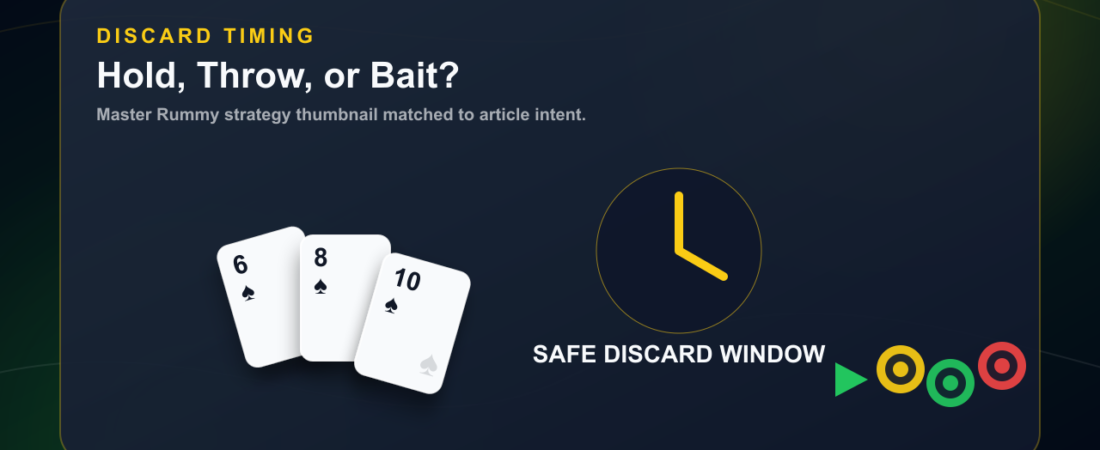
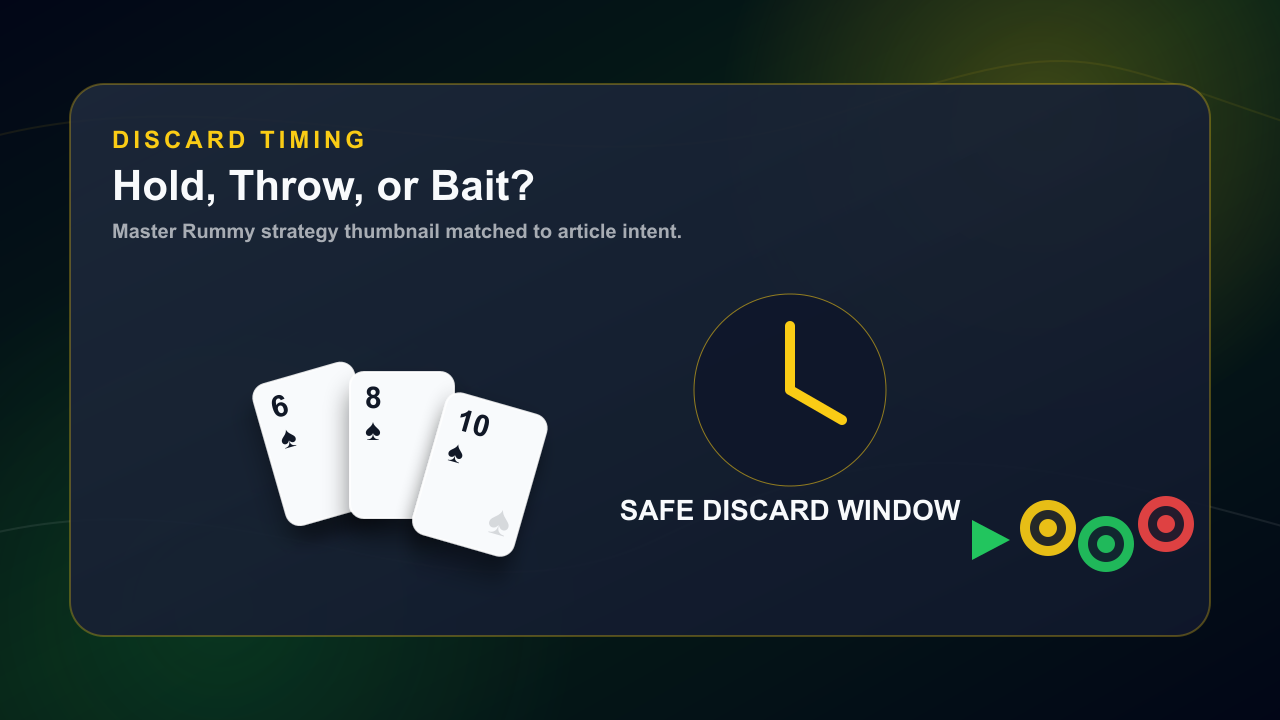
In Indian Rummy, the same card can be safe in one turn and dangerous in the next. If an opponent has just picked 7♠ from the open pile, throwing 6♠ or 8♠ may help them complete a sequence. Timing your discard means judging both your own deadwood and the information visible at the table.
Wait Before Throwing Connectors
A card beside an opponent’s pickup is often risky. Hold it for a turn if your hand can afford the points and you need more table information.
Release Deadwood Early
Loose high cards that do not connect to your hand should usually be reduced before they become expensive in a sudden declaration.
Read Pickup Patterns
If a player repeatedly picks from one suit, avoid feeding nearby cards from that suit unless the point risk forces you to move.
Use Safe Bait Carefully
Sometimes a low-value card can test whether an opponent needs a suit. Keep bait low risk and never sacrifice your pure sequence plan.
Build a discard routine
Before discarding, ask three questions: Does this card help my hand? Did an opponent recently show interest in nearby cards? Is the point risk worth holding it longer? This routine turns discards from guesswork into controlled decisions.
Use the official download page for Android access and future iOS availability.