


Use the Immediate-Use Test Before Picking a Discard
A face-up discard is useful only if its role in the hand is clear. Seeing a familiar rank or suit is not enough reason to pick it.
Summary: Before taking a face-up discard, name the group it will enter and check whether that group becomes valid now or gains a strong one-card route. Protect the mandatory pure sequence, compare the closed-pile alternative without pretending to know the hidden card, and plan the next discard. This test improves decision clarity but cannot predict draws or guarantee a result.
Why a visible card needs a higher bar
Taking from the open pile gives you certainty about one card, but it also shows the table which card interested you. That information cost can be reasonable when the card completes a sequence or set immediately. It is harder to justify when the card merely creates another unfinished route.
Run the immediate-use test
Ask where the card goes before touching the pile. A strong answer names one exact group, confirms that no card is counted twice and leaves the mandatory pure sequence protected. If the pickup still needs two unknown cards, treat it as a weak possibility rather than a completed plan.
- Name the target sequence or set.
- Check whether the pickup completes it now.
- Confirm the pure sequence remains intact.
- Choose which loose card would leave the hand.
- Recount all 13 cards after rearranging.
Example: an eight with one clear role
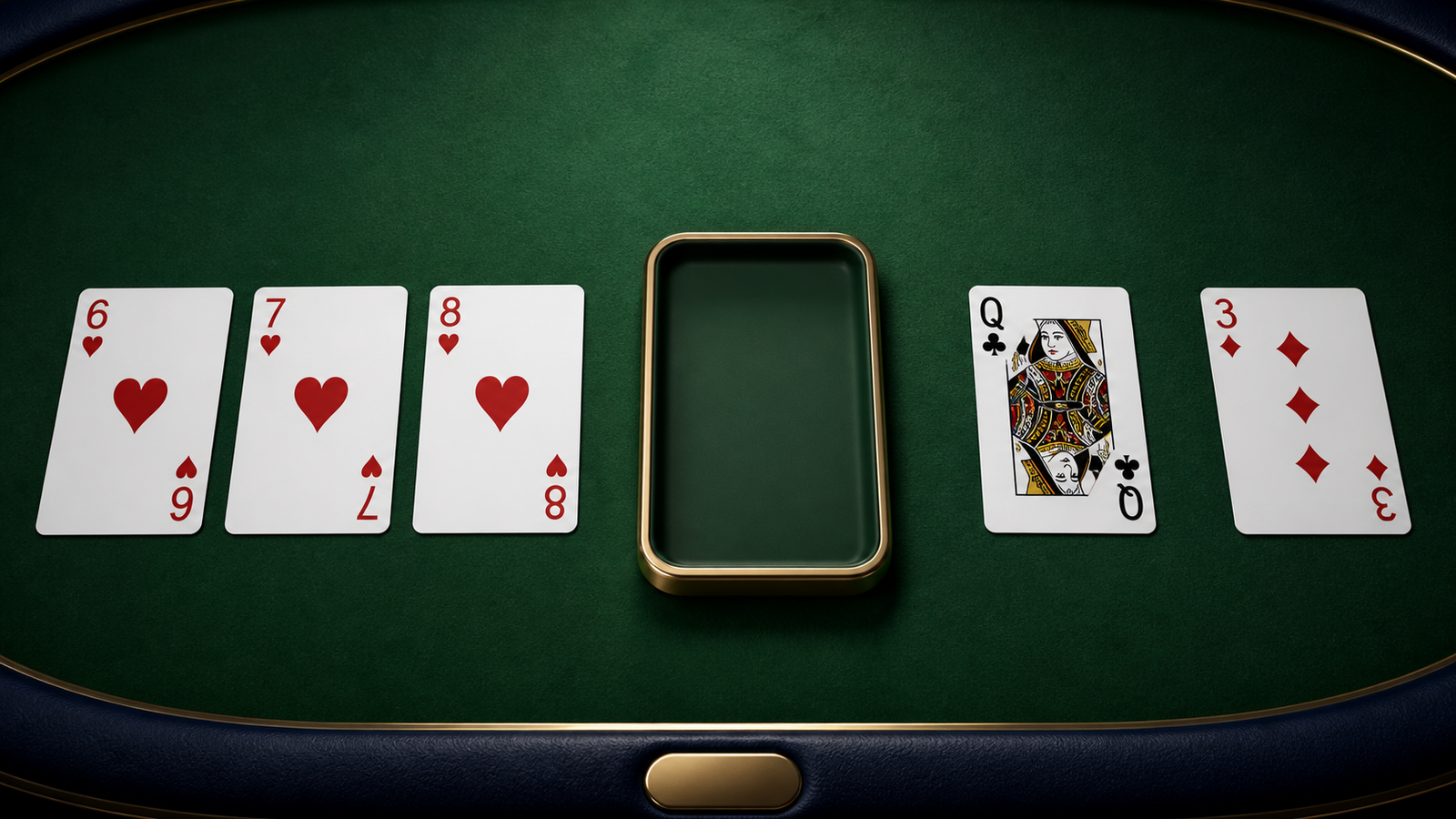
Suppose you hold 6H-7H and the open pile shows 8H. Taking 8H creates the natural sequence 6H-7H-8H immediately. That is a concrete role. If you hold only 6H and no 7H or 9H, the same pickup leaves a route needing another specific card, so its value is less certain.
Review the whole hand after the pickup
An immediate group can still be the wrong move if it breaks a better route elsewhere or leaves too many loose points. Check the separate second-sequence requirement and every remaining set or sequence before declaring. Platform rules can differ, so review the Indian Rummy rules guide. Adults should set time and budget limits, take breaks and never chase losses. See the responsible gaming guide.
FAQ
Should I always take a discard that completes a sequence?
No. Check the whole hand, including pure-sequence safety, the second sequence, loose points and the card you will discard next.
Does taking from the closed pile hide my plan?
The closed card is unknown, so it does not guarantee improvement. Compare that uncertainty with the visible card’s exact role without claiming to know hidden cards.
Can this test guarantee a better hand?
No. It is a decision check that reduces vague pickups. Draws, opponents and later discards remain uncertain.
Glossary
- Immediate-use test: A check that names the exact legal group a visible discard will complete or materially improve.
- Information cost: The table information revealed when a player chooses a known face-up discard.
- Loose card: A card not yet assigned to a valid sequence or set.
Responsible play note
Indian Rummy is a skill-based card game, but no article, checklist, or tournament routine can guarantee results. Use these guides to improve decisions, keep time and budget limits, and follow the laws and table rules that apply in your location.