
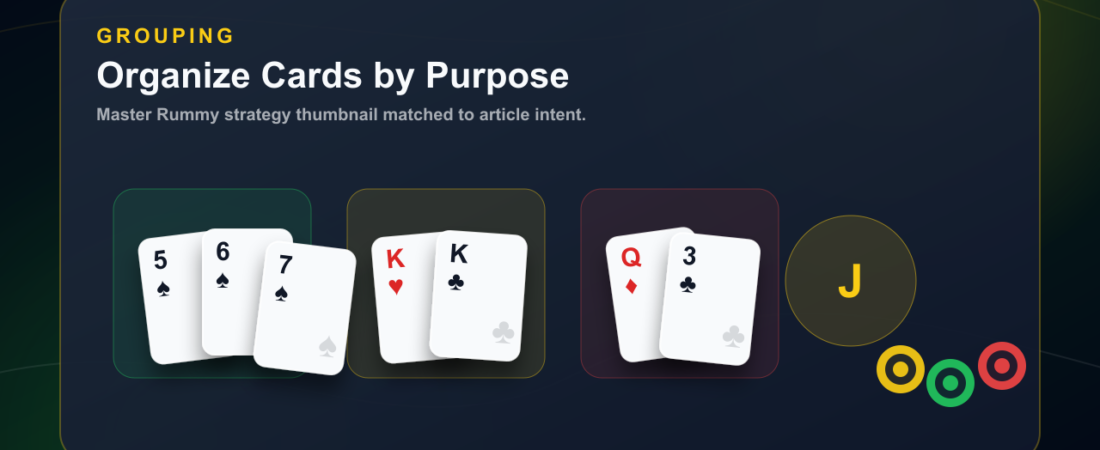
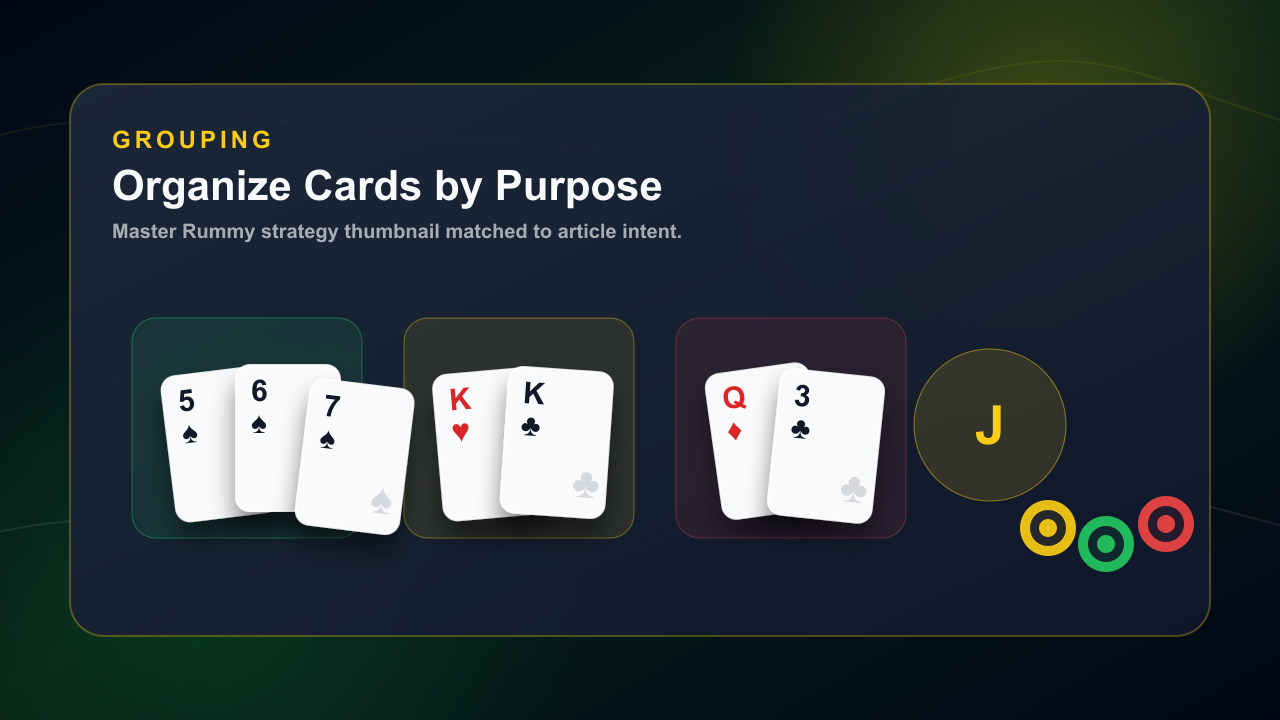
Card Grouping Strategy in Indian Rummy
A strong Rummy hand is easier to manage when every card has a role. Use this grouping method to organize sequences, sets, Jokers, and loose cards with less confusion.
Summary: Card grouping is the habit of sorting your 13 cards by purpose, not just by rank or suit. Separate pure sequence candidates first, then build secondary groups, place Jokers carefully, and keep deadwood visible so you can reduce points quickly.
Why grouping beats random sorting
Many players arrange cards only by suit or rank and then wonder why the hand feels unclear. Better grouping asks a different question: which cards are close to a valid group, which cards need help, and which cards are only increasing risk? That structure helps you make faster decisions after every draw.
Create a Pure Sequence Zone
Keep natural suited connectors together before anything else. This group should be easy to verify without using a Joker.
Separate Near-Complete Groups
Pairs, two-card runs, and three-card possibilities should be visible so you know what draw will improve the hand.
Place Jokers After Structure
Use Jokers where they complete a real group. Do not let a Joker hide the fact that your pure sequence is still missing.
Keep Deadwood Exposed
Loose high cards should not blend into promising groups. Keep them separate so you remember to reduce point risk.
Re-group after every draw
Grouping is not a one-time action at the start of the round. After each pickup or discard, quickly ask whether a card changed roles. A loose card may become a connector, and a hopeful connector may become deadwood.
Use the official download page for Android access and future iOS availability.