Points Rummy vs Pool Rummy: Check the Rules Before You Join
Points Rummy and Pool Rummy can use similar card-grouping ideas, but the format around a hand can differ. Check the room rules before play.
Summary: Use this comparison to separate card-grouping rules from format rules. A pure sequence remains a hand requirement in common Indian Rummy play, while scoring and exit terms must come from the active table.
Start with the rules shown for this table
Points Rummy and Pool Rummy are format names, not a substitute for the active room terms. Before joining, read the scoring display, the drop or exit information, the number of deals if shown, and the declaration instructions. Do not carry a number from an earlier table into a new one.
The hand still needs correct grouping. In common Indian Rummy play, a pure sequence uses consecutive natural cards of one suit and is required before a valid declaration. The table terms tell you how that hand is assessed in the current format.
Compare the format without inventing defaults
A Points Rummy table may present a score-focused result for an individual hand. A Pool Rummy table may present a running format across deals. Those labels do not prove the exact point cap, drop penalty, deal count, Joker rule, or declaration flow for every table. Read the terms displayed where you play.

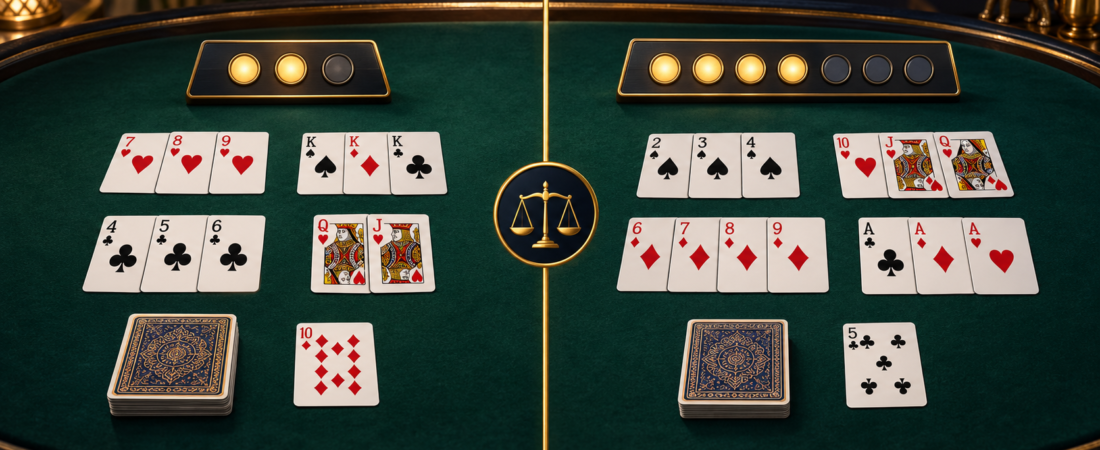
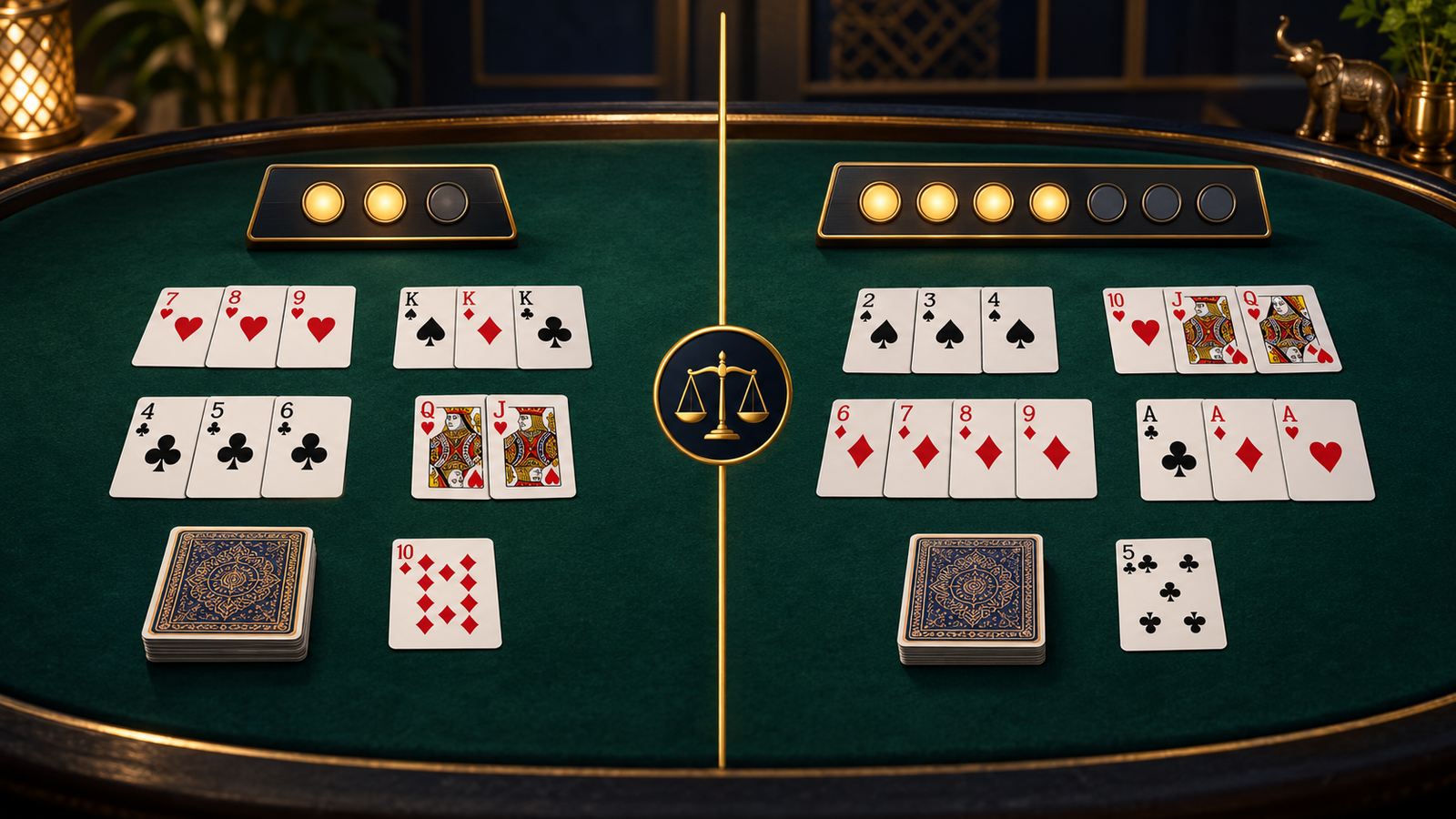
The image is an editorial comparison, not a screenshot of a live table. It does not state a score, cap, or penalty.
A short join checklist
- Confirm the format name and any visible scoring summary.
- Read the current drop, exit and declaration instructions.
- Check the active rules for Jokers and sequences.
- Keep one physical card in one group only.
- Review the complete hand before declaring.
Use the Indian Rummy rules guide for grouping basics and the first-turn drop guide for a hand-review framework. Neither page replaces the live table terms.
18+ only. Practise responsible play, set session and budget limits, take breaks, and do not chase losses. Follow local laws and the rules shown for the active table.
FAQ
Is Pool Rummy always played with the same number of deals?
No. Do not assume a deal count from the format name. Check the active table terms.
Does a format name remove the need for a pure sequence?
No. Check the active Indian Rummy rules and the full declaration requirements.
Can an old drop rule be reused at a new table?
No. Read the current table terms before using a drop or exit rule.
Glossary
Responsible play note
Indian Rummy is a skill-based card game, but no article, checklist, or tournament routine can guarantee results. Use these guides to improve decisions, keep time and budget limits, and follow the laws and table rules that apply in your location.