
The Card You Wanted Arrived: Regroup Before You Discard
The draw you were waiting for can produce a new mistake: fitting it into one group while mentally leaving an overlapping card in another. Pause before choosing the discard.
Summary: During a normal draw-and-discard turn, first place the new card in one provisional group. Rebuild the rest of the temporary hand from scratch, keep the natural pure sequence, confirm a second valid sequence and assign every physical card once. Only then choose the discard that returns the hand to 13 cards. The audit reduces avoidable grouping errors but cannot guarantee an outcome.
Why a useful draw can mislead
A card can complete the group you noticed without completing the hand. The new arrangement may borrow a connector from the pure sequence, use one card in two mental routes or leave a different card without a legal final home.
Indian Rummy declaration checks apply to the whole hand. One completed set or sequence does not repair an invalid group elsewhere.
The four-step regrouping audit
- Place the drawn card in one provisional group.
- Rebuild the natural pure sequence without Joker substitution.
- Confirm at least one more valid sequence, then check the remaining legal sets or sequences.
- Choose one actual loose card to discard and recount the remaining 13 cards.
Each physical card belongs to one final group. If two routes share a connector, compare them with the overlapping-card sequence guide.
Example: the seven arrives
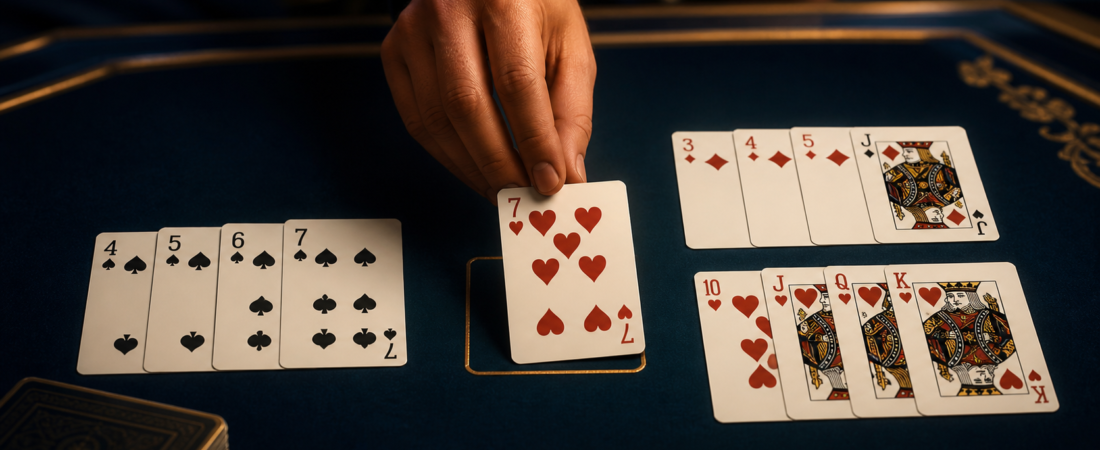
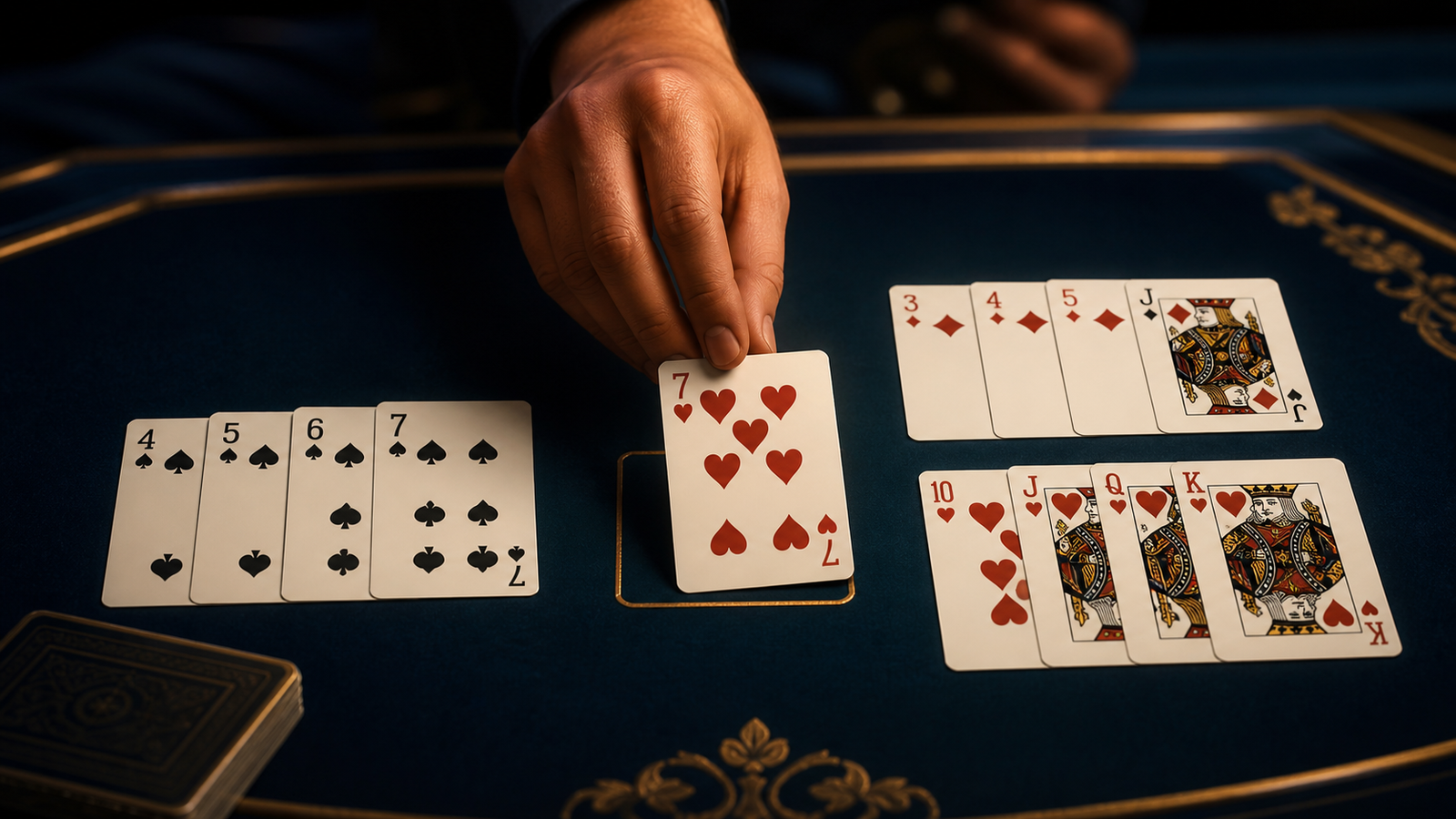
Imagine 4-5-6-7 of spades already forms the natural pure sequence, while 3-4-5 of diamonds is the second sequence and three kings form a set. You draw the 7 of hearts for another provisional route. Place it once, then account for every other card before deciding what to discard.
Do not move the 7 of spades out of the pure sequence merely because another layout looks tidy. The useful draw changes one route, not the declaration requirements.
Final checks before the declaration control
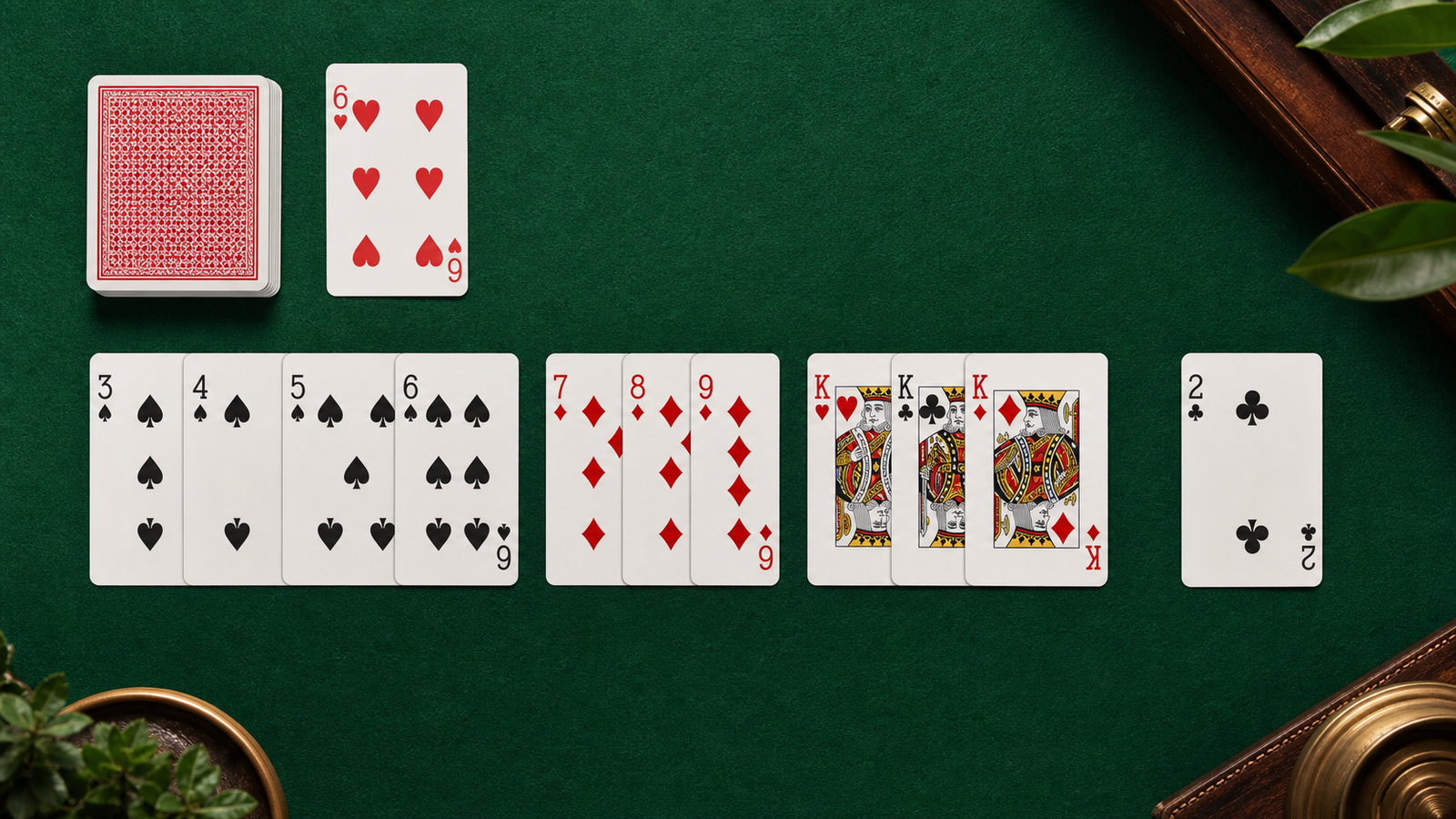
After the discard, count 13 cards and validate the natural pure sequence, second sequence, remaining groups and every Joker role. Platform interfaces and table variants can differ, so follow the active table rules and validator.
Use the final-turn declaration check and invalid declaration checklist before submitting. Adults 18+ should play within local rules and fixed time and spending limits. A careful audit reduces mistakes; it does not guarantee wins or income.
FAQ
Should I discard immediately when the wanted card arrives?
No. First regroup the full temporary hand and confirm which card is genuinely loose.
Can one card support two groups in the final declaration?
No. A physical card can appear in only one final group.
How many cards remain after the normal discard?
In common 13-card Indian Rummy, the hand returns to 13 cards after the draw and discard, subject to the active table rules.
Glossary
- Useful draw: A drawn card that improves or completes a planned group.
- Regrouping audit: A full-hand check that assigns every physical card to one provisional final group.
- Loose card: A card that has no chosen role in a valid sequence or set after regrouping.
Responsible play note
Indian Rummy is a skill-based card game, but no article, checklist, or tournament routine can guarantee results. Use these guides to improve decisions, keep time and budget limits, and follow the laws and table rules that apply in your location.