
High-Card Point Reduction in Indian Rummy: A Two-Pass Checklist
Point reduction is not a race to discard every face card; it is a structured comparison between meld value, information risk and ungrouped points.
Summary: First protect cards that form or extend a realistic pure sequence. Then compare each loose ace or face card by natural connectivity, set support, visible pickup signals and common point exposure. Exact scoring caps and drop penalties are platform-specific. This checklist limits avoidable points but does not guarantee outcomes.
Protect structure
Do not discard a high card that anchors the best natural pure-sequence route.
Price loose points
Aces and face cards commonly carry ten points when left unmatched.
Read visible signals
Avoid feeding a rank or suit an opponent has just collected openly.
Recheck each draw
Point exposure changes whenever a card gains or loses realistic connectivity.
How rummy points calculation changes the decision
In common 13-card Indian Rummy scoring, an ungrouped ace and each face card commonly count as ten points, number cards count their face value, and a validly grouped card does not add unmatched points. Platform scoring caps, drop values and invalid-declaration penalties can differ, so verify the active table rules instead of treating one site’s numbers as universal.
A connected QH-KH may be more useful than an isolated 8C because the high cards have a natural sequence route. Point value matters only after structural value is checked.
Two-pass high-card reduction checklist
- Pass one: sort by suit and lock the strongest natural pure-sequence route.
- Mark high cards already in a same-suit run, one-card gap or supported same-rank set.
- Separate truly isolated aces and face cards from cards with realistic natural outs.
- Pass two: compare the loose points each alternative leaves unmatched.
- Check the open pile for recent pickups before choosing a discard.
- Release the weakest isolated high card when it offers little structure and no strong safety reason to hold.
- Repeat after every draw and stop play if time or budget limits are reached.
Example hand: keep the connected queen, release the isolated king
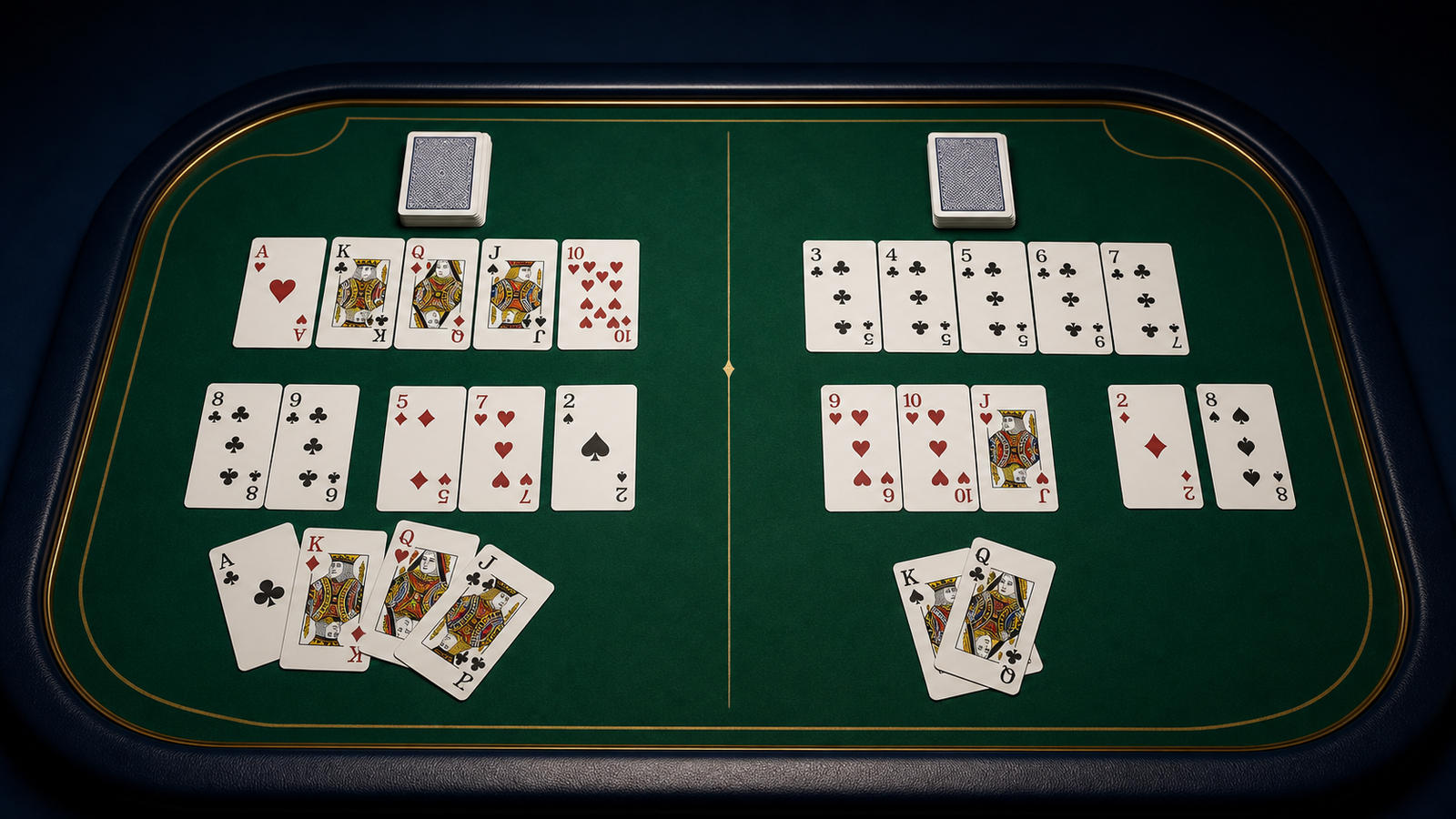
Suppose your hand includes 4C-5C-6C as a pure sequence, 9H-10H-QH, KS, 2D-3D and other cards. QH has a clear one-card route through JH and supports the second sequence. KS is isolated with no nearby spades or matching kings. If visible play does not suggest that discarding KS would directly feed an opponent, releasing KS reduces ten loose points while preserving the stronger heart route.
This is a probability-aware choice, not a prediction. An opponent may still need KS, and the next draw may change the best grouping.
Safe discard checks before point reduction
Point reduction should not ignore table observation. A card becomes riskier to discard when the next player has openly picked a nearby rank of the same suit or repeatedly avoided that suit in the discard pile. These are signals rather than certainties. Prefer low-information discards when choices are structurally similar, keep the pure sequence intact, and distinguish Indian Rummy scoring from Gin Rummy deadwood rules.
FAQ
How many points are ace, king, queen and jack in Indian Rummy?
They commonly count as ten points each when unmatched, but always confirm the active platform’s scoring rules and caps.
Should I discard every high card early?
No. Keep a high card when it supports a strong pure or second-sequence route; release isolated high cards only after comparing structure and discard safety.
What is point reduction in rummy?
It is the disciplined process of lowering the value of cards likely to remain unmatched without damaging a realistic declaration plan.
Can a point-reduction checklist guarantee lower losses?
No. It can reduce avoidable exposure, but draws, opponents and table conditions remain uncertain.
Glossary
- Point exposure: The total value likely to remain unmatched if the hand ends before completion.
- Face card: A jack, queen or king; each commonly carries ten unmatched points in Indian Rummy.
- Discard signal: Visible pickup or discard information that changes the estimated safety of releasing a card.
- Deadwood: A Gin Rummy term for unmatched cards; it should not replace Indian Rummy declaration and points terminology.
Responsible play note
Indian Rummy is a skill-based card game, but no article, checklist, or tournament routine can guarantee results. Use these guides to improve decisions, keep time and budget limits, and follow the laws and table rules that apply in your location.