
Ace Sequence Rules in Indian Rummy: A-2-3 or Q-K-A?
An ace can sit at an edge of a sequence, but it should not be treated as a bridge between king and two.
Summary: Many 13-card Indian Rummy tables accept same-suit A-2-3 and Q-K-A runs, while K-A-2 is not a normal consecutive sequence. Platform validation can differ, so confirm the active rules before declaring. Build the mandatory pure sequence with natural cards and keep Indian Rummy separate from Gin Rummy terminology.
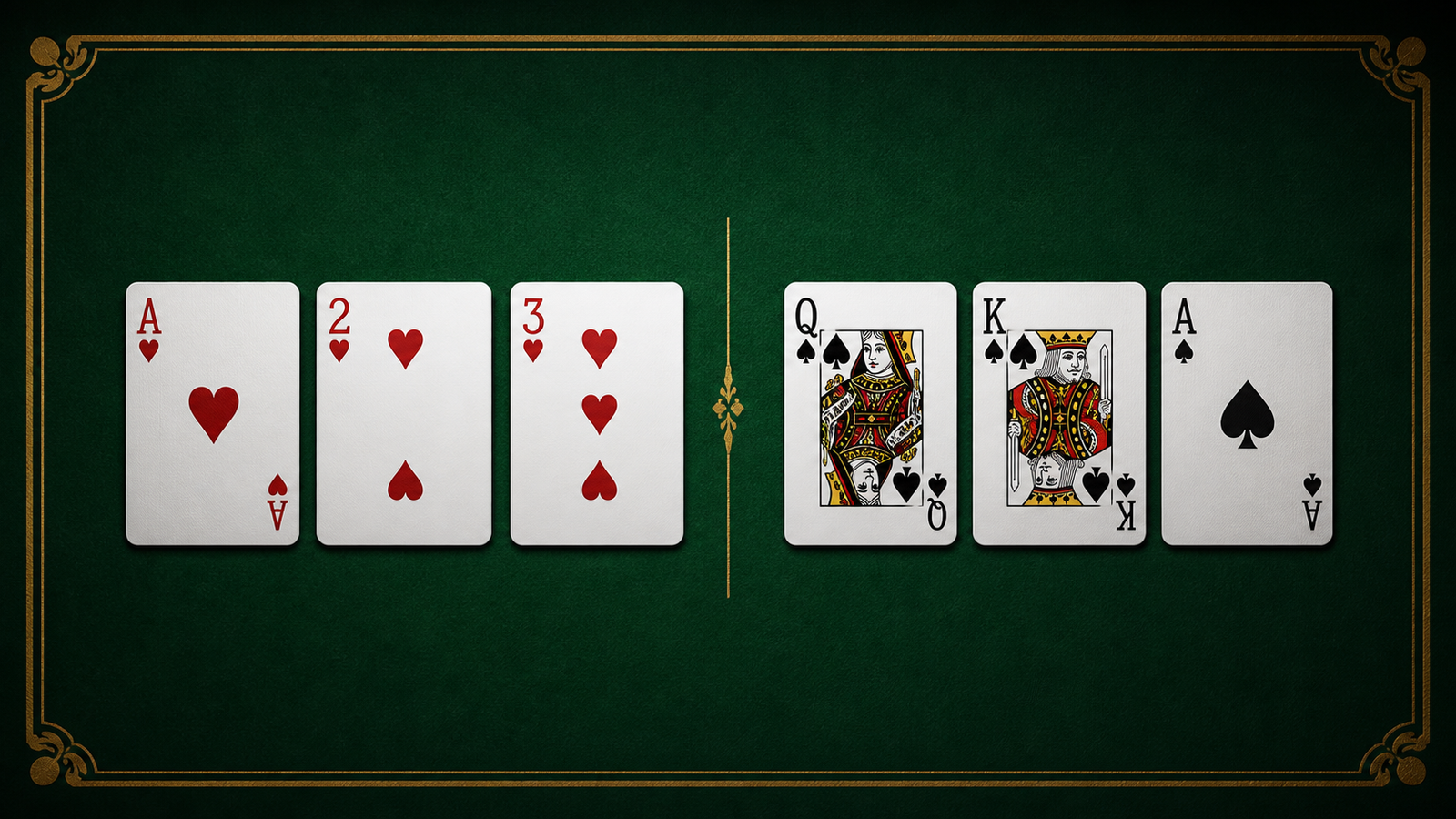
Low-ace route
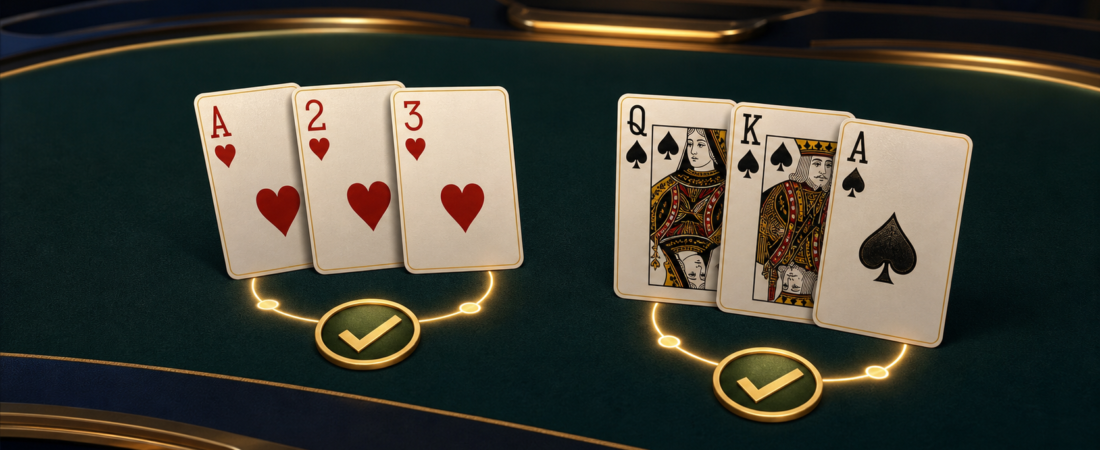
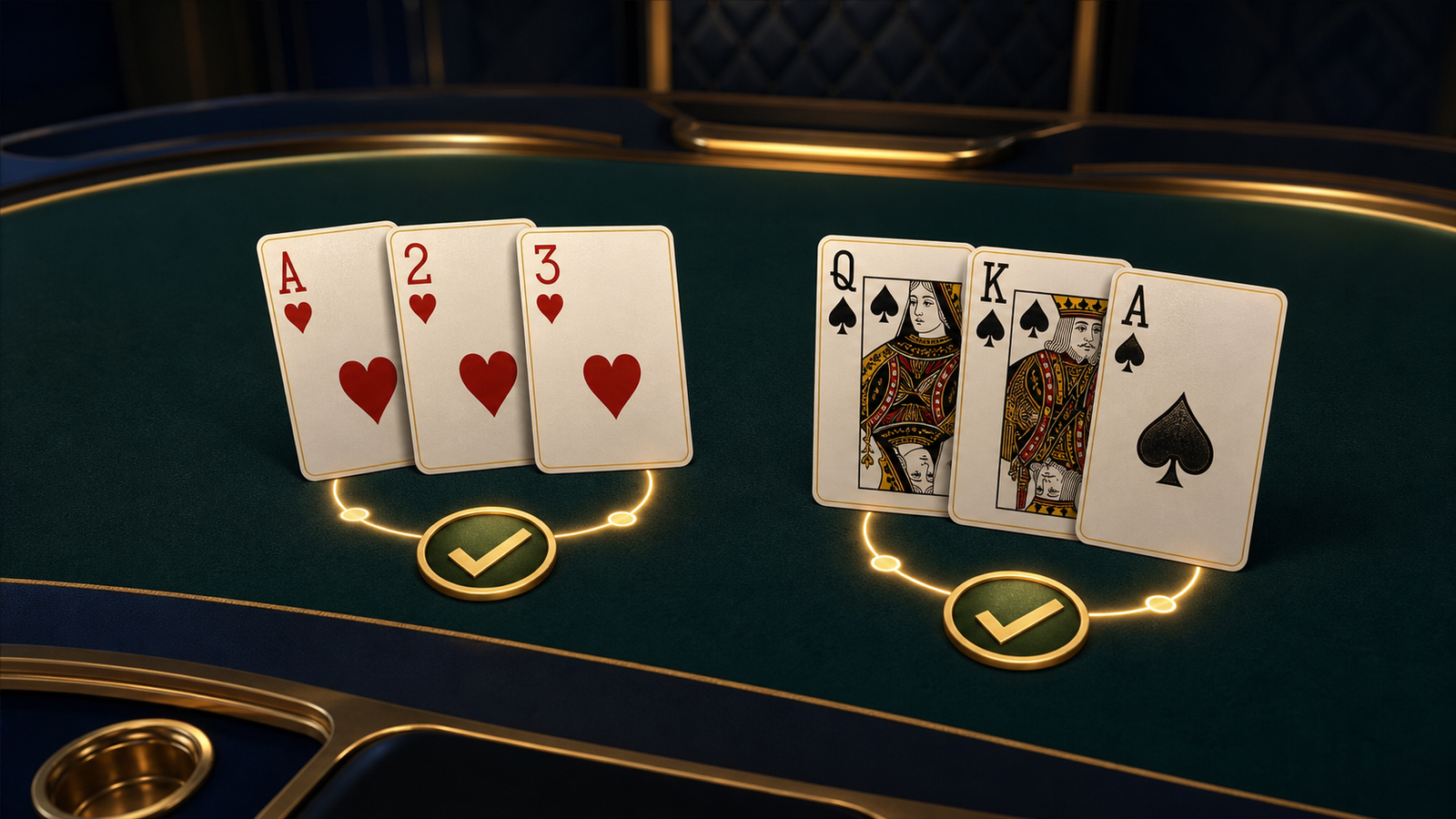
A-2-3 of one suit is a common natural sequence example.
High-ace route
Q-K-A of one suit is commonly treated as a high-ace run.
Do not wrap
K-A-2 is not a normal consecutive sequence.
Check the table
The active platform validator remains authoritative.
How the ace fits common 13-card Rummy rules
In many 13-card Indian Rummy rule sets, an ace can be used low in A-2-3 or high in Q-K-A when all cards share one suit. It does not normally wrap through both ends, so K-A-2 is not treated as a consecutive sequence. A pure sequence uses only natural cards and no Joker substitution.
Ace sequence declaration checklist
- Confirm all cards in the run share the same suit.
- Use the ace at one edge only: before 2 or after king.
- Reject wraparound shapes such as K-A-2.
- Confirm whether the run is natural or uses a Joker.
- Verify the hand still contains the required second sequence.
- Check every remaining card belongs to a valid group.
- Use the table’s preview or validation control when available.
- Keep responsible time and budget limits.
Example: two valid-looking edge sequences
A♥-2♥-3♥ is a natural low-ace run, while Q♠-K♠-A♠ is a natural high-ace run under many Indian Rummy tables. Either can serve as a pure sequence when no Joker is used. A mixed-suit A♥-2♣-3♥ is not a sequence, and K♠-A♠-2♠ should not be assumed valid because ranks do not wrap around.
Indian Rummy and Gin Rummy are different
Indian Rummy commonly deals 13 cards and focuses on arranging the full hand into sequences and sets with a mandatory pure sequence. Gin Rummy uses melds, knocking and deadwood scoring. Ace treatment and scoring conventions should be checked within the specific game instead of transferred between them. Platform-specific Indian Rummy validators may also differ, so verify before declaring.
FAQ
Is A-2-3 a valid pure sequence in Indian Rummy?
It is commonly accepted when all three cards share one suit and no Joker is used, subject to the active table rules.
Can Q-K-A form a sequence?
Many 13-card Indian Rummy tables accept same-suit Q-K-A as a high-ace sequence; confirm the platform validator.
Is K-A-2 a valid sequence?
It is not normally treated as consecutive because the ace does not wrap between king and two.
Glossary
- Low ace: Using ace immediately before two in a same-suit run such as A-2-3.
- High ace: Using ace immediately after king in a same-suit run such as Q-K-A.
- Wraparound sequence: A proposed run that crosses from king through ace to two; this is not normally valid in Indian Rummy.
Responsible play note
Indian Rummy is a skill-based card game, but no article, checklist, or tournament routine can guarantee results. Use these guides to improve decisions, keep time and budget limits, and follow the laws and table rules that apply in your location.