Middle-Card Connectivity: A Better Indian Rummy Opening-Hand Test
A middle card is useful because it can connect on both sides, but only when its suit, neighbours, and role in a pure sequence support that flexibility.
Summary: Score each opening-hand card by same-suit neighbours, number of natural extensions, pure-sequence value, and point exposure. Keep connected middle cards when they support realistic routes; release isolated cards when they add risk without structure. This framework improves discipline but cannot guarantee results.
Count neighbours
Same-suit cards one or two ranks away create practical natural extensions.
Prioritise purity
Natural connectors matter most when they can form the mandatory pure sequence.
Measure flexibility
Middle ranks can extend upward or downward, but only within the same suit.
Price the risk
Compare structural value with the points carried by loose cards.
What middle-card connectivity means
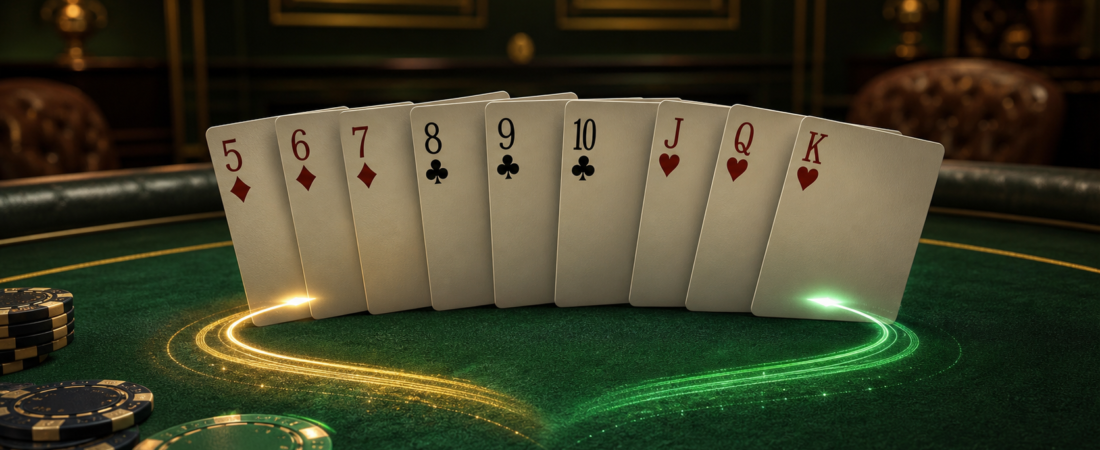
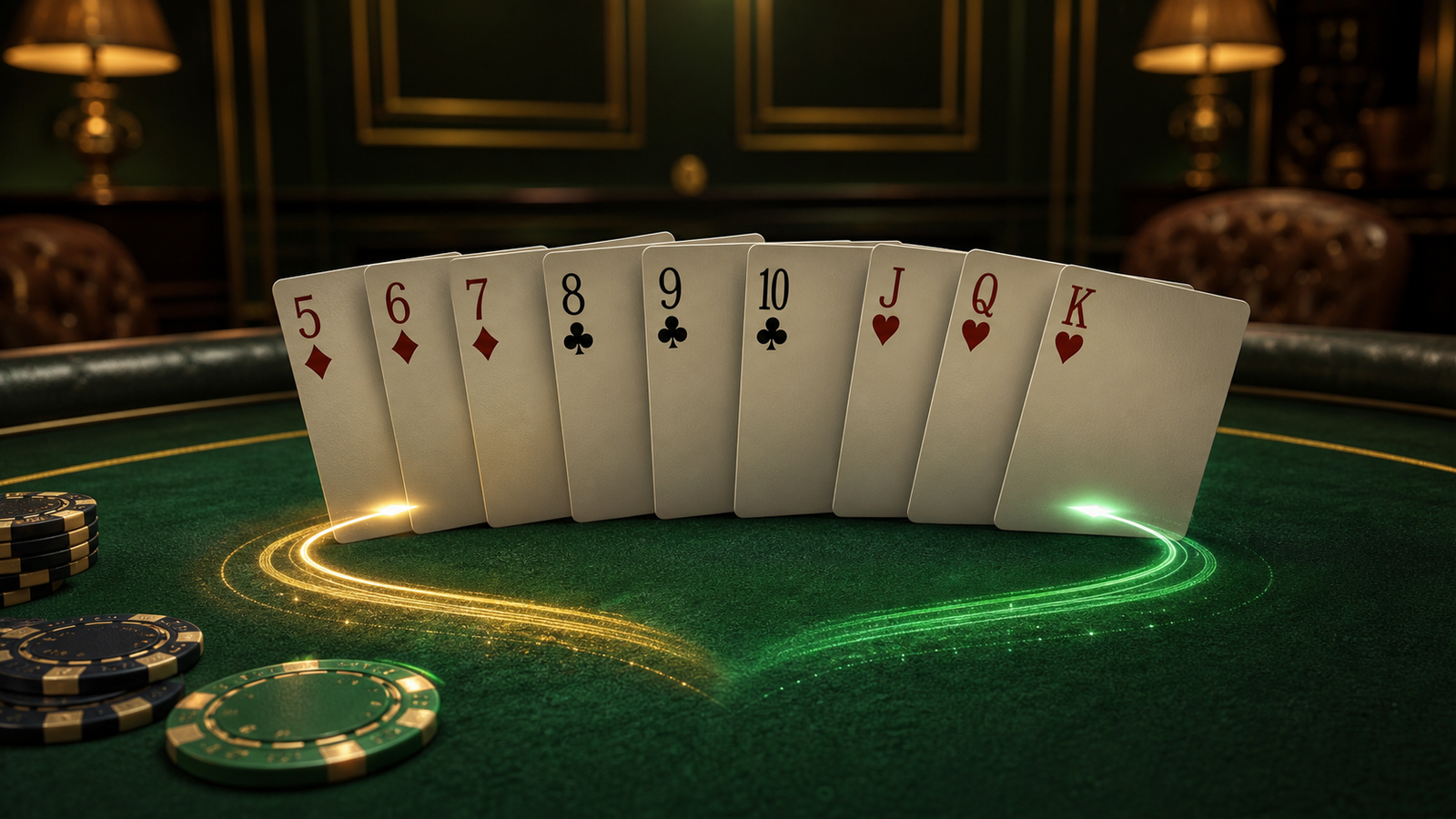
In 13-card Indian Rummy, cards such as 6, 7, and 8 often have more natural sequence extensions than edge ranks because they can connect on either side. A 7H beside 6H and 9H has two clear routes: 5H-6H-7H or 7H-8H-9H. A 7H beside unrelated suits has no such connectivity. Suit and distance matter more than rank alone.
Opening-hand connectivity checklist
- Sort the hand by suit before judging individual ranks.
- Mark every same-suit neighbour one rank away and every one-card gap two ranks away.
- Identify the strongest natural route to a pure sequence.
- Give extra value to cards that participate in two realistic same-suit routes.
- Separate connected cards from isolated high cards and weak duplicates.
- Check visible discards before assuming a connector remains available.
- Re-score after each draw and keep firm time and budget limits.
Example hand: flexible 7 versus isolated queen
Suppose your opening hand contains 5D-6D, 8D-9D, 7C, QC, QH and other cards. The diamond middle cards form two adjoining routes: 5D-6D needs 4D or 7D, while 8D-9D needs 7D or 10D. The 7D would connect both clusters, so it is highly valuable if drawn. By contrast, 7C is isolated unless nearby clubs exist, and the queens currently offer only set potential plus higher point exposure. Protect the best natural pure-sequence route before chasing a speculative set.
Stable rules and platform differences
The common 13-card Indian Rummy declaration structure requires at least two sequences, including at least one pure sequence; other cards may form valid sequences or sets. Deck count, Joker selection, duplicate-card rules, scoring caps, and declaration interfaces can vary by platform, so check the active table rules. Gin Rummy uses knocking and deadwood scoring and should not be mixed with Indian Rummy rules.
FAQ
Why are middle cards often flexible in Indian Rummy?
They can have natural same-suit extensions on both sides, although actual value depends on the surrounding cards and visible availability.
Should I always keep a connected middle card?
No. Keep it when it supports a realistic pure or second-sequence route; point risk and stronger alternatives can justify releasing it.
Can an opening-hand connectivity score guarantee a win?
No. It improves hand evaluation but cannot control draws, opponents, or declaration timing.
Glossary
- Connectivity: The number and quality of same-suit natural links a card has to possible sequences.
- Middle card: A card away from the rank edges that may extend naturally in two directions within its suit.
- Pure-sequence route: A group of natural same-suit cards that can become a consecutive run without Joker substitution.
Responsible play note
Indian Rummy is a skill-based card game, but no article, checklist, or tournament routine can guarantee results. Use these guides to improve decisions, keep time and budget limits, and follow the laws and table rules that apply in your location.