
Sequence or Set? What to Build After a Pure Sequence
Once a pure sequence is safe, the next decision is not automatically to make a set; it is to finish the most realistic valid group.
Summary: After securing a pure sequence, compare unfinished groups by completion distance, live connectors, Joker efficiency, and point exposure. Prefer the route that needs fewer specific cards without breaking the pure sequence. This decision framework supports disciplined play but cannot guarantee a result.
Protect purity
Do not reuse or break the completed pure sequence for a tempting set.
Count distance
Prefer a group that needs one realistic connector over one needing two exact cards.
Spend Jokers well
Use a Joker where it removes the largest practical completion gap.
Reduce risk
If routes are similar, lower exposed high-card points first.
Why sequence versus set is a conditional choice
In 13-card Indian Rummy, a valid declaration generally needs at least two sequences, including one pure sequence; remaining cards may be arranged into valid sequences or sets. That means a set cannot replace the second required sequence. After the pure sequence is complete, first confirm whether you already have another sequence path, then compare the remaining set and sequence candidates.
Sequence-or-set decision checklist
- Lock the completed pure sequence and do not count its cards elsewhere.
- Confirm that the hand still has a route to the second required sequence.
- Count how many specific cards each unfinished group needs.
- Check visible discards and cards already picked to judge whether connectors may be less available.
- Assign a Joker only after comparing which gap it removes most efficiently.
- If two routes are equally close, prefer the one that reduces high-card point exposure.
- Reassess after every draw and keep firm time and budget limits.
Example hand: compare completion distance
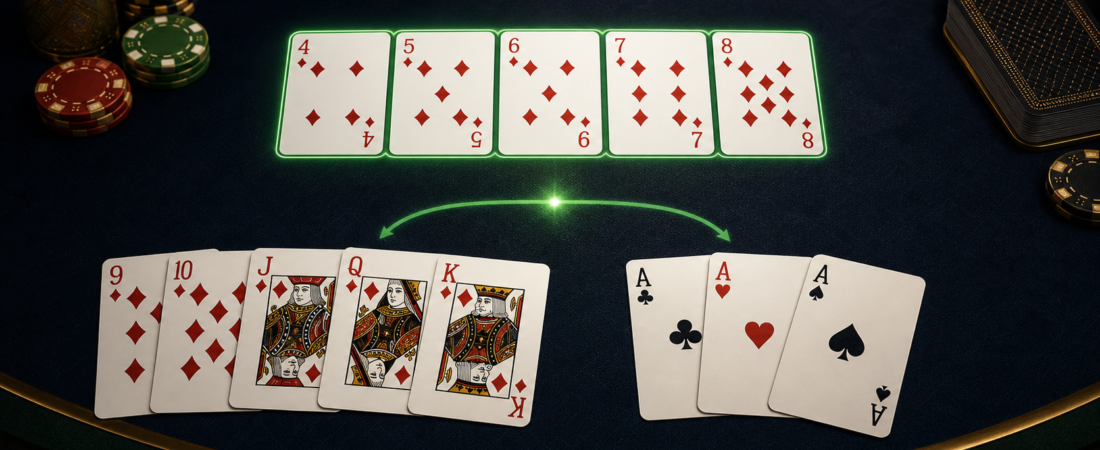
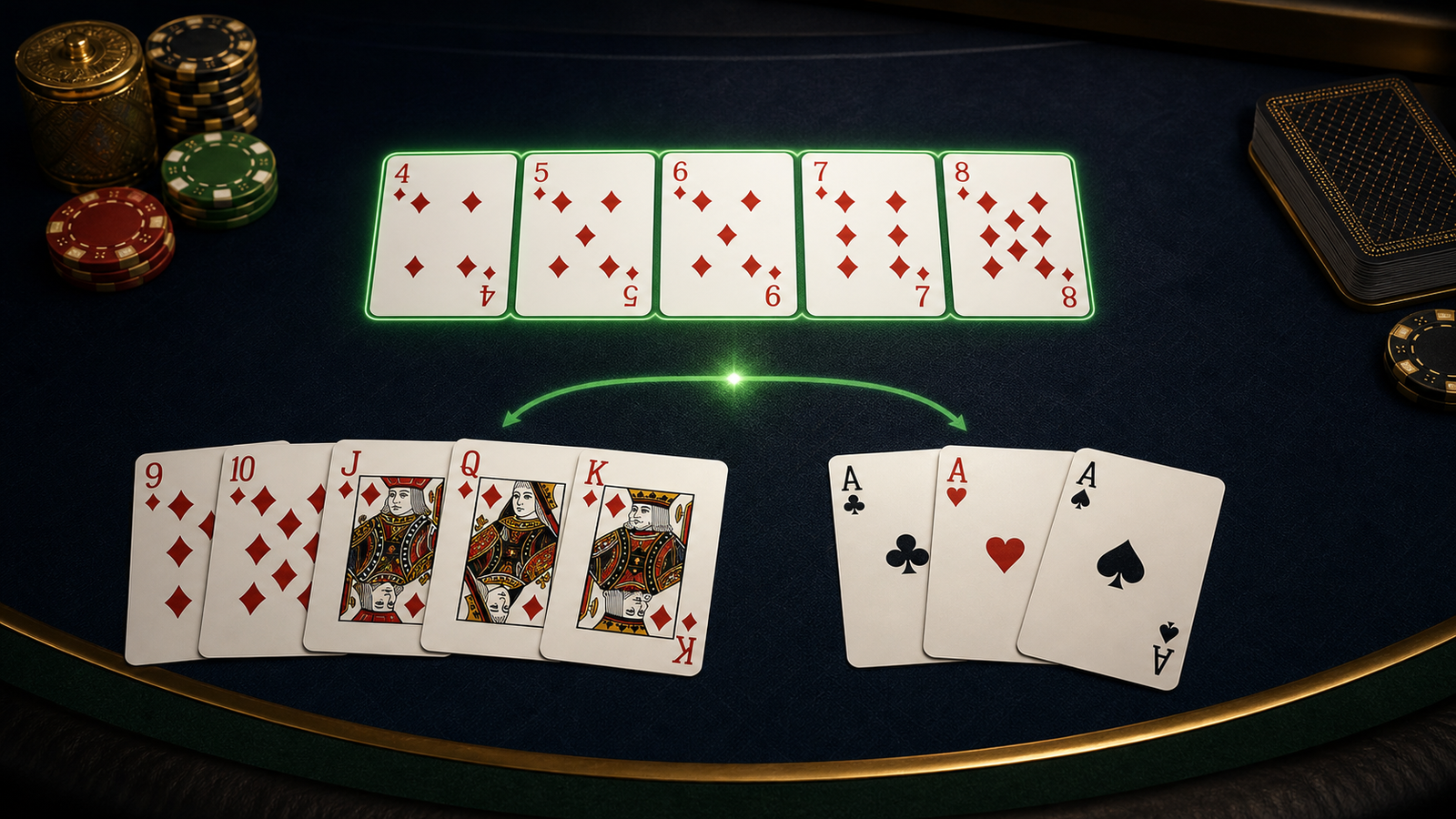
Suppose 4D-5D-6D is your pure sequence. You also hold 9H-10H, 8C-8D, a Joker, QH and KC. The heart route needs 8H or JH to become a natural sequence, while the pair of eights needs one of the two remaining eights for a set. Because the hand still needs a second sequence, protecting 9H-10H matters. The Joker could complete that sequence if table rules allow, while QH may extend it naturally. Do not move a diamond from the pure sequence merely to chase a set.
Stable rules and platform differences
The common 13-card Indian Rummy declaration structure requires at least two sequences, with at least one pure sequence; valid sets can organize other cards. Deck count, Joker selection, duplicate-card rules, scoring caps, and declaration interfaces can vary by platform, so check the active table rules. Gin Rummy uses melds, knocking, and deadwood scoring and is a different game.
FAQ
Should I build a sequence or a set after making a pure sequence?
First protect a route to the second required sequence, then choose the closest valid group based on connectors, Joker efficiency, and point exposure.
Can a set replace the second sequence in 13-card Indian Rummy?
No. A standard valid declaration needs at least two sequences, including at least one pure sequence; confirm platform-specific details at the active table.
Does this sequence-or-set framework guarantee a win?
No. It organizes decisions but cannot control draws, opponents, or the timing of declarations.
Glossary
- Pure sequence: A same-suit consecutive run made without using a Joker as a substitute.
- Set: A valid group of cards of the same rank and different suits, subject to the active table rules.
- Completion distance: The number and specificity of cards still needed to turn a candidate group into a valid sequence or set.
Responsible play note
Indian Rummy is a skill-based card game, but no article, checklist, or tournament routine can guarantee results. Use these guides to improve decisions, keep time and budget limits, and follow the laws and table rules that apply in your location.