Open-Ended vs Inside Sequence Draws in Indian Rummy
Two incomplete runs can look equally close, yet they may not offer the same number of useful future cards.
Summary: An open-ended run such as 6H-7H can improve with 5H or 8H, while an inside-gap shape such as 6H-8H mainly waits for 7H. Count useful connectors, protect the pure sequence path, and reassess after every draw. This improves decisions but never guarantees a result.
Count connectors
Open-ended shapes often have two immediate same-suit ranks that can extend them.
Respect the gap
An inside-gap shape usually depends on one exact middle rank.
Protect purity
Keep the best natural path for the required pure sequence.
Recheck
Opponent pickups and discards can change which path deserves patience.
What open-ended and inside draws mean
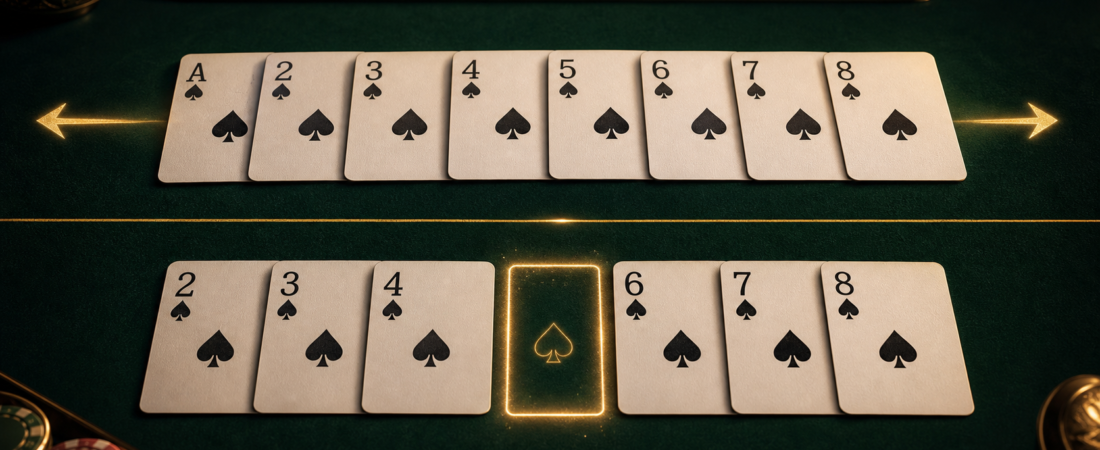
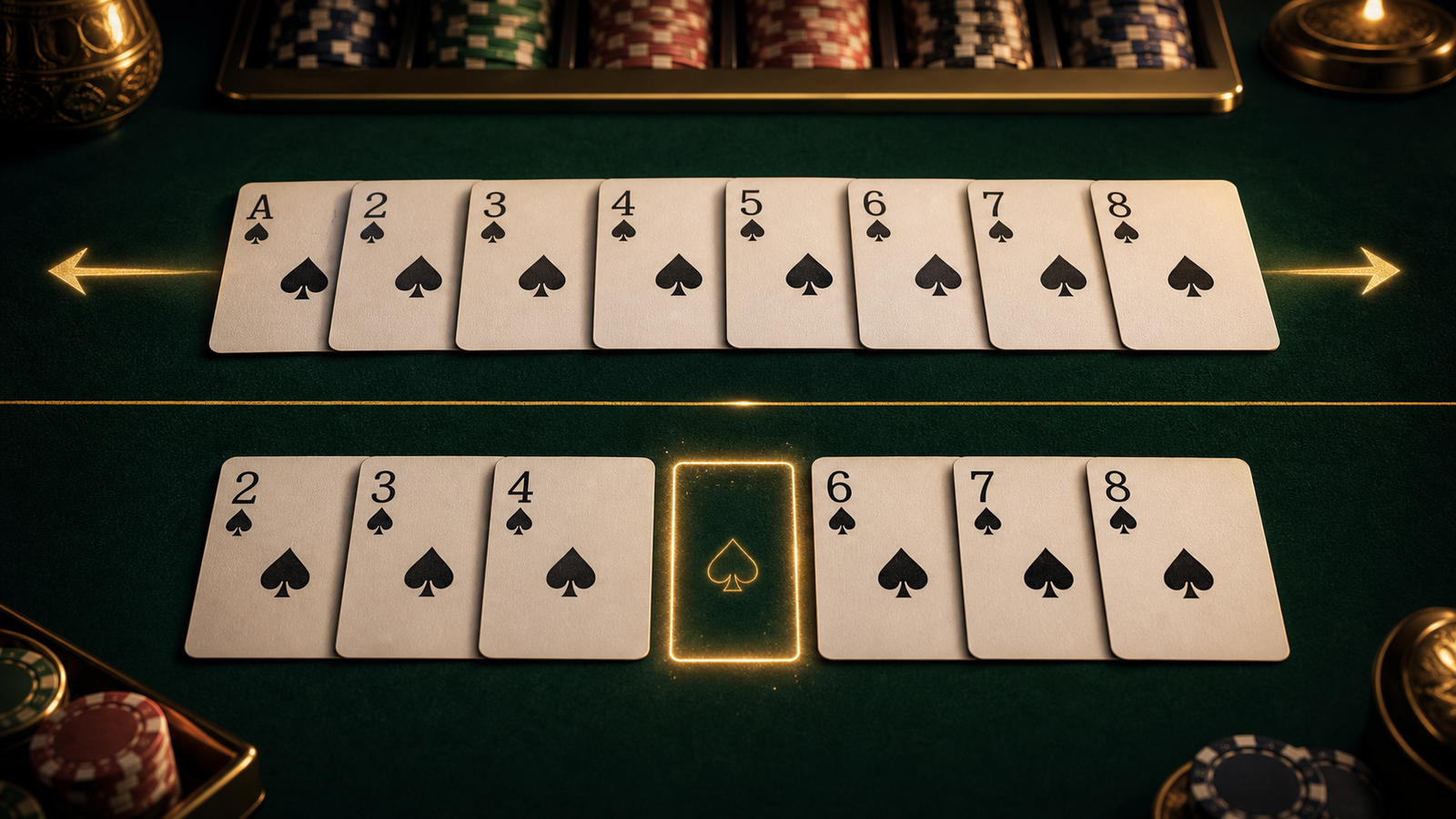
In this guide, an open-ended shape has room to extend on either side: 6H-7H can use 5H or 8H. An inside-gap shape is missing a middle card: 6H-8H needs 7H. These are decision labels, not special platform rules. A valid Indian Rummy declaration still depends on complete sequences and sets, including the required pure sequence.
Sequence draw decision checklist
- Mark the best natural same-suit route toward a pure sequence.
- List the exact ranks that improve each incomplete group.
- Prefer the path with more useful connectors when point exposure is similar.
- Check visible discards before waiting for a rank that may already be unavailable.
- Do not spend a Joker on the group reserved as your pure sequence.
- Use time and budget limits; stop if sequence chasing becomes rushed play.
Example hand: compare two incomplete runs
Suppose you hold 6H-7H and 4C-6C. The hearts can immediately improve with 5H or 8H, while the clubs need 5C to close the inside gap. If neither suit has been heavily discarded and other factors are equal, the heart path is more flexible. This does not mean holding it forever: reassess when discards reveal fewer realistic connectors.
Rules boundary and probability caveat
The pure-sequence requirement and grouping cards into valid sequences or sets are stable Indian Rummy concepts. Deck count, Joker selection, timers, scoring and declaration handling can vary by platform. Visible cards improve judgment, but unseen-card counts are estimates unless the full table state is known. Gin Rummy uses a different ruleset and deadwood scoring.
FAQ
What is an open-ended sequence draw in Indian Rummy?
It is an incomplete same-suit run that can be extended by a rank on either side, such as 5H or 8H for 6H-7H.
Is an open-ended run always better than an inside gap?
No. Visible discards, point exposure, duplicate decks and other groups can make the inside connector more practical.
Does counting connectors guarantee a win?
No. It structures decisions but cannot control future draws or opponents.
Glossary
- Pure sequence: A same-suit consecutive run made without using a Joker as a substitute.
- Open-ended draw: An incomplete same-suit run with an immediate extension rank on either side.
- Inside gap: An incomplete same-suit run waiting for a missing rank between two held cards.
Responsible play note
Indian Rummy is a skill-based card game, but no article, checklist, or tournament routine can guarantee results. Use these guides to improve decisions, keep time and budget limits, and follow the laws and table rules that apply in your location.