
How to Reduce Points After a Bad Draw in Indian Rummy
A bad draw does not mean you should panic. Point control is about protecting valid structure while reducing loose high-card exposure step by step.
Summary: After a bad draw in Indian Rummy, protect your pure sequence path first, separate loose high cards, compare discard risk against point exposure, and check whether a drop is table-legal before the hand becomes too costly. This improves discipline, but it never guarantees a result.
Protect structure
Keep the natural same-suit run that can become your required pure sequence.
Reduce exposure
Loose A, K, Q, J, and 10 cards need a clear role or an exit plan.
Assess drop value
Only consider a drop after checking the platform’s current point and timing rules.
Use Jokers calmly
Jokers can reduce pressure in weak groups, but they do not replace a pure sequence.
Start with point exposure, not frustration
In 13-card Indian Rummy, a weak draw can tempt beginners to throw cards quickly. A better approach is to count which cards are actually increasing risk. High cards create more point exposure when they are loose, but they may still be worth holding if they support a likely pure sequence or a strong set. The aim is disciplined damage control, not a promise of recovery.
Bad-draw point reduction checklist
- Identify your strongest pure sequence path before discarding anything.
- Separate loose high cards from cards that support sequences or sets.
- Discard the high card with the weakest future connection first, unless it clearly helps an opponent’s visible pickup pattern.
- Use a Joker to complete an impure group only after the natural sequence plan is protected.
- Compare continuing risk with the table’s drop option, point cap, and time controls.
- Pause if the hand starts triggering rushed decisions; responsible play includes time and budget limits.
Example hand: reduce points without breaking the hand
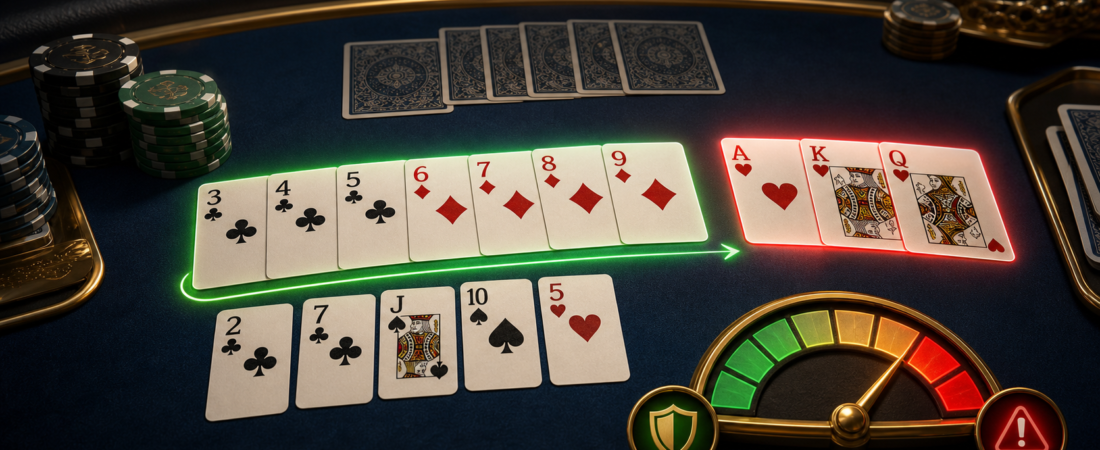
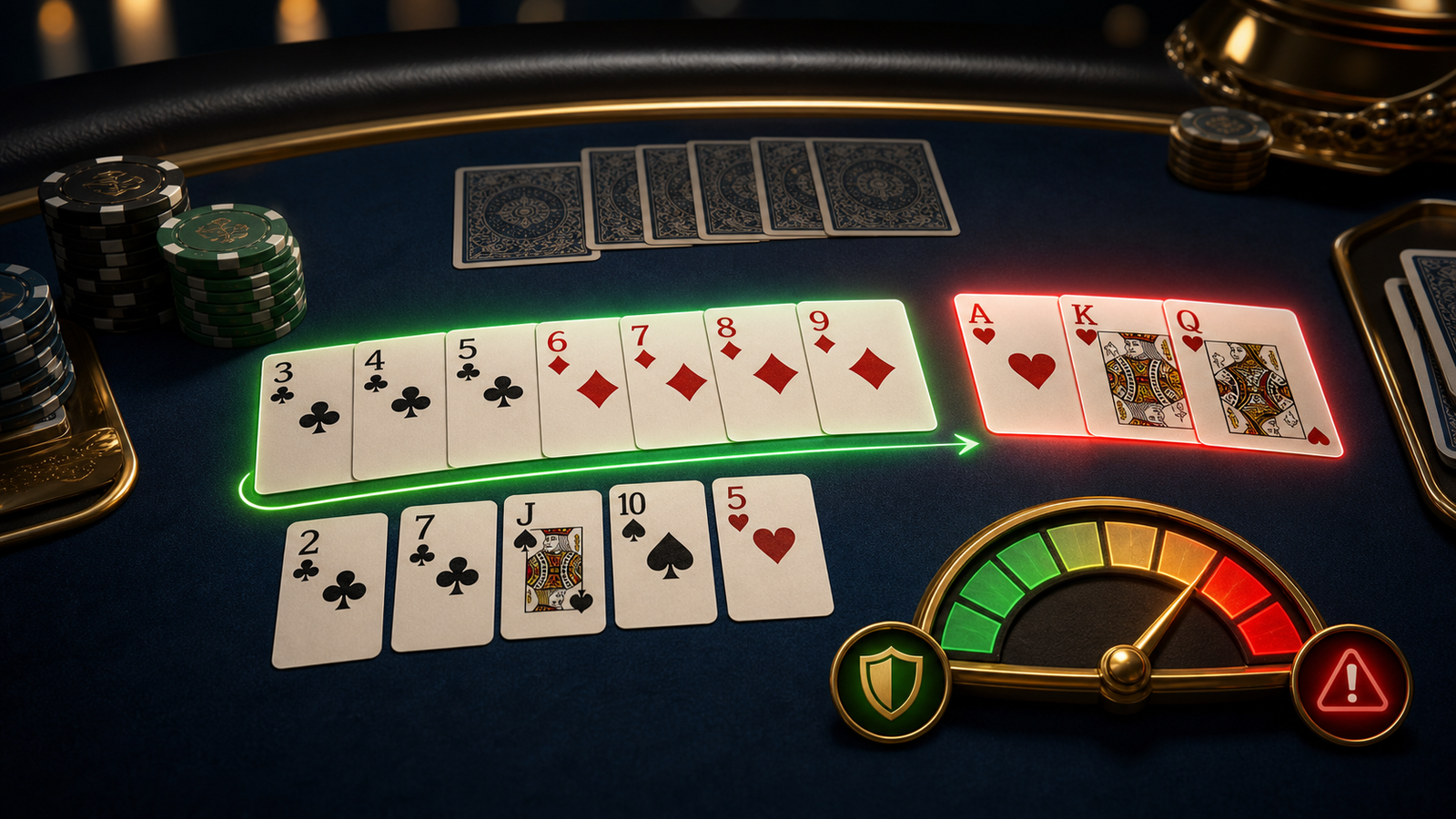
Suppose you hold 4C 5C, 7D 8D, AH, KH, QS, 10S, printed Joker, 2H, 9C, and 3D. The 4C-5C and 7D-8D pairs can grow into natural sequence paths, so avoid breaking them early. AH, KH, QS, and 10S are higher-risk cards unless they connect soon. If the next draw does not improve them, releasing the least connected high card may reduce exposure while preserving the pure sequence plan.
Stable rules vs platform differences
The need for valid sequences and sets, including at least one pure sequence in Indian Rummy, is a stable rule concept. Exact drop values, point caps, declaration penalties, and table timers can vary by platform. Gin Rummy terms such as deadwood belong to a different format and should not be used as a direct scoring shortcut for Indian Rummy.
FAQ
How do I reduce points after a bad draw in Indian Rummy?
Protect the pure sequence path, identify loose high cards, discard the weakest high-card risk carefully, and compare the hand against platform-specific drop rules.
Should I always drop after a bad opening hand?
No. Drop decisions depend on the table’s rules, your point exposure, sequence potential, and responsible play limits. Check the platform rules before relying on this option.
Can point reduction guarantee a win?
No. It can reduce avoidable losses and improve decisions, but draws, opponent choices, and table rules still affect the result.
Glossary
- Pure sequence: A same-suit consecutive run made without using a Joker as a substitute.
- Point exposure: The penalty risk created by loose high-value cards if another player declares before your hand is grouped.
- Drop: A platform-specific option to leave a hand under defined timing and scoring rules.
Responsible play note
Indian Rummy is a skill-based card game, but no article, checklist, or tournament routine can guarantee results. Use these guides to improve decisions, keep time and budget limits, and follow the laws and table rules that apply in your location.