Meld in Rummy Meaning: How Indian Rummy Players Build Valid Groups
Meld is a useful card-game word, but Indian Rummy players should connect it to practical hand grouping: sequences, sets, Jokers, and the pure sequence rule.
Summary: In Indian Rummy, a meld can be understood as a valid group of cards, usually a sequence or set. The safest beginner approach is to first secure a pure sequence, then build other sequences or sets, and finally verify every card before declaring while keeping responsible play limits in mind.
Pure sequence
Start with a natural same-suit run because it is the foundation of a valid Indian Rummy declaration.
Set
A set groups cards of the same rank from different suits, subject to platform rules.
Joker support
Jokers can help impure groups but should not replace the pure sequence requirement.
Final check
A valid-looking group still needs one last review before declaration.
What does meld mean in Rummy?
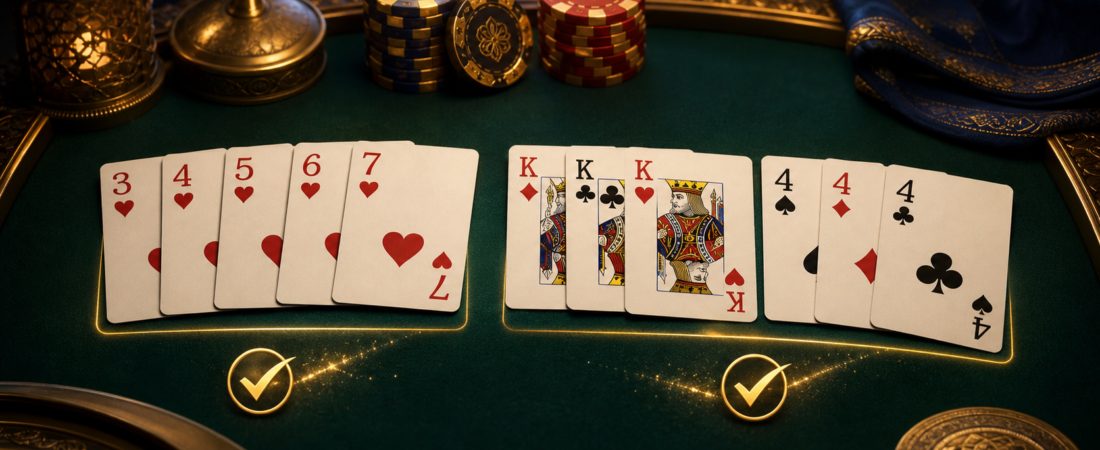
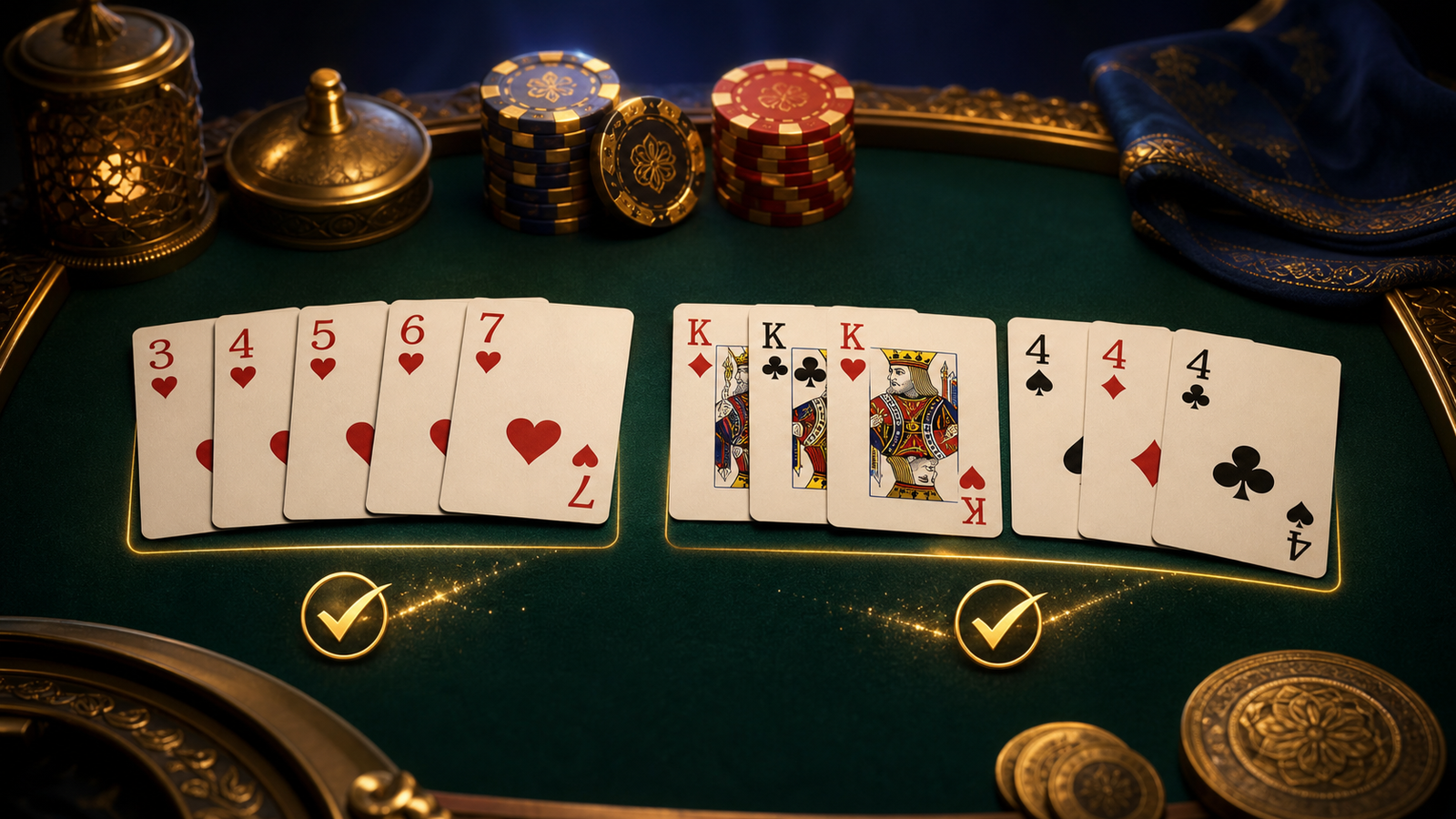
In many Rummy-family games, a meld is a legal group of cards. In Indian Rummy, the practical equivalent is a sequence or set that helps organize your 13-card hand. The word is common in global card-game explanations, but Indian Rummy articles should still use local rule language such as pure sequence, impure sequence, set, and declaration.
Indian Rummy vs Gin Rummy wording
Gin Rummy often talks about melds and deadwood. Indian Rummy usually focuses on sequences, sets, Jokers, and valid declaration. Do not assume Gin Rummy deadwood rules apply to 13-card Indian Rummy. If a platform uses the word meld, read it as a grouping concept and then check the platform-specific table rules.
Example hand: turning cards into valid groups
Suppose your hand includes 5♥ 6♥ 7♥, 9♣ 10♣ printed Joker, Q♦ Q♠ Q♥, 2♣ 3♣, A♠, and K♦. The heart run is a pure sequence. The club run with Joker can be an impure sequence if the table rules allow it. The queens form a set. The remaining loose cards need a plan before declaration.
Beginner checklist for every meld
- Does at least one group form a pure sequence without Joker substitution?
- Is each sequence same-suit and consecutive?
- Does each set use same-rank cards from valid suits?
- Is each Joker placed only where it legally supports a group?
- Are any cards left outside a valid group?
FAQ
Is a meld the same as a sequence in Indian Rummy?
Not exactly. A meld is a broad grouping term, while Indian Rummy uses specific groups such as pure sequence, impure sequence, and set.
Can a Joker complete every meld?
No. Jokers can support many impure groups, but they cannot substitute for the required pure sequence.
Should beginners learn Gin Rummy meld rules first?
Only for comparison. Indian Rummy and Gin Rummy use different scoring language and declaration logic, so keep the rules separate and use responsible play limits.
Glossary
- Meld: A broad Rummy-family term for a legal group of cards.
- Pure sequence: A same-suit consecutive run made without using a Joker as a substitute.
- Deadwood: A Gin Rummy term for unmelded cards; do not directly apply it to Indian Rummy declarations.
Responsible play note
Indian Rummy is a skill-based card game, but no article, checklist, or tournament routine can guarantee results. Use these guides to improve decisions, keep time and budget limits, and follow the laws and table rules that apply in your location.