
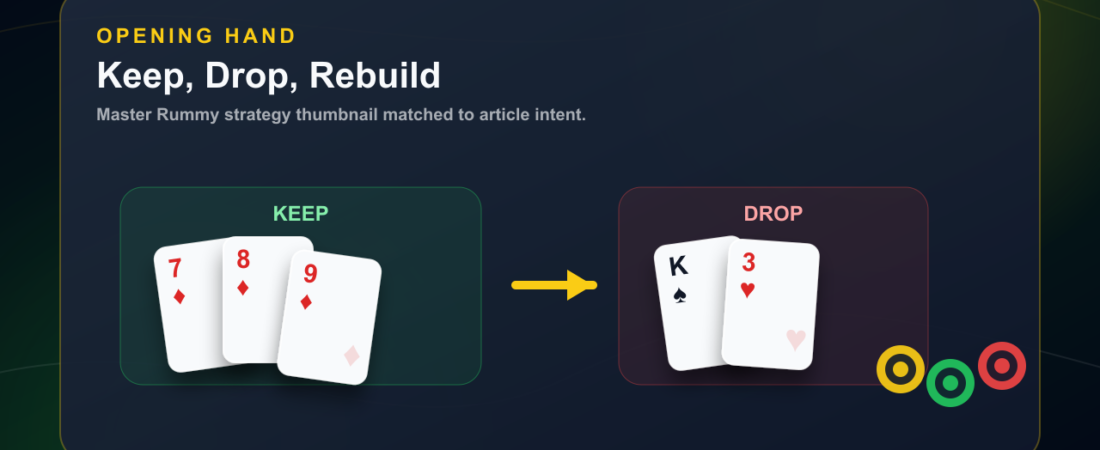
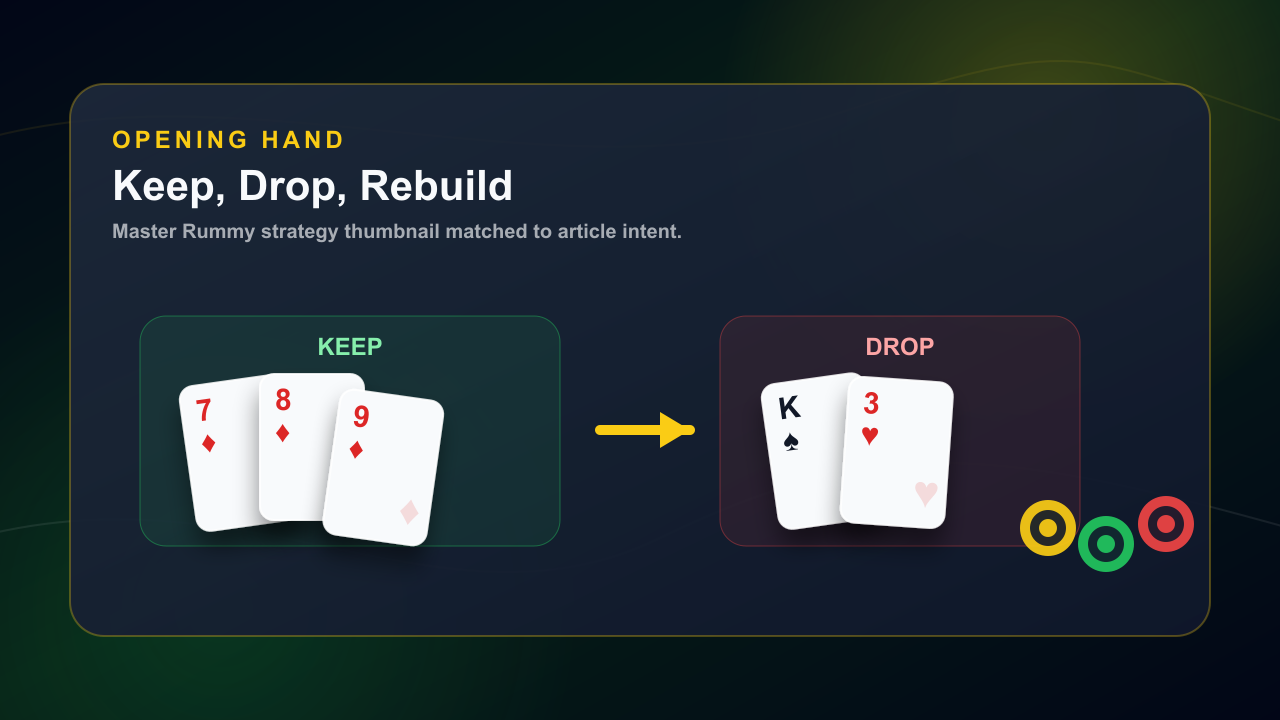
Rummy Opening Hand Evaluation
The first scan of your 13 cards shapes the whole game. Learn a simple checklist for deciding what to keep, what to drop, and how to avoid early mistakes.
Summary: Opening-hand evaluation helps you avoid emotional decisions. By checking pure sequence potential, high-card risk, Joker value, and discard safety, you can choose a clearer game plan from the first turn.
Start with structure, not excitement
New players often react to one or two attractive cards and miss the bigger structure. Stronger players first ask whether the hand has a realistic pure sequence path, how much deadwood is exposed, and whether the Jokers actually solve the right problems.
Scan for Pure Sequence Potential
Look for natural suited runs or two-card connectors first. Without a pure sequence path, even a hand with several pairs can remain risky.
Count High-Card Exposure
Loose face cards and tens can increase penalty pressure. Keep them when they connect; release them when they only add deadwood.
Place Jokers After the Scan
A Joker is most useful after you identify the natural sequence plan. Do not let a Joker distract you from building a valid foundation.
Choose Safe Early Discards
Avoid discarding cards that obviously complete visible opponent pickups. Early safety can prevent giving away a clean sequence.
A checklist beats guesswork
Before your first discard, ask four questions: Where is my pure sequence? Which high cards are loose? Where can the Joker reduce risk? Which discard is least helpful to opponents? This simple routine makes every hand easier to manage.
Use the official download page for Android access and future iOS availability.