
Middle Card Strategy in Indian Rummy
Middle cards can connect in more directions than edge cards. Learn how to use them to build flexible sequences faster and protect your declaration plan.
Summary: A strong Indian Rummy hand often depends on how well you manage middle cards such as 5, 6, 7, 8, and 9. These cards create more sequence options, help reduce deadwood, and give you better discard control.
Why middle cards create more options
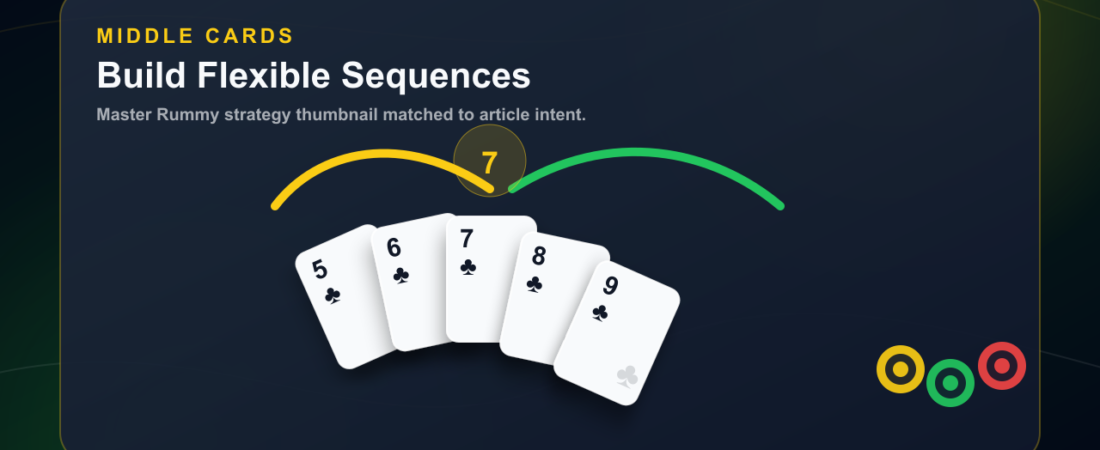
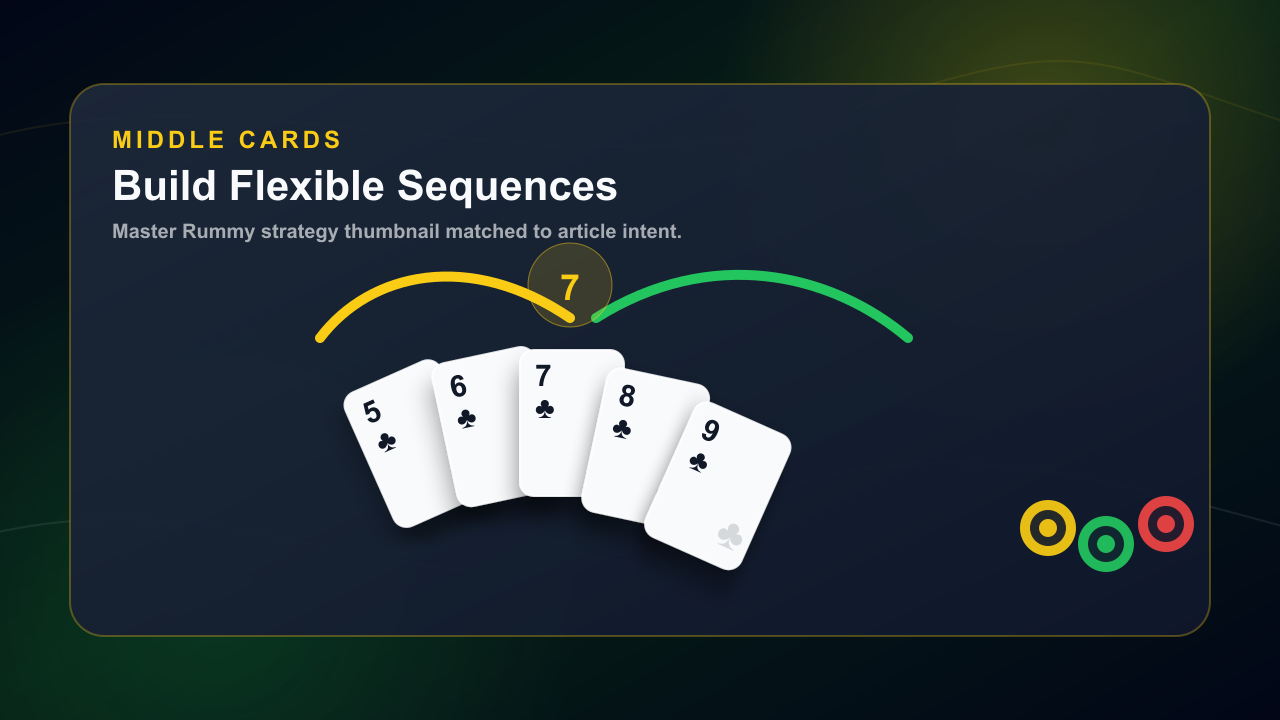
In Indian Rummy, cards near the middle of a suit can usually connect upward or downward. For example, a 7 can support 5-6-7, 6-7-8, or 7-8-9. That flexibility gives you more live draws than a corner card such as ace or king, especially in the first few turns.
Keep Flexible Connectors Early
A two-card connector such as 6-7 or 8-9 of the same suit is worth protecting early because it can become a pure sequence from either side.
Avoid Locking Too Soon
Do not force a middle card into a weak set before checking whether it can complete a cleaner natural run. Sequence flexibility is often more valuable than a rushed group.
Reduce Deadwood With Purpose
If a middle card no longer connects after several turns, release it only after comparing point risk and opponent pickup patterns.
Use It to Support Pure Sequence
Middle cards are especially useful when building the required pure sequence, because they create multiple paths without relying on Jokers.
Turn flexibility into cleaner decisions
Middle card strategy is not about holding every connector forever. It is about keeping the cards that create the most realistic sequence paths, then letting go when the table flow changes. That habit improves both speed and safety.
Use the official download page for Android access and future iOS availability.