
Can You Split a Six-Card Run into Two Pure Sequences?
A long natural run can hide two valid groups. Check the split point, then audit the seven cards outside that run.
Summary: Under common 13-card rules, six consecutive natural cards of one suit can form two separate three-card pure sequences. Each group needs its own cards; the full hand still needs validation.
Count the groups, not just the length
You may have a six-card run and still be looking for a second sequence. Before waiting for another card, check whether that run can be divided into two valid groups. Under common 13-card Indian Rummy rules, a sequence has at least three consecutive cards of the same suit, and a declaration needs at least two sequences, including one pure sequence. Confirm the active table rules before using this example.
The Indian Rummy rules guide distinguishes sequences from sets and explains the need for a pure sequence. In this example, every card is natural and none of the listed ranks is a designated wild Joker. No substitute is doing the work of a missing card.
Example: split three through eight of hearts
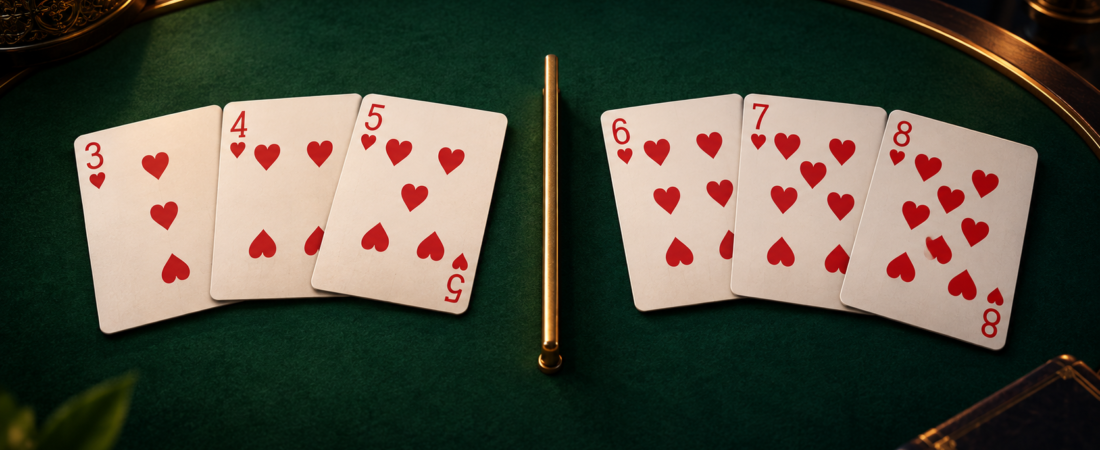
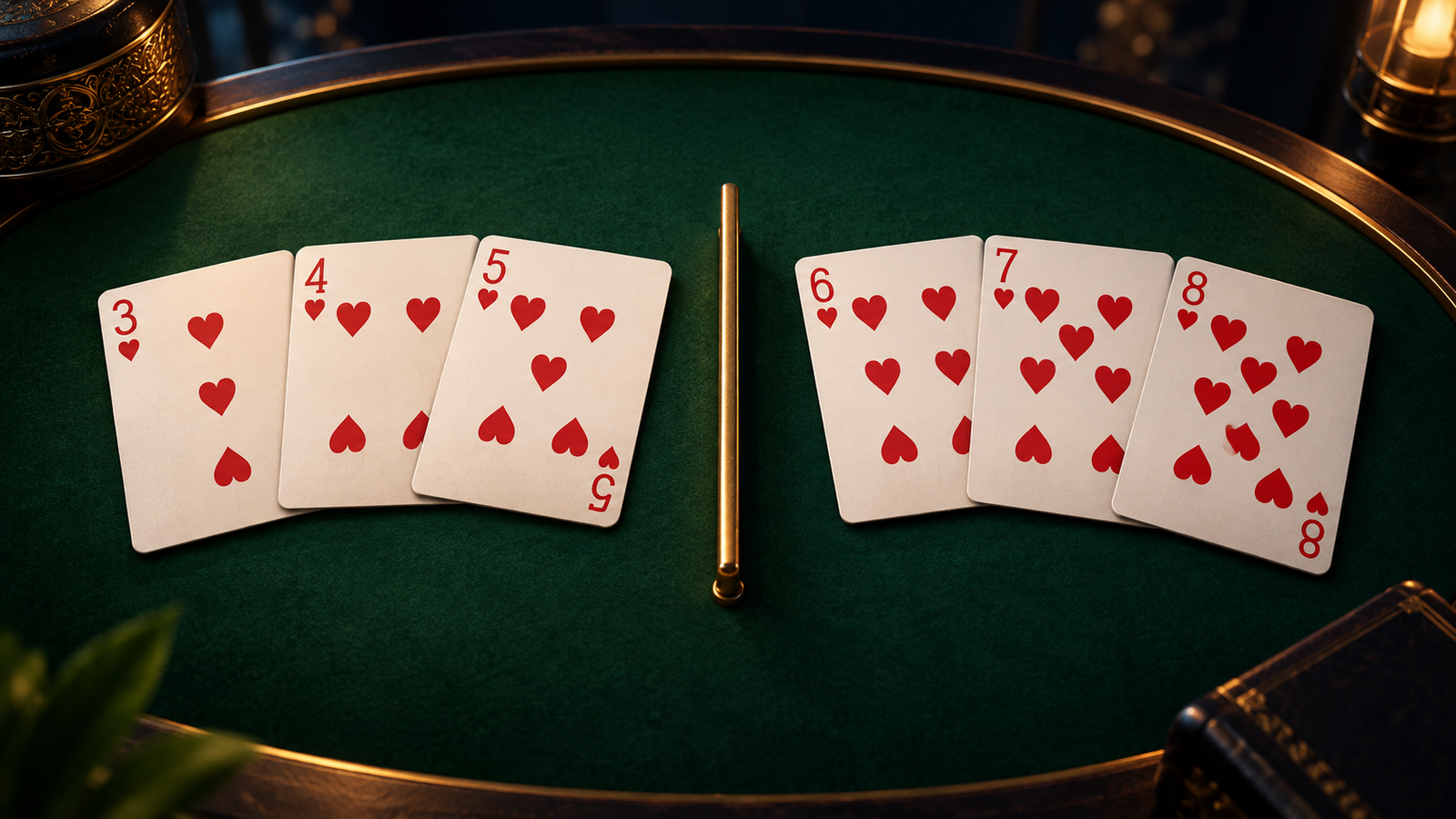
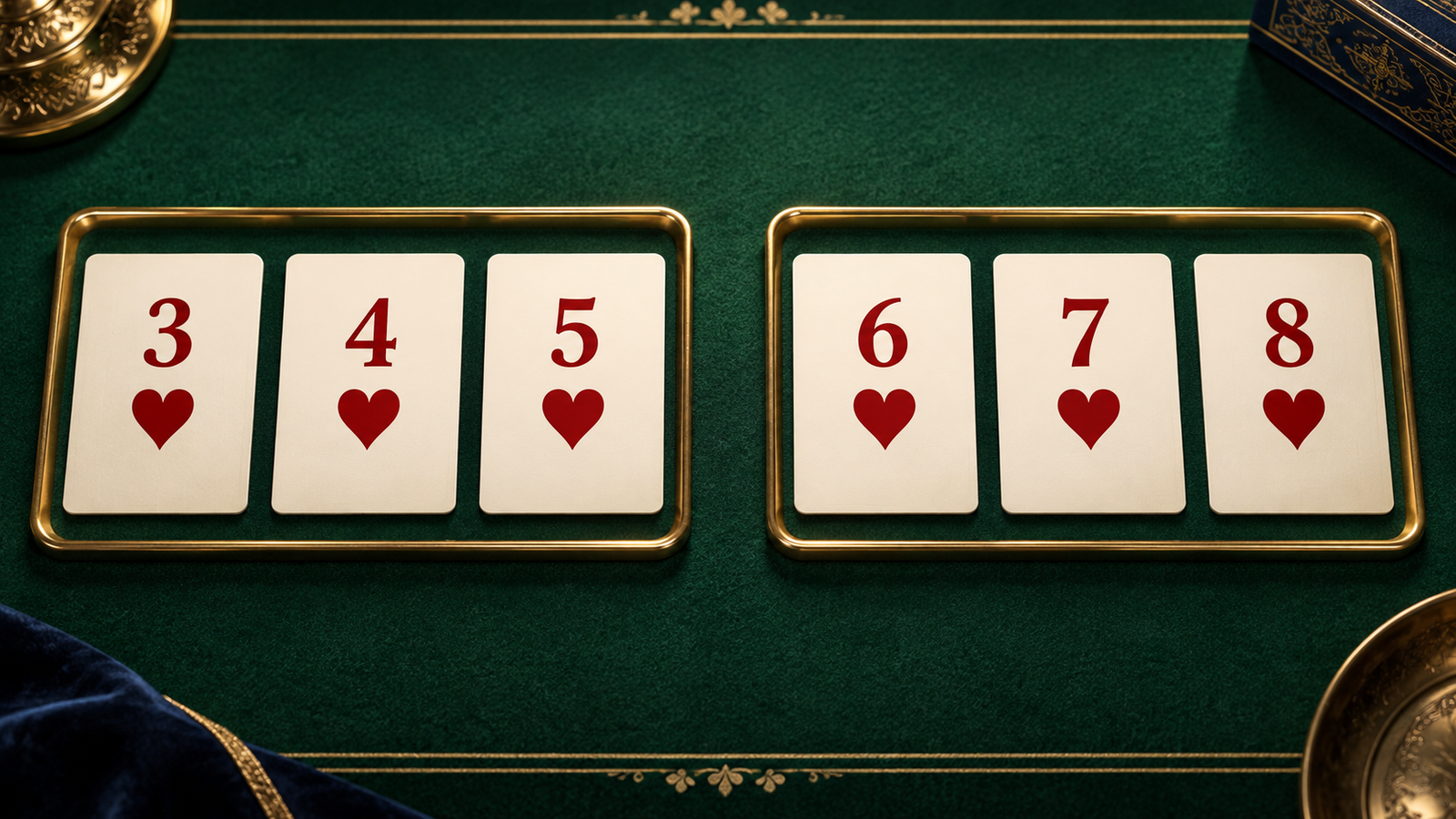
Take 3H-4H-5H-6H-7H-8H, where H means hearts. Split between 5H and 6H. The first group is 3H-4H-5H; the second is 6H-7H-8H. Each group contains three consecutive cards in one suit without a Joker substitute. They are two pure sequences, even though both use hearts. The groups do not have to use different suits.
These two groups use six physical cards. In a 13-card hand, seven cards remain to be assigned to valid groups. Having two pure sequences satisfies the sequence part of this example, not the complete declaration. Do not declare while the remaining cards are ungrouped or invalid.
Why five cards are not enough for this split
Do not stretch the same idea to 3H-4H-5H-6H-7H. Splitting after 5H leaves 6H-7H, which is only a pair. Writing 3H-4H-5H and 5H-6H-7H on paper counts the same physical 5H twice. One card cannot belong to both groups in the final arrangement.
Also check every rank. A row such as 3H-4H-5H-7H-8H-9H already contains two possible three-card runs, but it is not one uninterrupted six-card run. Describe the groups you actually have instead of treating a tidy row as proof.
Use a split-point checklist
- Confirm the minimum group size and declaration requirements for the table.
- Check that all six cards are natural consecutive ranks of one suit.
- Separate the first three from the last three.
- Read each group independently, including the suit.
- Count each physical card once.
- Check the other seven cards and any required final discard before declaring.
Grouping controls can differ between apps. Make sure the displayed groups match your intended arrangement. The declaration-ready hand audit helps check the whole hand after this local change.
Practise the split without treating it as a win
Lay out the six-card example in a practice session, make the split and name the two sequences. Then remove 8H and explain why the same split no longer works. Use the exercise to check your groups. It cannot predict the next draw or choose a discard for you.
18+ only. Practise responsible play, set time and budget limits, take breaks and do not chase losses. A valid grouping cannot guarantee a win. Read the responsible gaming guide.
FAQ
Can both required sequences be in the same suit?
Under the common rules used here, yes. Each must be a valid separate group, and each physical card can be used only once. Check the active table rules.
Can I split five cards into two three-card sequences?
Not using only those five physical cards. Two separate three-card groups need six cards; sharing a middle card counts it twice.
Does splitting the run make the full hand ready?
No. The other seven cards, any final discard and the table declaration requirements still need checking.
Glossary
Responsible play note
Indian Rummy is a skill-based card game, but no article, checklist, or tournament routine can guarantee results. Use these guides to improve decisions, keep time and budget limits, and follow the laws and table rules that apply in your location.