
Opponent Picked Your Discard? Recheck the Next Safe Rummy Card
When an opponent takes a face-up card, you learn one useful fact: that card helped the hand enough to reveal interest. Your next discard should respect that signal without pretending it proves the opponent’s exact groups.
Summary: Record the picked card, avoid immediately feeding obvious same-suit neighbours or matching ranks, and compare those risks with your own sequence needs and point exposure. Observation can improve a discard choice, but it cannot reveal a hidden hand or guarantee a result.
Record the pickup
Note the exact rank and suit taken from the open pile.
Check neighbours
Screen cards one rank above or below in the same suit.
Respect your routes
Do not break your best pure-sequence path merely to avoid a weak signal.
Compare points
When two discards are similarly safe, reduce avoidable point exposure.
What a face-up pickup actually tells you
A face-up pickup is stronger evidence than a draw from the closed pile because you can see the chosen card. If an opponent takes 7H, it may support a heart sequence, a set of sevens, or a rearrangement involving a Joker. It does not prove which route is being built. Use the signal to rank risk rather than guessing a complete hidden hand.
The next-discard safety check
- Write down the exact picked card in your mental discard log.
- Mark same-suit neighbours one rank away as immediate caution cards.
- Check the same rank in other suits because a set may be possible.
- Protect any card that belongs to your strongest natural pure-sequence route.
- Compare the remaining loose cards by point exposure and useful connections.
- Reassess after later pickups and discards instead of treating one signal as permanent.
- Keep firm session and budget limits.
Example: the opponent takes 7H
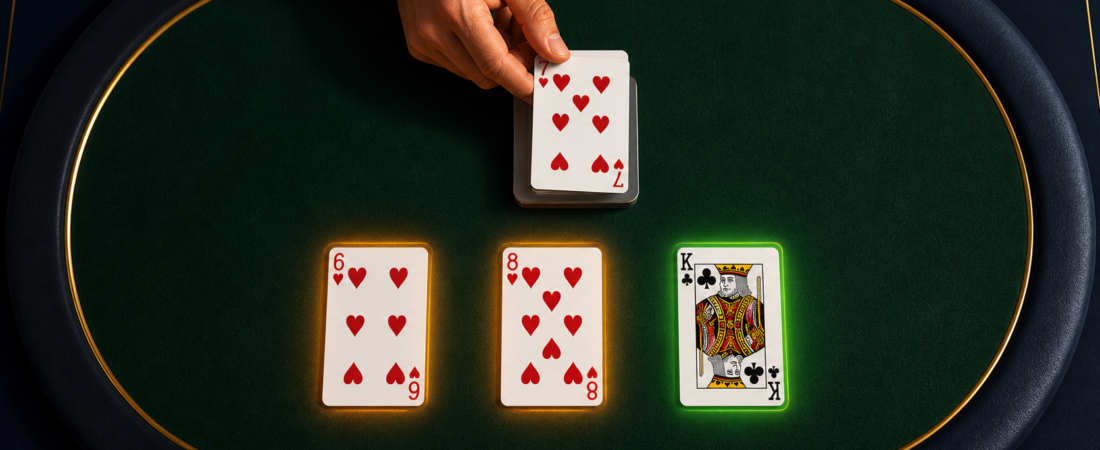
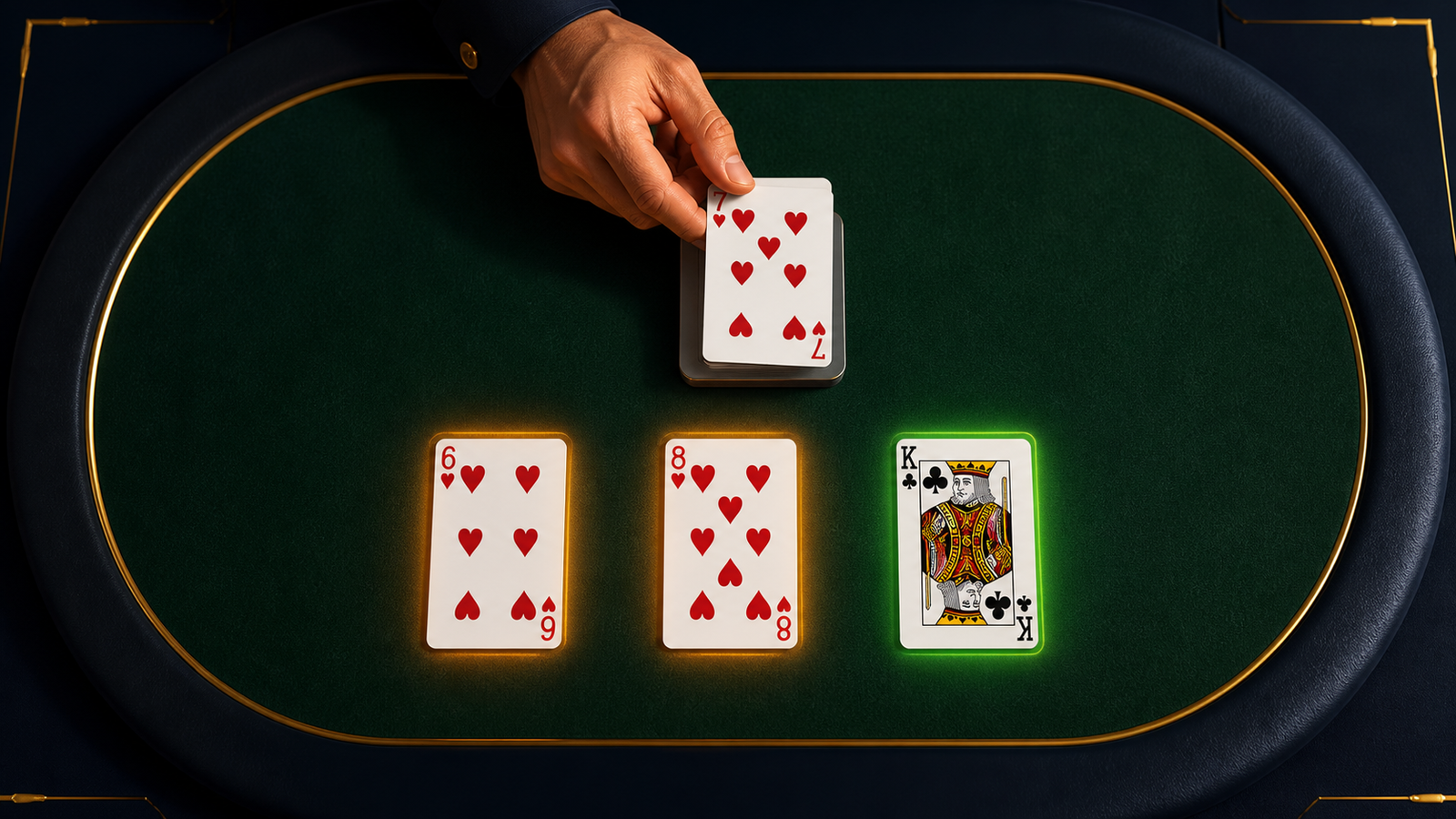
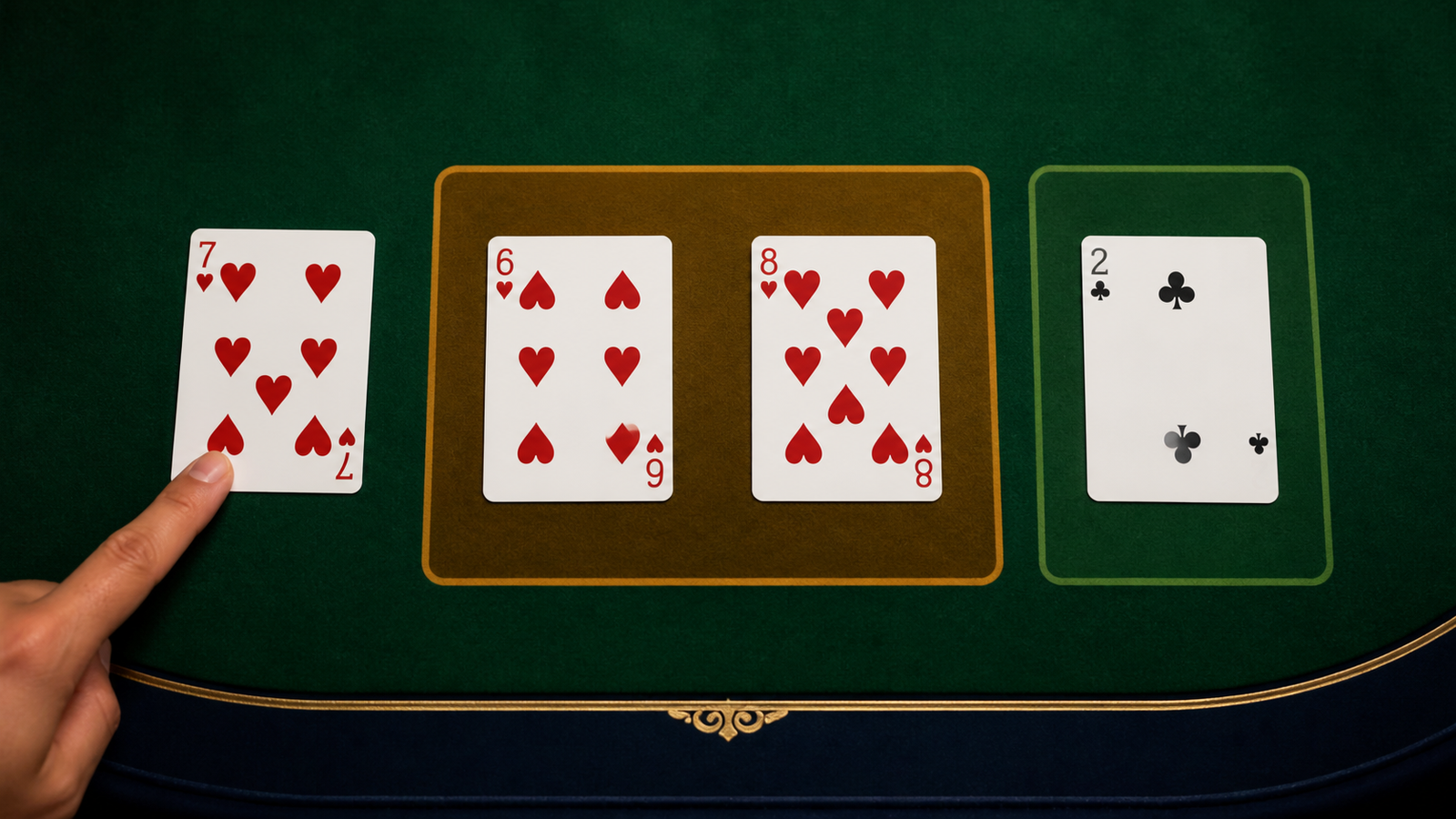
Suppose the player to your right takes 7H from the open pile. You are considering 6H, 8H, and 2C as loose cards. Both heart cards can sit next to 7H in a same-suit sequence, so discarding either immediately carries a clear feeding risk. The 2C is less connected to the observed pickup and costs only two points if it remains unmatched. Keep 6H or 8H only when one supports your own realistic pure-sequence or second-sequence route; otherwise 2C is the calmer discard.
Do not overread one move
Later evidence can change the risk. If the same opponent discards 9H, the heart-sequence reading weakens; repeated heart pickups strengthen it. The usual 13-card Indian Rummy declaration still needs at least two sequences, including one pure sequence, with all remaining cards in valid sequences or sets. Platform rules for decks, Jokers, scoring and drops may differ, so check the active table rules. For more context, review the discard-by-suit guide and the Indian Rummy rules.
FAQ
Does picking 7H prove that an opponent has 6H and 8H?
No. The pickup shows interest in 7H, but it does not reveal the exact sequence, set or Joker arrangement in the hidden hand.
Should I always avoid the same suit after a face-up pickup?
No. Compare the signal with your own pure-sequence needs, other visible cards and point exposure before choosing.
Can discard observation guarantee a win?
No. It can improve risk estimates, but hidden cards, draws and later decisions remain uncertain.
Glossary
- Face-up pickup: A card taken from the visible open discard pile.
- Feeding risk: The chance that a discard directly helps an opponent complete or extend a group.
- Neighbour card: A card one rank above or below another card in the same suit.
Responsible play note
Indian Rummy is a skill-based card game, but no article, checklist, or tournament routine can guarantee results. Use these guides to improve decisions, keep time and budget limits, and follow the laws and table rules that apply in your location.