
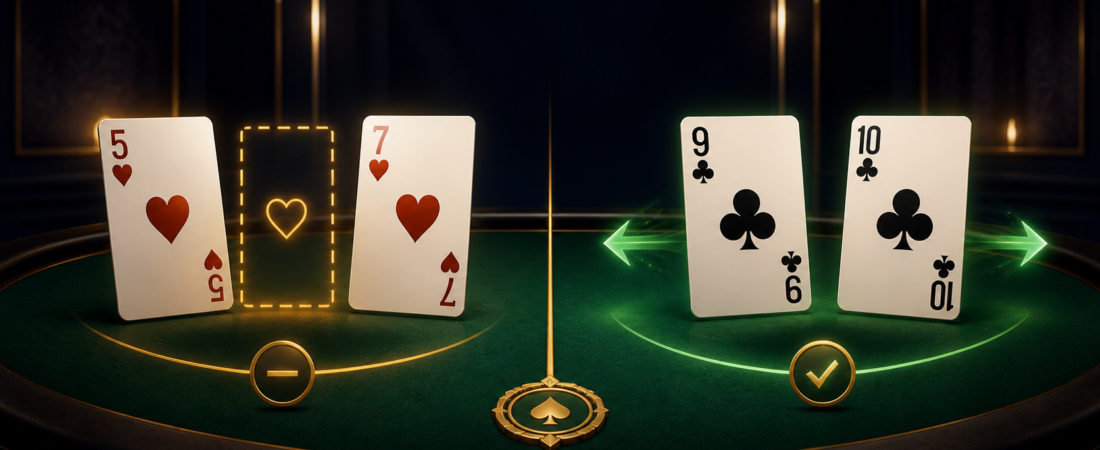

One-Card Gap or Open-Ended Run? Rank the Better Rummy Route
Two unfinished same-suit routes can sit one card from completion and still have different practical value. The useful comparison is not their appearance but the exact natural cards they accept and the declaration problem they solve.
Summary: Protect the mandatory pure sequence first. A 5H-7H gap needs the exact 6H, while 9C-10C can normally extend with 8C or JC. Count only cards that legally complete the intended group, check visible discards, and compare the loose points left elsewhere. More natural outs can make a route flexible, but no route predicts the next draw or guarantees a result.
Start with declaration structure
In common 13-card Indian Rummy, a valid declaration needs at least two sequences, including one pure sequence. If the natural pure sequence is not secure, protect that route before comparing optional groups. Once purity is covered, give extra weight to a candidate that can become the separate second sequence.
Count exact natural outs
A 5H-7H gap has one natural middle card, 6H. A consecutive 9C-10C pair can normally extend with 8C or JC. Those are candidate outs, not promised draws. Cards already visible in discards can change the practical comparison, while hidden cards remain unknown.
Use a four-check decision framework
- Lock the strongest natural pure sequence.
- Confirm whether a separate second sequence is still missing.
- List the exact natural cards that complete each candidate route.
- Compare loose points and useful alternative roles across the full hand.
Count every physical card once. Do not use one card in two groups when testing a declaration.
Example: flexibility versus a narrow gap
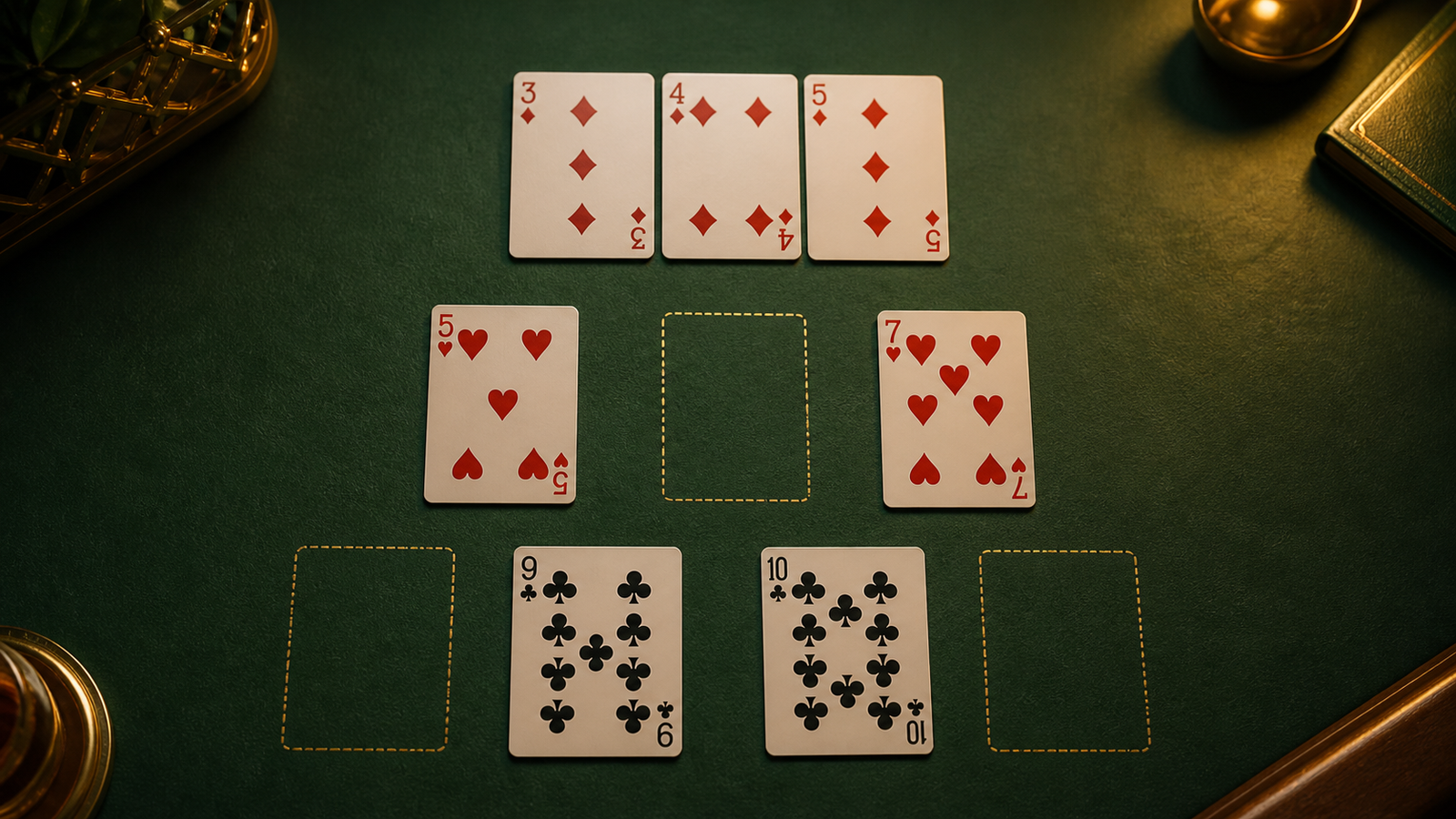
Assume 3D-4D-5D is already your pure sequence. You hold 5H-7H and 9C-10C, with no second sequence yet. The heart route needs 6H. The club route can normally accept 8C or JC, so it has two natural completion cards. That gives the club pair more flexibility unless visible cards or the rest of the hand change the calculation.
Platform details can vary, so check the Indian Rummy rules guide. Adults should keep time and budget limits, take breaks and never chase losses. Read the responsible gaming guide.
FAQ
Is an open-ended sequence pair always better than a one-card gap?
No. It may have more natural outs, but declaration needs, visible cards, loose points and alternative groups can change the decision.
Should visible discards be treated as proof that a route is blocked?
They are useful evidence about exposed cards, but they do not reveal every hidden card or guarantee future draws.
Can counting natural outs guarantee a win?
No. It organises the current decision but cannot control the closed pile, opponents or declaration timing.
Glossary
- One-card gap: Two same-suit cards separated by one missing natural rank, such as 5H and 7H.
- Open-ended pair: Two consecutive same-suit cards that can normally extend at either end, subject to rank boundaries.
- Natural out: A non-Joker card that legally completes or extends the candidate group.
Responsible play note
Indian Rummy is a skill-based card game, but no article, checklist, or tournament routine can guarantee results. Use these guides to improve decisions, keep time and budget limits, and follow the laws and table rules that apply in your location.