

Set Pair or Sequence Pair? Choose the Better Rummy Route
A same-rank pair and a same-suit pair can both look promising. The better route is the one that solves the hand’s current declaration problem with less dependence on exact future cards.
Summary: Protect the mandatory pure sequence first. Then compare whether the hand still needs a second sequence, which natural cards can finish each pair and how many loose points remain if the route fails. A set pair may have two matching ranks in the other suits, while a consecutive same-suit pair may accept a card at either end unless it sits at a rank boundary. Recheck the active table rules. This framework improves planning but cannot predict draws or guarantee a result.
Start with the declaration requirement
In common 13-card Indian Rummy, a valid declaration needs at least two sequences, including one pure sequence. If the pure sequence is safe but the second sequence is missing, a same-suit pair may carry more structural value than an optional set pair. If both sequence requirements are already covered, the set route can deserve more attention.
Count natural completions instead of guessing
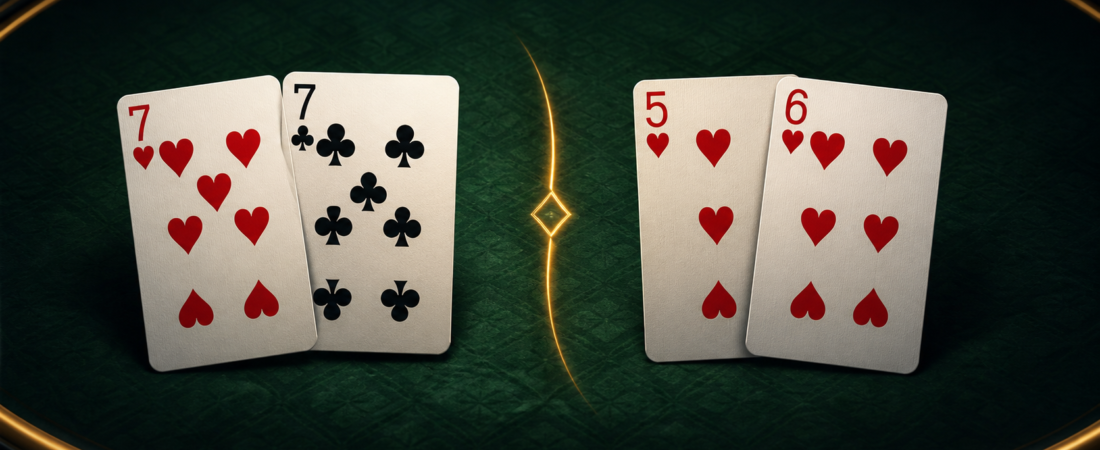
Suppose you hold 7H-7C. Under common different-suit set rules, the natural completions are the remaining sevens in the other suits, subject to the cards still available and the active deck rules. A 5H-6H sequence pair can normally extend with 4H or 7H. Do not treat those possibilities as guaranteed draws. Visible discards are evidence, not proof of what remains hidden.
Use a four-part decision check
- Lock the natural pure sequence.
- Check whether a separate second sequence is still missing.
- List the exact natural cards that complete each pair.
- Compare the loose points and useful alternative roles left in the full hand.
Count each physical card once. A card cannot support the set pair and the sequence pair at the same time in a final declaration.
Example: the second sequence changes the answer
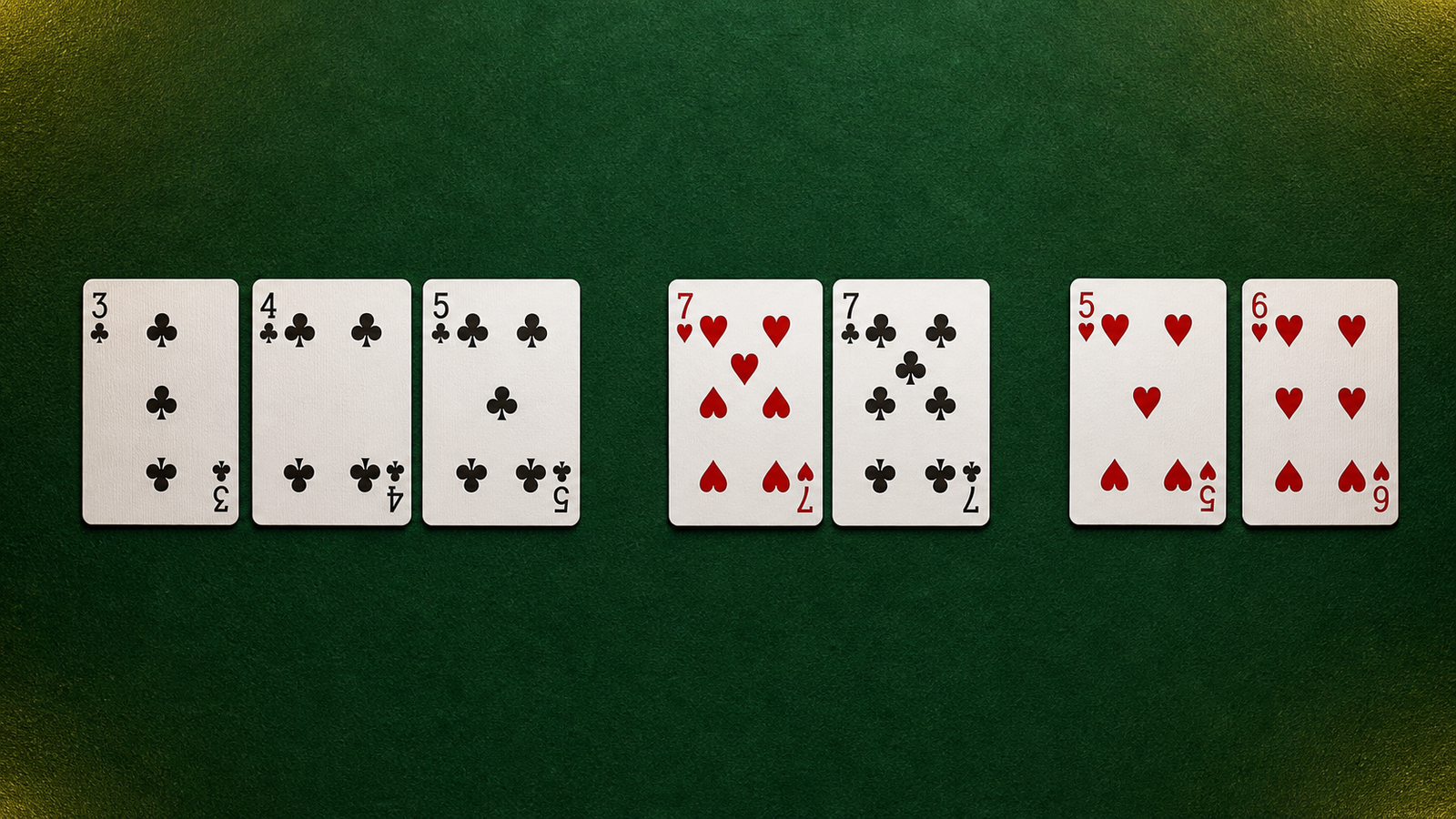
Assume 3C-4C-5C is your pure sequence. You also hold 7H-7C and 5H-6H, but no separate second sequence. The heart pair can become that required sequence with 4H or 7H, while completing the sevens creates a set and leaves the sequence requirement unresolved. That makes the heart route more urgent, although later draws can change the plan.
Platform details can vary, so confirm the Indian Rummy rules guide. Adults should use time and budget limits, take breaks and never chase losses. Read the responsible gaming guide.
FAQ
Is a sequence pair always better than a set pair?
No. Give extra weight to the sequence pair when the hand still needs its second sequence, then compare natural completions and the remaining cards.
How many cards can complete a two-card set?
Under common different-suit set rules, a same-rank pair may be completed by that rank in another suit. Exact availability depends on the cards, decks and active table rules.
Can this comparison guarantee a better draw?
No. It organises the current hand but cannot control the closed pile, opponents or later discards.
Glossary
- Set pair: Two same-rank cards in different suits being considered as the start of a legal set.
- Sequence pair: Two same-suit cards with a natural route toward a consecutive sequence.
- Natural completion: A non-Joker card that legally completes or extends the candidate group.
Responsible play note
Indian Rummy is a skill-based card game, but no article, checklist, or tournament routine can guarantee results. Use these guides to improve decisions, keep time and budget limits, and follow the laws and table rules that apply in your location.