


Keep or Split the Fourth Card in an Indian Rummy Sequence?
A fourth natural card can make a completed run longer, but length alone does not make the whole hand stronger. Its best role depends on what the other ten cards still need.
Summary: Keep a fourth same-suit card in a completed sequence when it lowers loose-card exposure without weakening another credible route. Split it only when the original three-card pure sequence remains intact and the moved card creates or materially improves a separate second sequence. Review the full 13-card structure after every draw. The decision framework reduces avoidable rearrangement but cannot guarantee winning.
A completed three-card run already has a job
A natural run such as 5H-6H-7H can satisfy the pure-sequence requirement. Adding 8H creates a valid longer natural sequence, but the extra card does not create a second sequence by itself. Before extending the run, check whether 8H also connects with other hearts elsewhere in the hand.
Use the full-hand test
First protect the mandatory pure sequence. Next check whether the hand already has a separate second sequence. Then compare the fourth card’s two roles: reducing loose-card points inside the completed run or joining a realistic second route. A speculative split that still needs two unknown cards usually deserves less weight than a route that becomes valid immediately.
Four checks before moving the extra card
- Will the original three-card run remain a valid natural pure sequence?
- Does the fourth card complete a separate sequence now, or only create a distant possibility?
- Which arrangement leaves fewer loose points outside valid groups?
- Do visible discards weaken either route without proving that hidden cards are unavailable?
Do not reuse the same card in two groups. Once the arrangement is chosen, recount all 13 cards and verify every group before declaring.
Example: one long run or two natural sequences
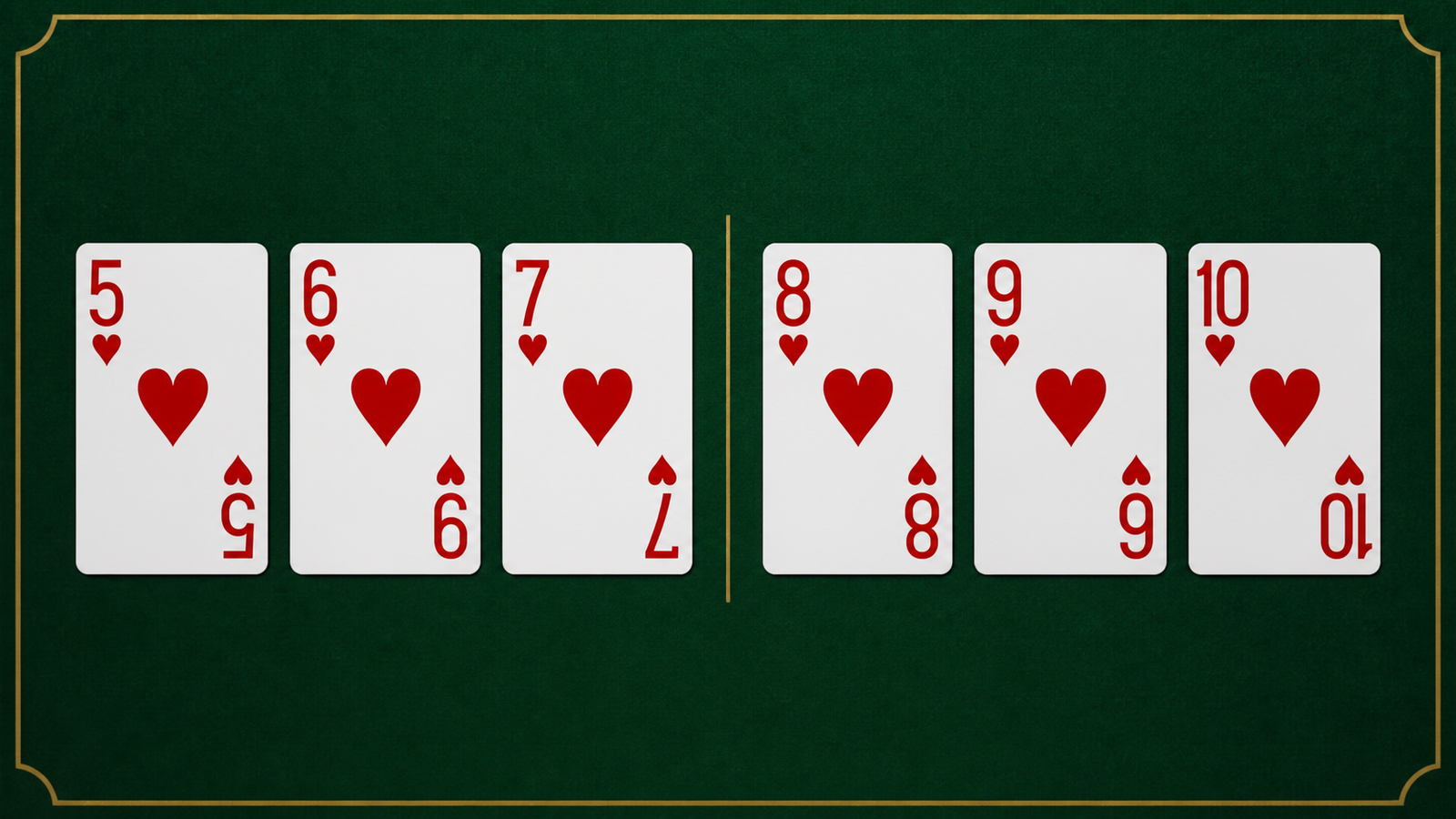
If you hold 5H-6H-7H-8H-9H-10H, you can arrange the six distinct cards as one long natural run or as 5H-6H-7H and 8H-9H-10H. The split preserves the first pure sequence and creates a separate second natural sequence. Whether the split is preferable still depends on how the remaining seven cards form sets or sequences.
Rules and interfaces can vary across platforms, so verify the active table requirements and review the rules guide. Adults should keep session and budget limits, take breaks and avoid chasing losses. The responsible gaming page provides further guidance.
FAQ
Is a four-card sequence better than a three-card sequence?
Not automatically. Both may be valid, but the better arrangement is the one that supports the complete hand and its required second sequence.
Can I split six consecutive same-suit cards into two sequences?
Under common Indian Rummy grouping rules, six distinct consecutive cards of one suit can be arranged as two three-card natural sequences, subject to the active table rules.
Can one card be shown in both sequence groups?
No. Every card must be counted once and assigned to one declared group only.
Glossary
- Sequence extension: A natural same-suit card added to either end of an existing consecutive run.
- Second sequence: A sequence separate from the mandatory pure sequence that helps satisfy declaration requirements.
- Full-hand test: A review of all cards and groups before judging whether one local rearrangement improves the complete hand.
Responsible play note
Indian Rummy is a skill-based card game, but no article, checklist, or tournament routine can guarantee results. Use these guides to improve decisions, keep time and budget limits, and follow the laws and table rules that apply in your location.