
Invalid Declaration Check: Audit Every Group in Order
A hand can look finished and still fail because one group was checked by memory instead of by rule. Use the same order every time before you declare.
Summary: Count the hand first, confirm a natural pure sequence, verify a second sequence, then test every set and remaining card. Treat the final arrangement as a rule audit rather than a speed test. This checklist reduces avoidable declaration errors but cannot guarantee a result.
Start with fixed declaration requirements
Common 13-card Indian Rummy requires at least two sequences, including at least one pure sequence made without Joker substitution. The remaining cards must belong to valid sequences or sets under the active table rules. A Joker-supported run may serve as the second sequence, but it cannot replace the mandatory natural pure sequence.
A five-step group-order audit
- Confirm that every card in the hand has been counted and placed once.
- Identify the natural pure sequence and check suit and consecutive rank.
- Verify a separate second sequence.
- Test each remaining set or sequence for rank, suit and Joker rules.
- Look for any loose, duplicated or accidentally reused card before declaring.
Example: one loose card changes the result
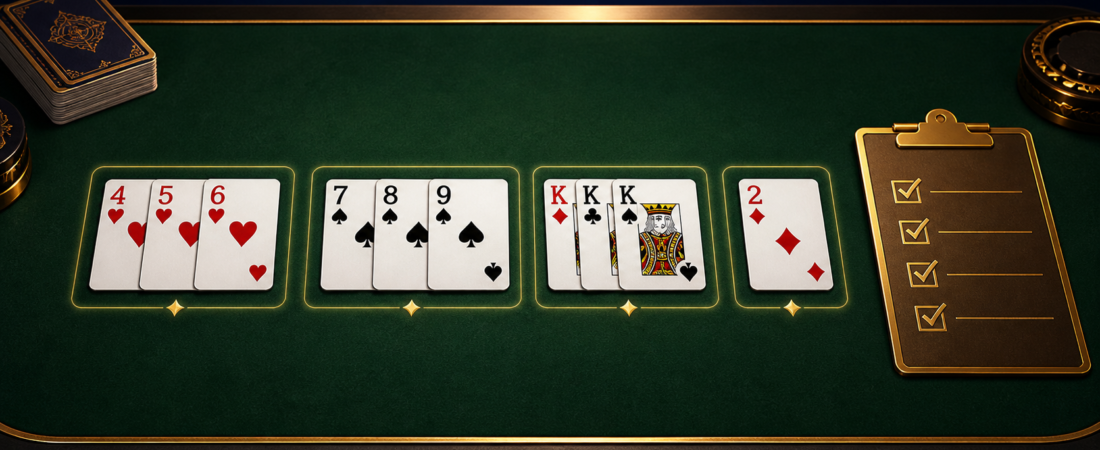
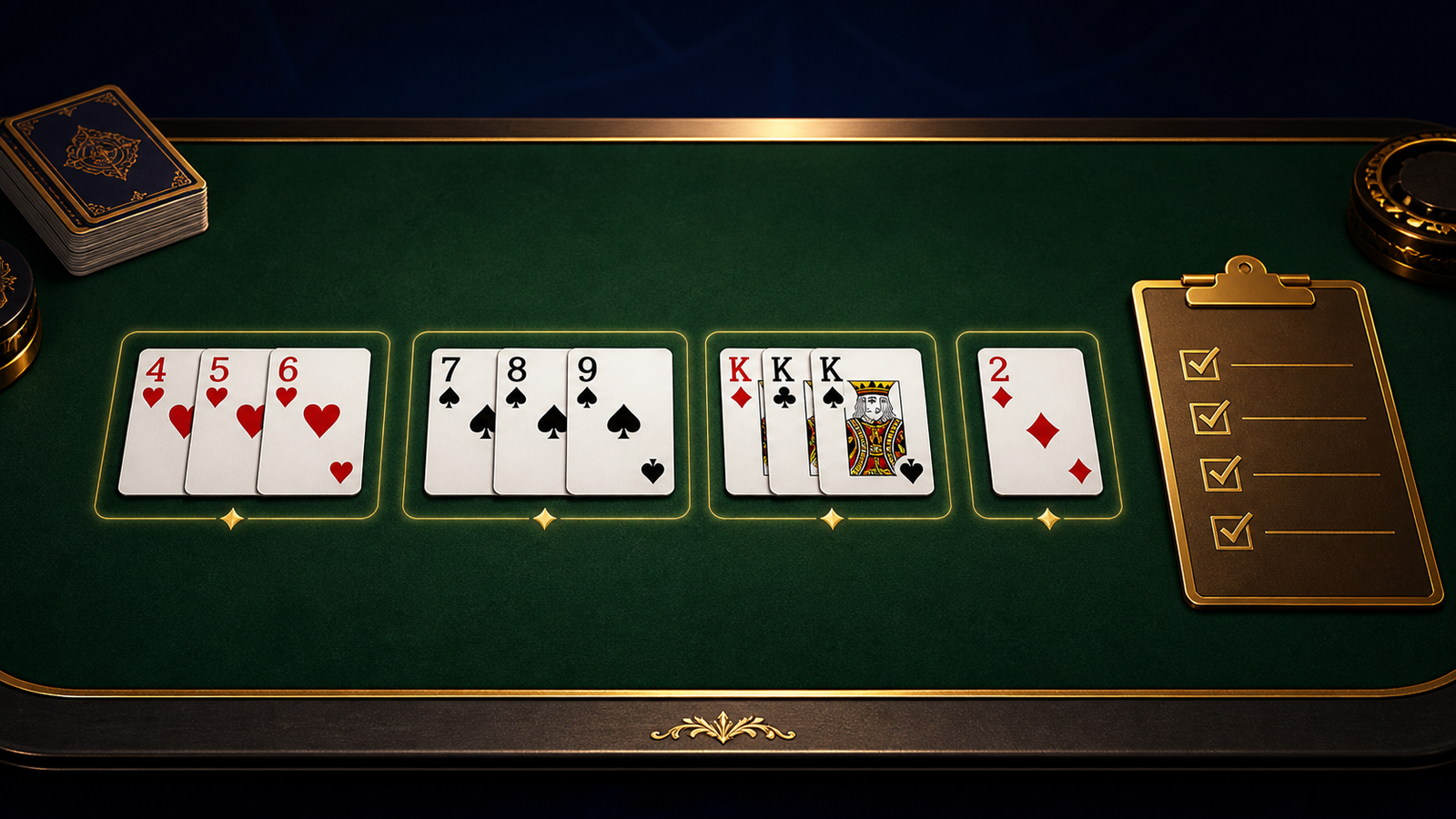
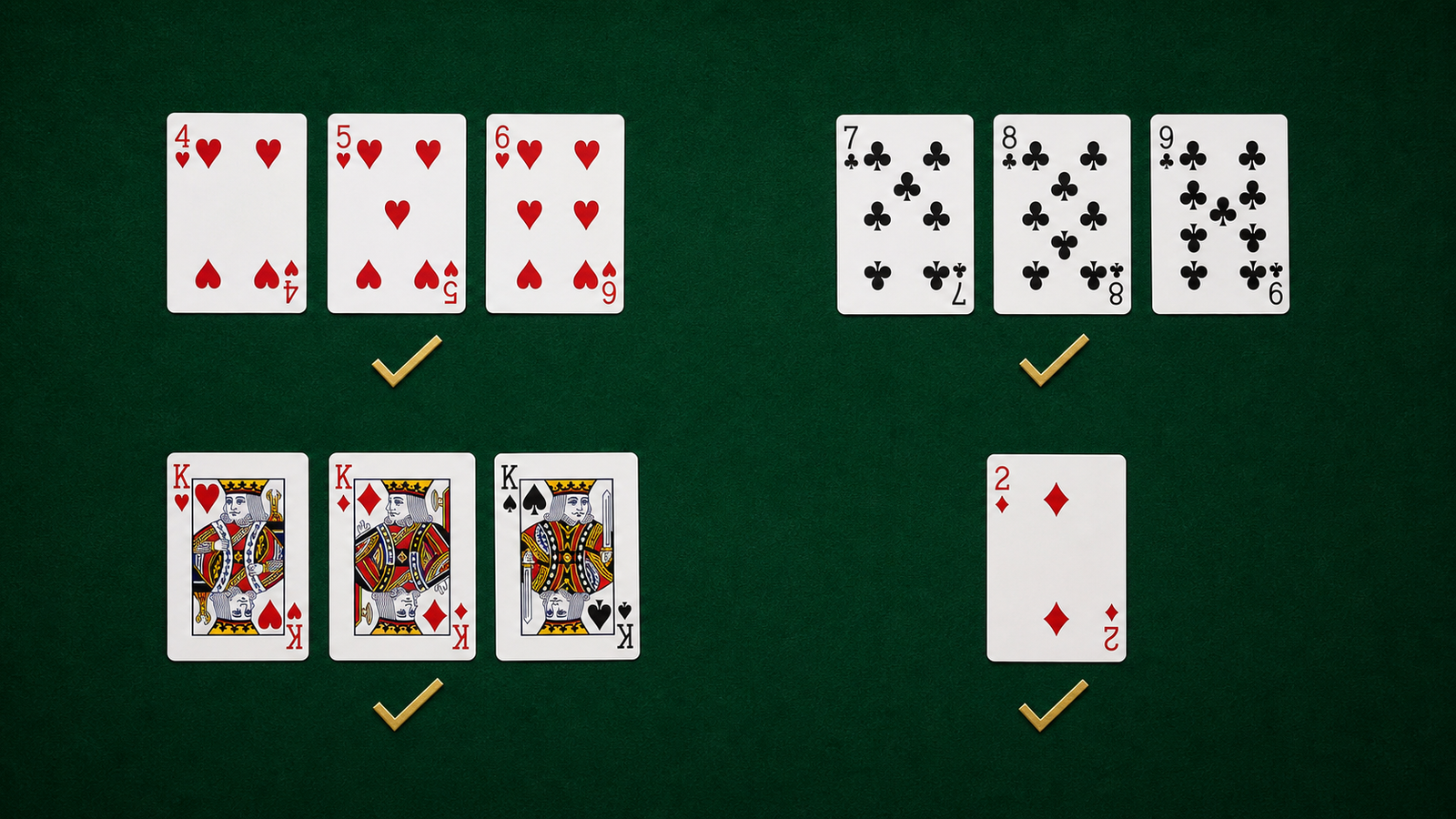
Suppose the groups are 4H-5H-6H, 7C-8C-9C, KH-KD-KS and 2D. The first group is a pure sequence, the second is another pure sequence and the kings form a set. The 2D is still loose, so the hand is not declaration-ready. Do not treat three valid groups as proof that all 13 cards are validly grouped.
Rules that need a table-specific check
Platforms can differ on deck count, wild-Joker selection, printed-Joker treatment, duplicate cards in sets, scoring caps and the declaration interface. Confirm the active rules and review the Indian Rummy rules guide before relying on a saved arrangement. Gin Rummy uses different meld and deadwood rules and should not be used to validate an Indian Rummy declaration.
Adults should keep time and budget limits, take breaks and never chase losses. The responsible gaming guide explains practical limit-setting. A careful audit improves rule compliance, not the certainty of winning.
FAQ
What is the first check before declaring in Indian Rummy?
Count and place every card once, then confirm the mandatory natural pure sequence before checking the other groups.
Can a Joker complete the mandatory pure sequence?
No. A pure sequence uses natural consecutive cards of the same suit without Joker substitution.
Are two valid sequences enough for a declaration?
Not by themselves. Every remaining card must also be arranged into valid groups under the active rules.
Glossary
- Invalid declaration: A submitted hand that does not meet the active grouping and sequence requirements.
- Pure sequence: Three or more consecutive natural cards of the same suit without Joker substitution.
- Loose card: A card that is not part of any valid declared sequence or set.
Responsible play note
Indian Rummy is a skill-based card game, but no article, checklist, or tournament routine can guarantee results. Use these guides to improve decisions, keep time and budget limits, and follow the laws and table rules that apply in your location.