
Drew a Joker? Recheck the Pure Sequence Before Regrouping
A Joker can solve an unfinished group, but it can also distract you from the one condition it cannot replace: a natural pure sequence.
Summary: After a Joker draw, lock the natural pure sequence before moving any card. Confirm whether the hand still needs a second sequence, list each unfinished group’s natural completions, and place the Joker at the tightest declaration bottleneck. Recheck after every natural draw. This routine improves discipline but cannot guarantee an outcome.
Why the pure-sequence check comes first
A pure sequence contains consecutive cards of the same suit without Joker substitution. In common 13-card Indian Rummy, at least one pure sequence is mandatory. A printed or wild Joker may help an impure sequence or another permitted group, but moving natural cards away from the only pure route can leave the hand structurally incomplete.
Joker-draw regrouping checklist
- Place the drawn Joker outside the existing groups for a moment.
- Identify and lock the strongest completed or near-complete natural pure sequence.
- Check whether a second valid sequence is still missing.
- List the natural cards that complete each unfinished group.
- Assign the Joker to the declaration-critical group with the fewest realistic natural completions.
- Choose a discard only after every physical card has one provisional role.
- Recheck the arrangement after the next natural draw.
Example: do not dismantle the natural route
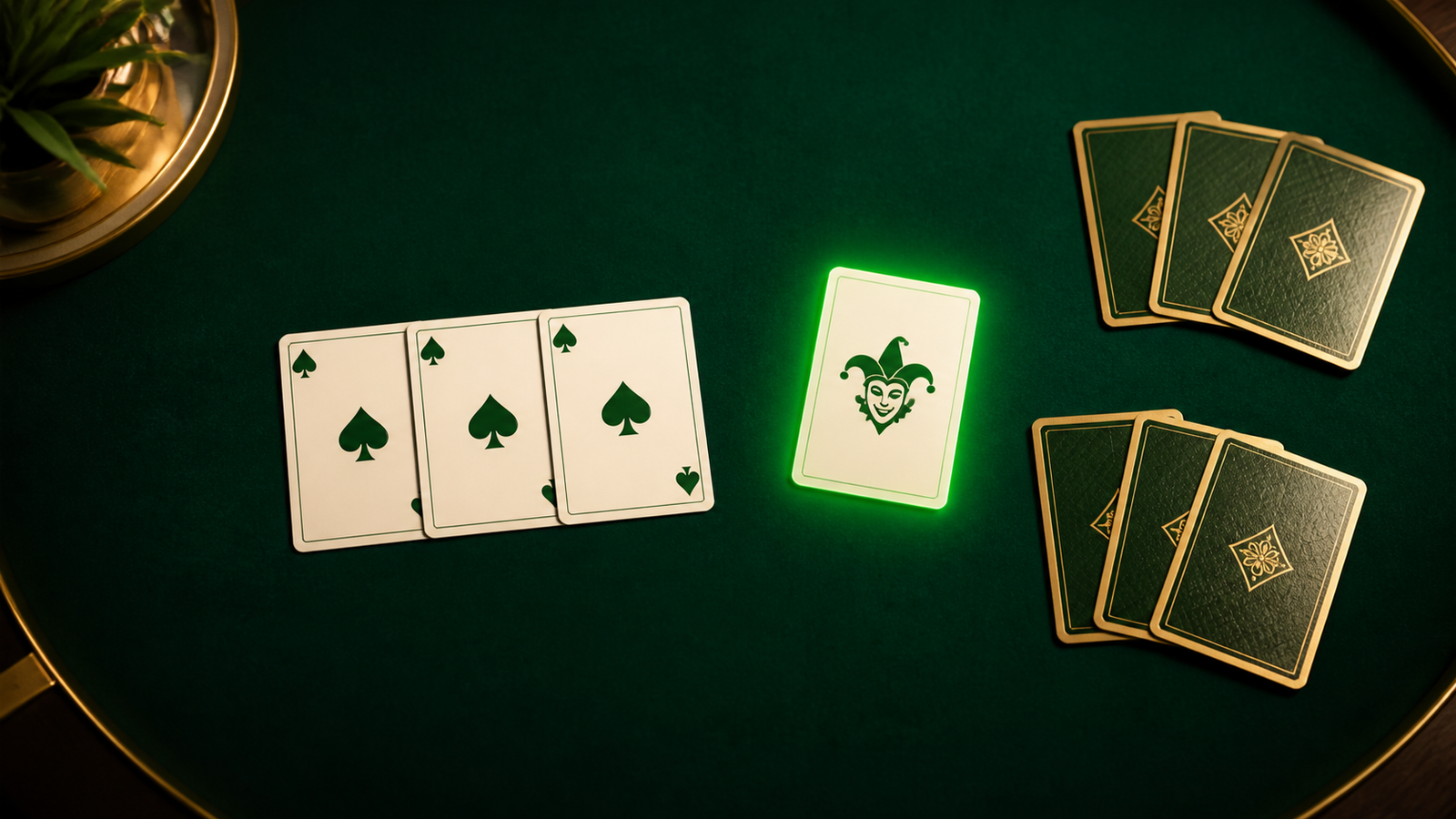
Suppose you hold 4H-5H-6H as a natural pure sequence, 8S-9S-JS, two kings of different suits, a drawn Joker, and loose cards. The spade group has a one-card gap at 10S and may be the clearest second-sequence route. Using the Joker as 10S can complete an impure sequence without disturbing the hearts. Moving 5H away from the pure sequence to chase another group would solve the wrong problem.
Check the active table rules
Platforms can differ in deck count, wild-Joker selection, printed-Joker treatment, duplicate-card rules, scoring caps, and how Joker-assisted sets are validated. Confirm the rules shown at the table. Do not apply Gin Rummy knocking or deadwood rules to Indian Rummy.
Joker management changes options, not certainty. Play only if you are an adult, keep session and budget limits, and never chase a result.
FAQ
Can a Joker be used in a pure sequence?
A substitute Joker cannot create the mandatory pure sequence; that sequence must use natural consecutive cards of one suit under the active rules.
Where should I place a newly drawn Joker?
Protect the pure sequence first, then use the Joker provisionally in the declaration-critical group with the fewest realistic natural completions.
Does drawing a Joker guarantee a better result?
No. It creates grouping options but does not control later draws, opponents, or declaration timing.
Glossary
- Pure sequence: Consecutive natural cards of the same suit without Joker substitution.
- Impure sequence: A same-suit sequence completed with permitted Joker substitution.
- Bottleneck: An unfinished declaration requirement with few realistic natural ways to complete it.
Responsible play note
Indian Rummy is a skill-based card game, but no article, checklist, or tournament routine can guarantee results. Use these guides to improve decisions, keep time and budget limits, and follow the laws and table rules that apply in your location.