One Card, Two Sequence Routes: Resolve Overlaps in Indian Rummy
A card can support two ideas while you plan, but it can occupy only one group in the hand you finally declare.
Summary: When two candidate sequences share one physical card, compare their declaration role, completion distance, natural alternatives and point exposure. Assign the shared card to one final group, then rebuild or abandon the other route. Secure a pure sequence and a second sequence before sets. This method reduces double-counting mistakes but cannot guarantee the result of a deal.
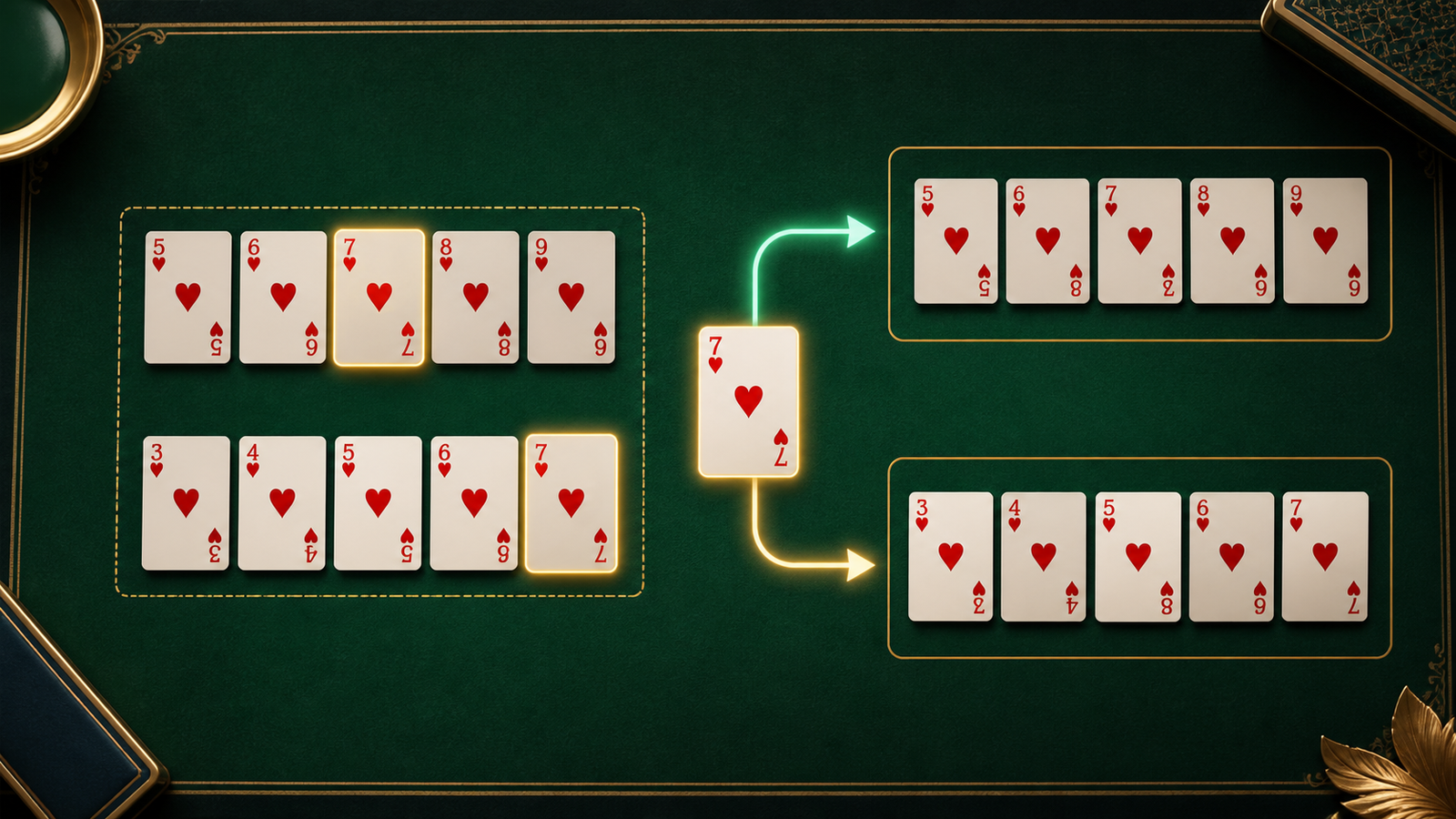
Find the overlap
Mark the physical card that appears in both provisional routes.
Protect purity
Give priority to the route that secures the mandatory pure sequence.
Count alternatives
Check which route has more natural cards that can replace the overlap.
Commit at the finish
Place the shared card in only one final group before declaration.
Why overlapping routes cause declaration errors
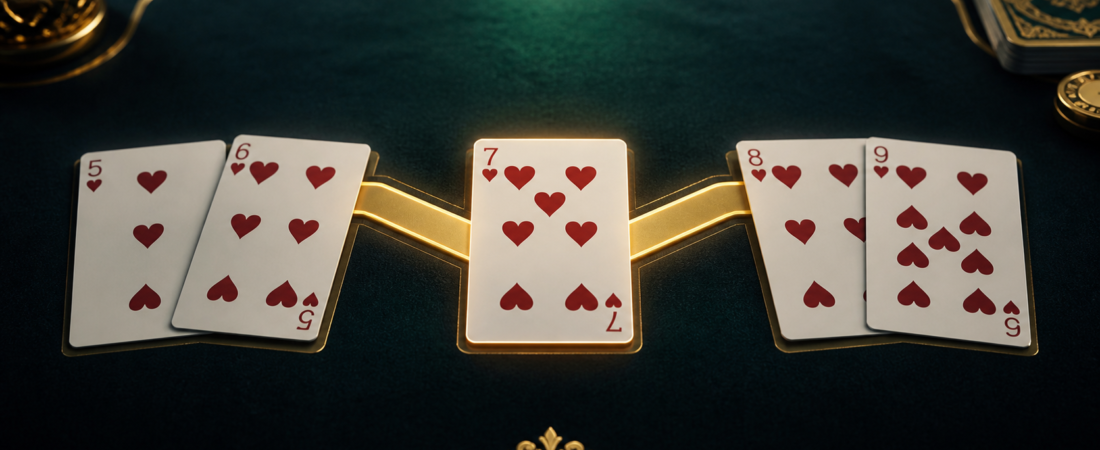
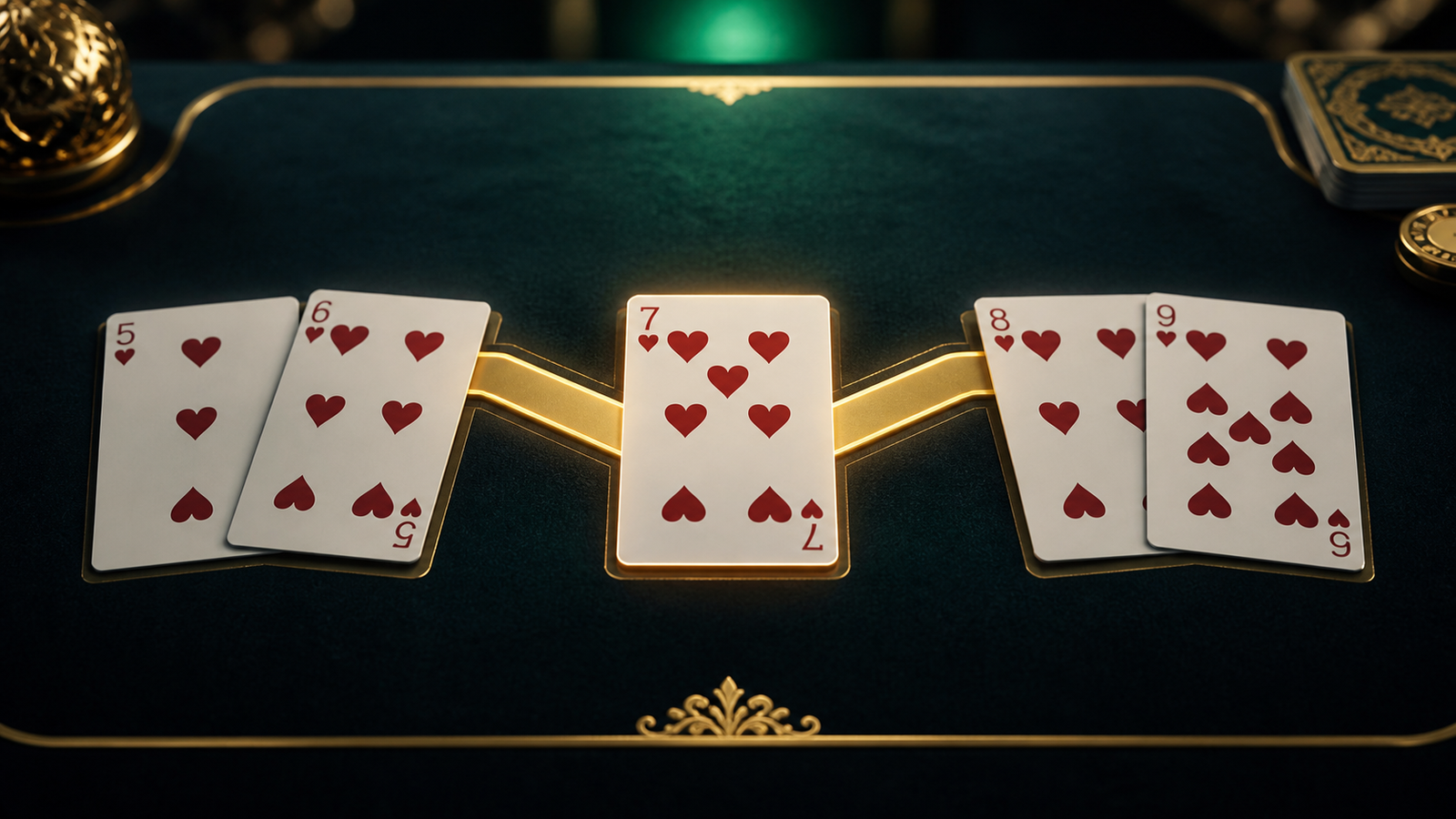
Suppose 7H sits between 5H-6H and 8H-9H. During planning, it can suggest either 5H-6H-7H or 7H-8H-9H. Those are useful alternatives, but they are not two completed groups because both depend on the same physical 7H.
A common 13-card Indian Rummy declaration needs at least two sequences, including at least one pure sequence. Every physical card must end in one valid group. A card shown twice in your mental plan leaves the other group incomplete.
Overlap decision checklist
- Sort the hand by suit and mark each card that appears in more than one candidate route.
- Identify which route can become the mandatory pure sequence without Joker substitution.
- Check whether the other route is needed as the second sequence.
- Count the natural replacement cards for each side of the overlap.
- Compare loose-card points if both routes have similar completion distance.
- After every draw, assign the shared card provisionally to one route and regroup the rest.
- Before declaring, confirm that each physical card appears exactly once and keep fixed time and budget limits.
Example: choose one home for the seven of hearts
You hold 5H-6H, 7H, 8H-9H and several other groups. If 5H-6H-7H is your only natural pure sequence, keep 7H there. The 8H-9H pair remains an incomplete route and needs 6H, 7H or 10H according to the final arrangement, but you cannot reuse the protected 7H.
If another pure sequence already exists, compare the two heart routes by the remaining natural cards, the need for a second sequence and the value of the cards left loose. The right assignment can change after a draw; it is not a promise about the outcome.
Final declaration check and related guides
Count 13 cards after the final discard and place every card in one group. Confirm at least two sequences, including one pure sequence, then validate the remaining sequences or sets under the active table rules. Deck count, Joker handling and declaration interfaces can vary.
Related guides: review the sets and sequences guide, backup pure-sequence routes and the declaration-ready hand audit.
FAQ
Can one card belong to two sequences in a final declaration?
No. You may compare provisional routes, but one physical card can appear in only one final group.
Which overlapping sequence should get the shared card?
Prioritise the route needed for a valid declaration, especially the pure sequence, then compare natural alternatives and loose points.
Does resolving overlaps guarantee a valid declaration?
No. Every other group, the total card count and the active table rules still need separate checks.
Glossary
- Overlapping card: One physical card that supports two provisional grouping ideas.
- Final assignment: The single group in which a physical card is placed for declaration.
- Natural alternative: A non-Joker card that can complete a route after the overlap is assigned elsewhere.
Responsible play note
Indian Rummy is a skill-based card game, but no article, checklist, or tournament routine can guarantee results. Use these guides to improve decisions, keep time and budget limits, and follow the laws and table rules that apply in your location.