
Opponent Picked the Open Pile? Use This Indian Rummy Response Check
An opponent’s open-pile pickup is visible evidence about one card, not proof of their complete hand.
Summary: Record the picked card, mark nearby same-suit ranks as potentially useful to that opponent, then protect your own pure-sequence plan and compare discard candidates by connection risk and unmatched points. Combine repeated signals rather than guessing from one move. Observation can reduce avoidable help but cannot guarantee results; keep responsible limits.
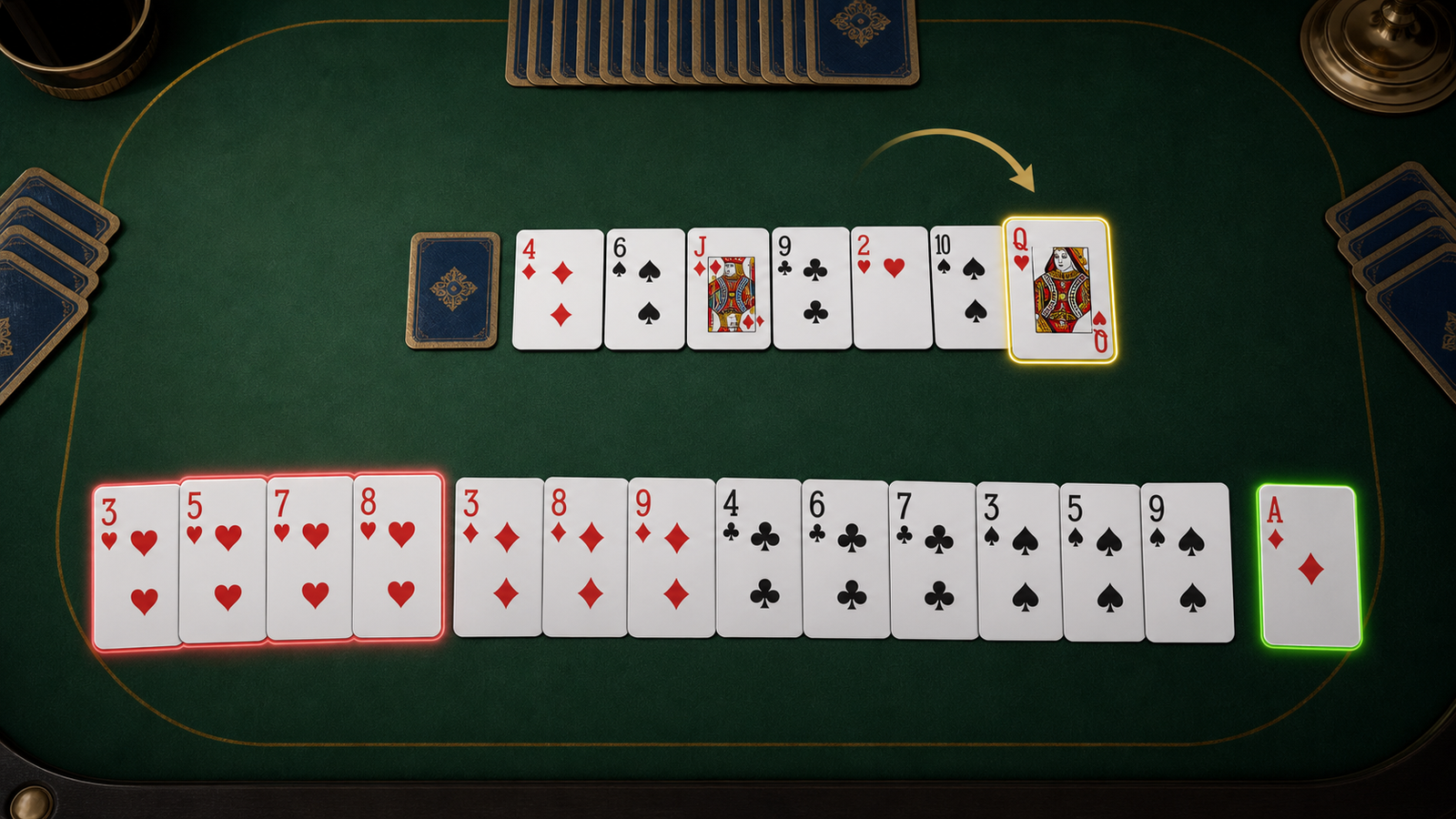
Record the pickup
Note the exact rank and suit taken from the open pile.
Mark neighbours
Review nearby same-suit ranks that could extend a natural sequence.
Protect your hand
Do not break your pure-sequence route only to avoid one uncertain signal.
Choose the safer discard
Compare opponent connection risk with your own point exposure.
What an open-pile pickup tells you
When an opponent takes a visible discard, you know that exact card was useful enough to choose over an unknown closed-deck draw. It may support a same-suit sequence, a same-rank set or another provisional plan. You do not know which group it serves, so treat the pickup as a risk signal rather than certainty.
Your own declaration still needs at least two sequences including one natural pure sequence. Observation should refine your discard, not replace correct hand building.
Four-part response check
- Record the exact rank and suit of the visible pickup.
- Mark one- and two-rank same-suit neighbours as possible sequence connectors.
- Consider same-rank cards as possible set help, subject to table rules.
- Remove candidates needed for your own pure sequence or strongest second-sequence route.
- Compare remaining cards by opponent connection risk and unmatched point exposure.
- Update the signal only when later pickups or discards add evidence.
- Keep fixed time and budget limits and never chase a previous result.
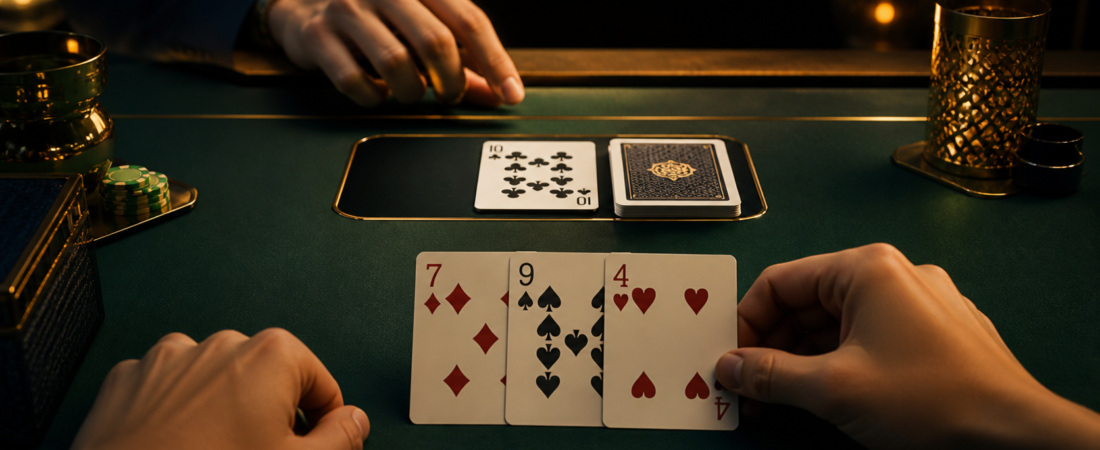
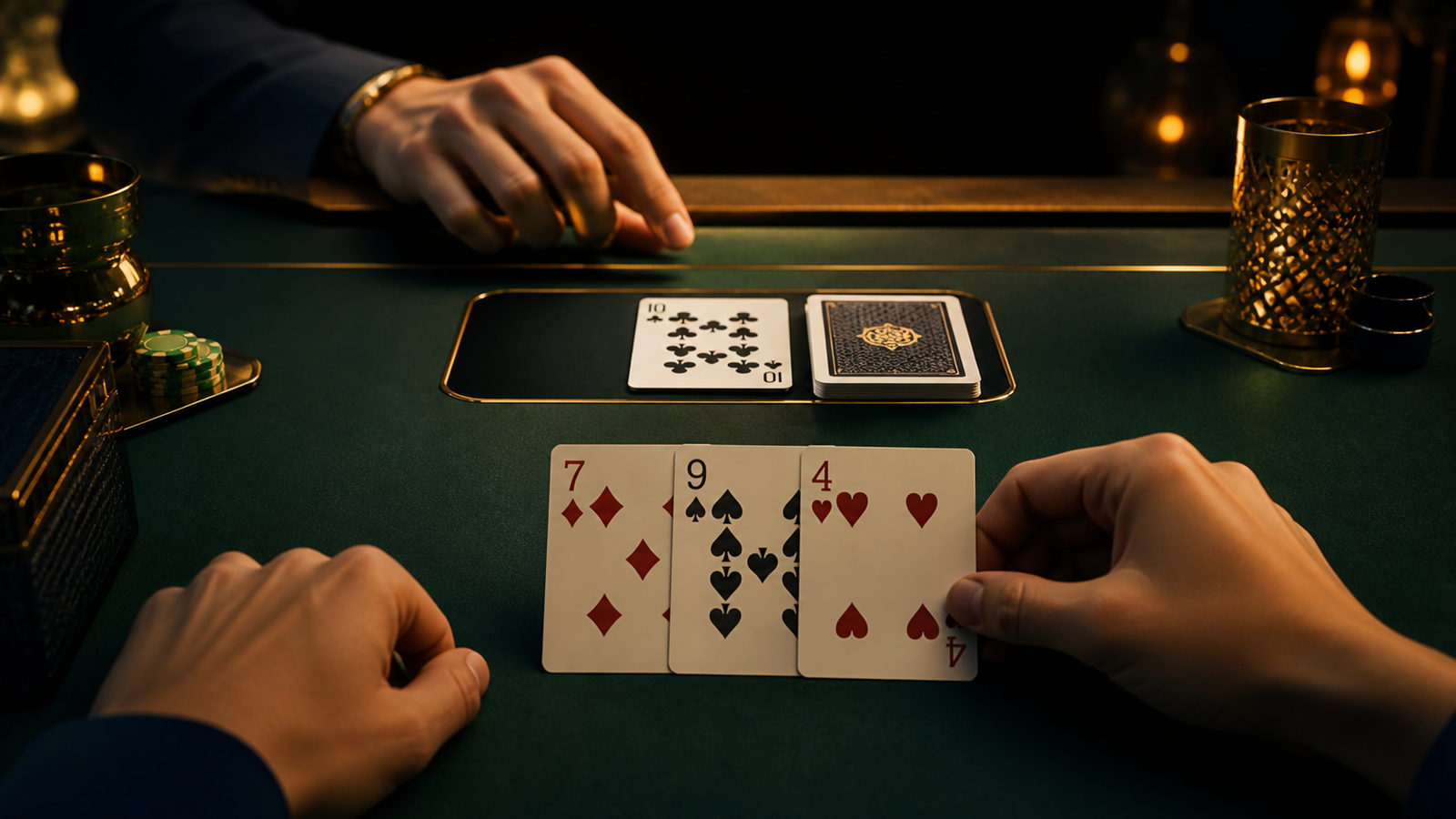
Example: opponent picks 10 of clubs
Suppose the opponent picks 10C from the open pile. Your loose candidates are 9C, QH and 4D, while 9C is not part of your own strong sequence route. The 9C sits next to the observed 10C and may help a club run, so it carries more connection risk than before. If 4D is isolated and low-value, it may be the safer release.
Do not automatically discard QH solely because it is a different suit. Compare its point exposure, set potential and your full hand. One pickup narrows a decision; it does not reveal the opponent’s hand.
Signals, platform rules and responsible play
Repeated open-pile pickups, avoided suits and later discards can strengthen or weaken an inference. Deck count, duplicate cards, Joker rules and discard visibility may vary by platform. Confirm the active rules, avoid certainty claims and remember that disciplined observation cannot control the draw or guarantee an outcome.
FAQ
Does an open-pile pickup reveal an opponent’s sequence?
No. It shows interest in one visible card, but the card may support a sequence, set or temporary arrangement.
Should I avoid every card near the picked rank?
No. Compare likely connections with your own hand needs and point exposure; one signal is not certainty.
What matters more: a safe discard or my pure sequence?
Protect the mandatory pure-sequence plan unless the whole-hand comparison gives a stronger valid route.
Can discard reading guarantee a win?
No. It can reduce avoidable assistance but cannot determine hidden cards, draws or outcomes.
Glossary
- Open-pile pickup: A visible discard selected by a player instead of drawing an unknown closed-deck card.
- Connection risk: The chance that a discard could naturally link with an opponent’s observed pickup.
- Signal: Visible table information that informs a decision without proving the opponent’s full arrangement.
Responsible play note
Indian Rummy is a skill-based card game, but no article, checklist, or tournament routine can guarantee results. Use these guides to improve decisions, keep time and budget limits, and follow the laws and table rules that apply in your location.