
Backup Pure-Sequence Routes: Avoid One-Path Hands in Indian Rummy
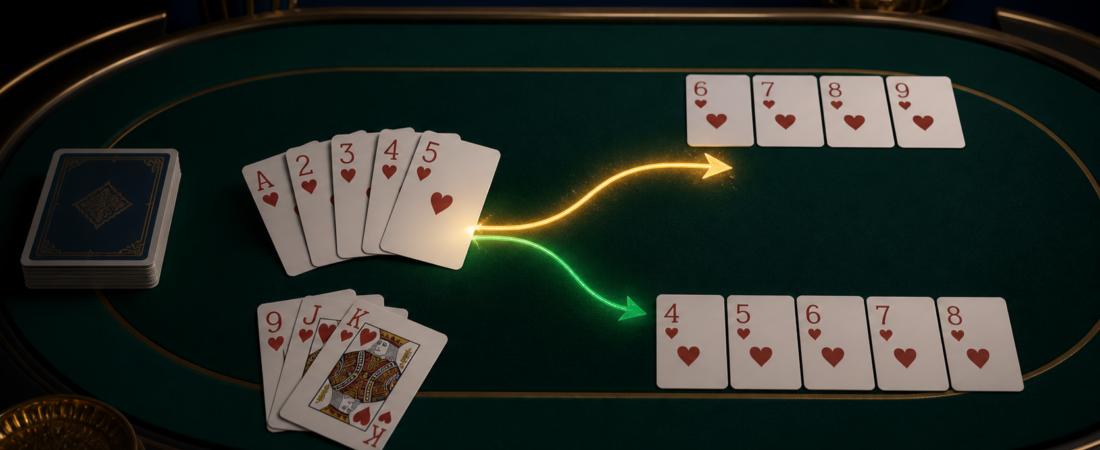
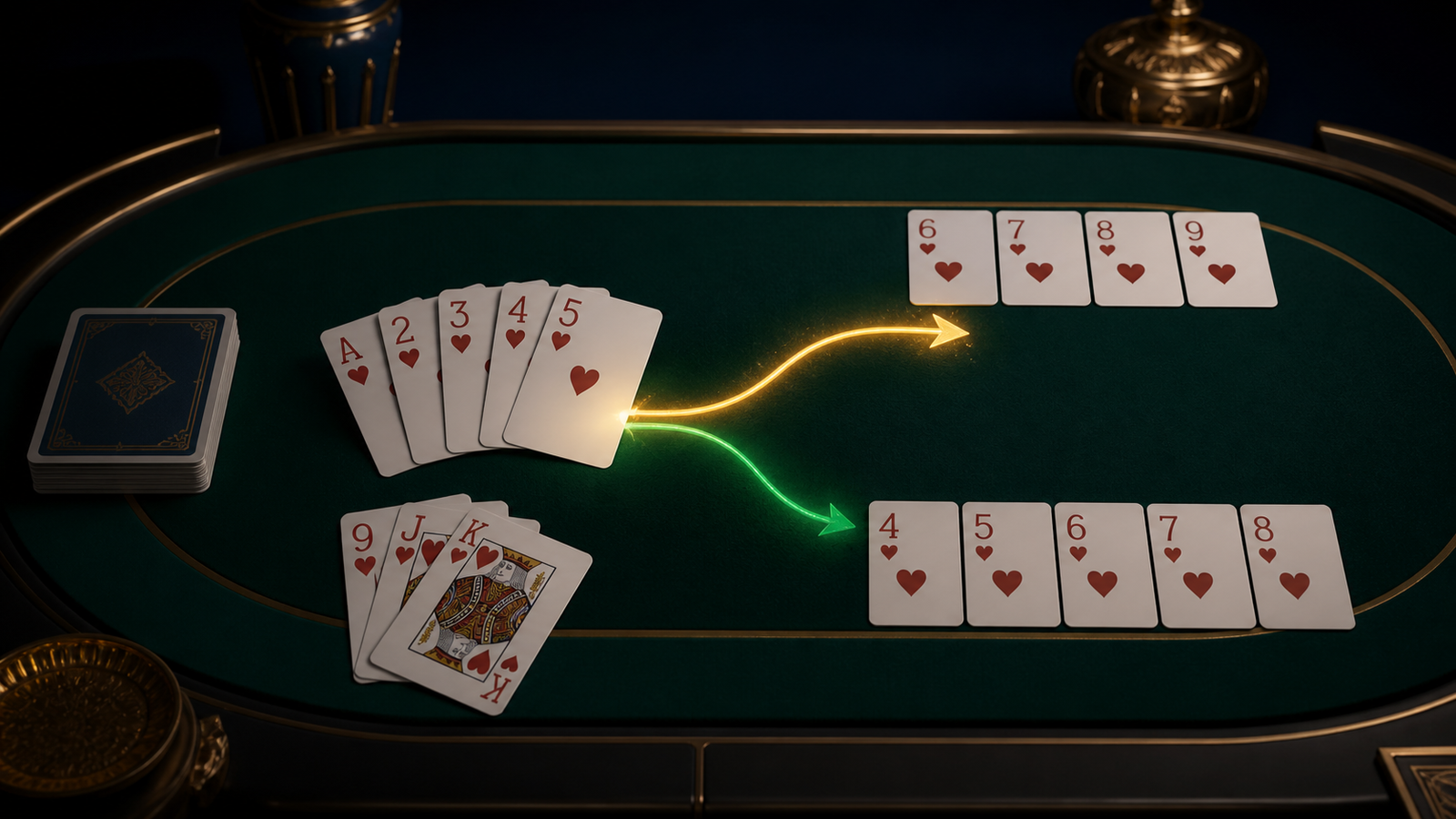
A strong opening plan protects the best natural run without assuming that one missing card will arrive.
Summary: Sort by suit, rank natural routes by completion distance, keep one practical backup and avoid using the same connector in two imagined groups. A pure sequence needs consecutive cards of one suit without Joker substitution. Recheck after every draw, reduce loose-point exposure and follow responsible time and budget limits; no route guarantees an outcome.
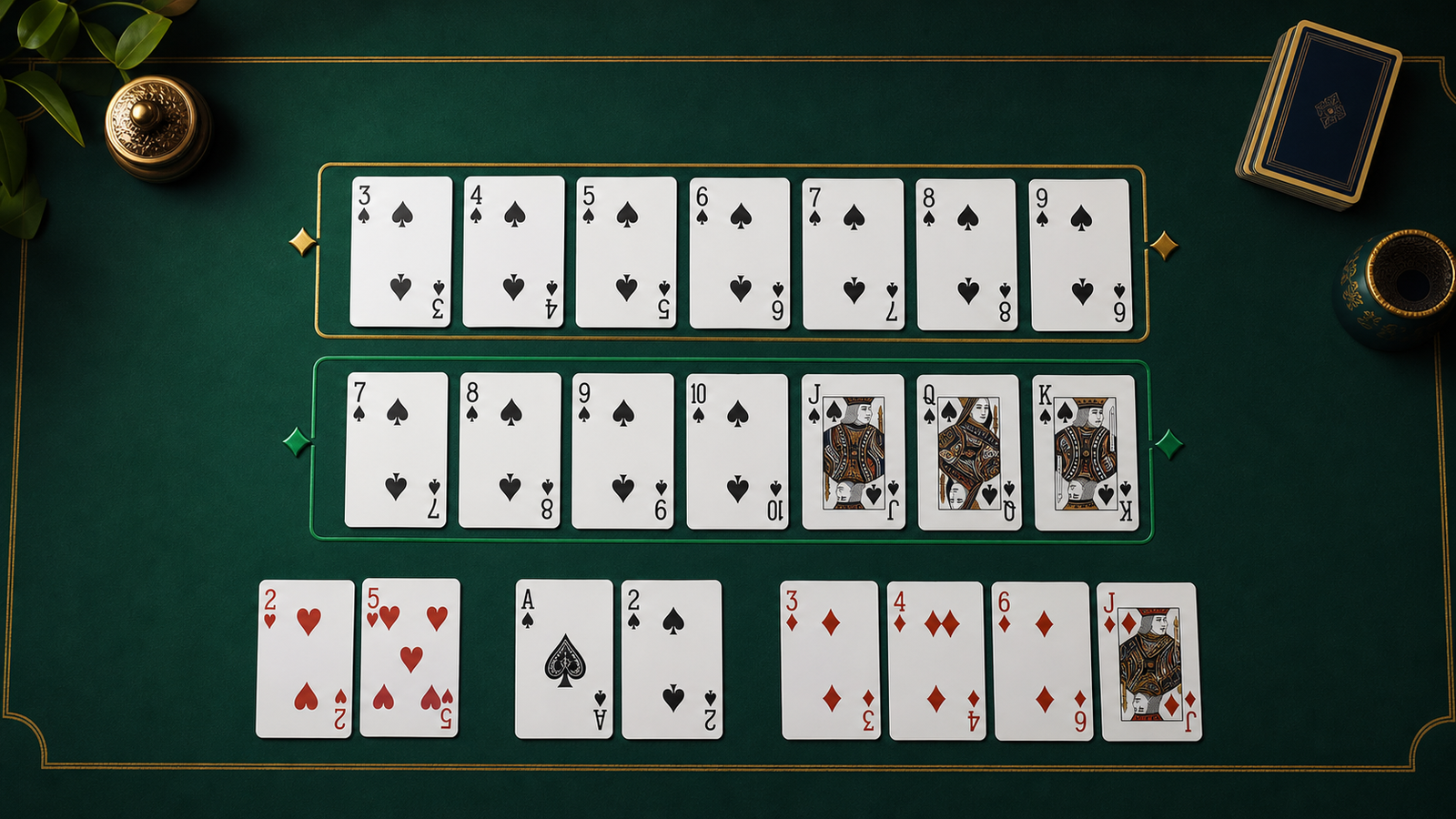
Choose the lead route
Prefer the natural run with the shortest realistic completion distance.
Keep one backup
Retain a second same-suit route only when it uses genuinely available cards.
Audit connectors
Do not count one physical card in two final groups.
Review each draw
Promote, downgrade or release a route as new information arrives.
Why a backup route can help
In common 13-card Indian Rummy, a valid declaration needs at least two sequences, including one pure sequence formed naturally without Joker substitution. If your only pure-sequence idea depends on one exact card, the hand can remain fragile. A second realistic natural route gives you another way to satisfy the mandatory requirement.
A backup is not permission to hold every same-suit card. It must be compared with point exposure and the needs of the rest of the hand.
Two-route decision checklist
- Sort all 13 cards by suit and identify natural pairs or runs.
- Rank routes by cards already held and the number of useful natural extensions.
- Protect the strongest route as the primary pure-sequence plan.
- Keep one backup only if it does not consume cards essential to a stronger group.
- Never count the same physical connector in both completed groups.
- Release a weak route when visible discards or new draws make it unrealistic.
- Check the active table validator and keep responsible time and budget limits.
Example: primary diamonds, backup clubs
Suppose you hold 5D-6D, 9D-10D, 3C-4C-5C and several loose cards. The clubs already form a natural pure sequence, while either 4D or 7D can extend 5D-6D and 8D or JD can extend 9D-10D. Lock 3C-4C-5C as the completed pure sequence and treat the diamond fragments as candidates for the required second sequence, not as two guaranteed groups.
If 7D arrives, 5D-6D-7D becomes natural. Re-sort immediately and discard based on the whole hand rather than continuing to chase every earlier route.
Avoid over-holding and rule confusion
Holding too many speculative connectors can preserve flexibility but also leave high unmatched points. Compare each route with sets, the second-sequence requirement and visible card information. Platform rules can vary for deck count, wild Jokers, duplicate cards and scoring. Gin Rummy uses different meld and deadwood logic, so do not apply it to an Indian Rummy declaration.
FAQ
Does a valid declaration need a pure sequence?
Common 13-card Indian Rummy requires at least two sequences, including at least one pure sequence made without Joker substitution; confirm the active table rules.
Should I keep every possible backup route?
No. Keep only realistic routes that do not create excessive loose-point risk or block stronger groups.
Can one card complete two sequences?
One physical card can belong to only one final group, so overlapping routes must be resolved before declaration.
Does a backup route guarantee a better result?
No. It improves planning flexibility but cannot control draws, opponents or outcomes.
Glossary
- Primary route: The strongest current natural path toward the mandatory pure sequence.
- Backup route: A second realistic natural sequence path retained if the primary route stalls.
- Shared connector: A card imagined in more than one candidate group that must be assigned to only one final group.
Responsible play note
Indian Rummy is a skill-based card game, but no article, checklist, or tournament routine can guarantee results. Use these guides to improve decisions, keep time and budget limits, and follow the laws and table rules that apply in your location.