


Duplicate Cards in Multi-Deck Indian Rummy: A Set-Check Guide
Two physical copies of the same card can appear in a multi-deck game, but that does not automatically make them a valid set together.
Summary: Before declaring, check that a same-rank set uses distinct suits as required by the active table, isolate same-suit duplicates, confirm Joker limits and protect the mandatory pure sequence. Deck and validator rules vary, so use the platform preview rather than assumptions. This check prevents avoidable errors but cannot guarantee results.
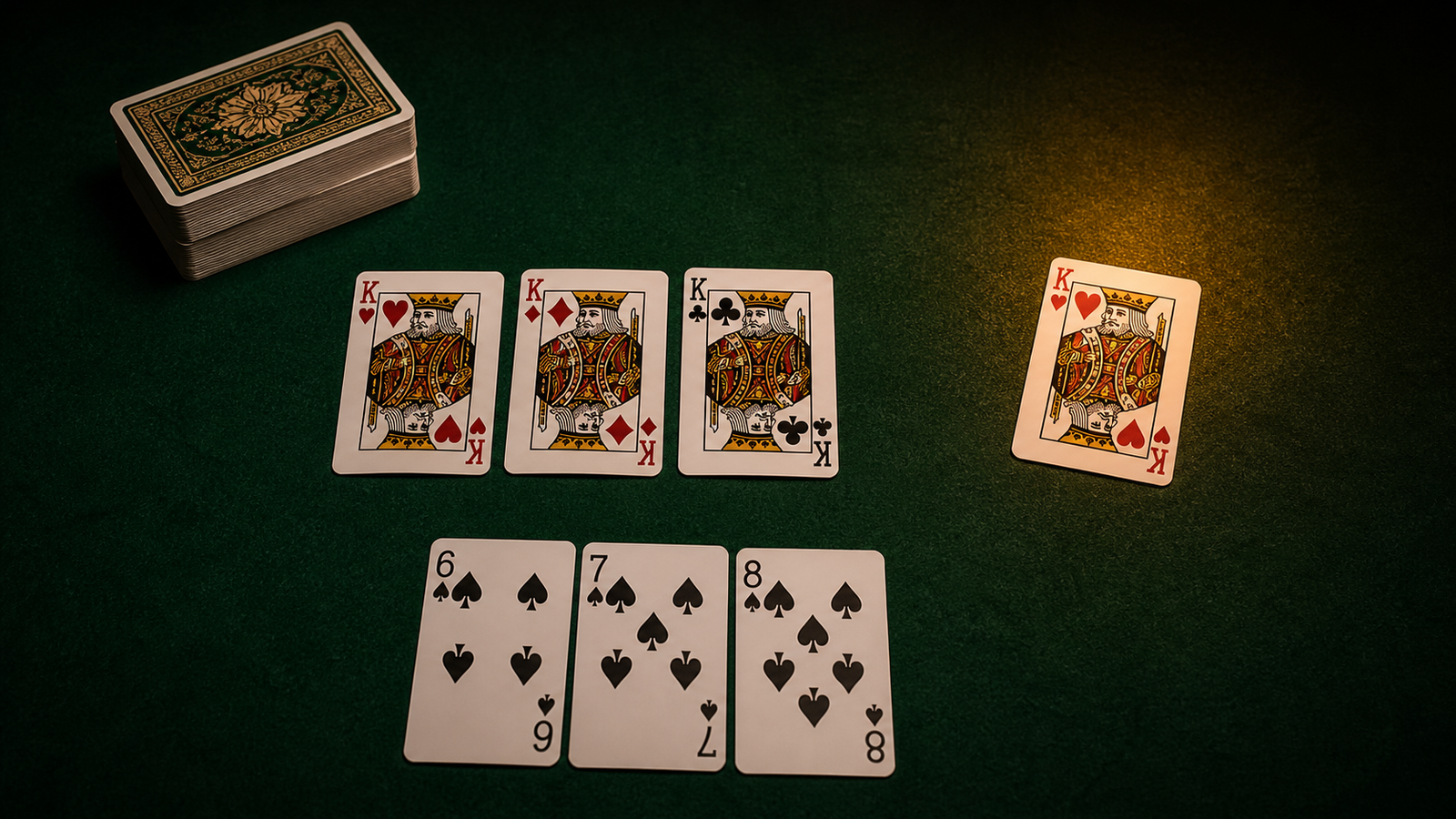
Match the rank
A candidate set groups cards of the same rank, not consecutive ranks.
Check distinct suits
Do not assume two identical same-suit copies belong in one valid set.
Verify Joker rules
Confirm permitted substitutes and minimum natural-card requirements.
Preview declaration
Use the active table validator before the final submit action.
Why duplicate cards need a separate check
Many 13-card Indian Rummy games use more than one deck, so two identical physical cards can appear in one hand. A common set groups three or four cards of the same rank with different suits. Placing two copies of the same rank and suit in that one set may be rejected, even though both cards are genuine cards from the shoe.
The hand still needs at least two sequences, including one natural pure sequence. A set cannot replace that sequence requirement.
Set-validation checklist
- Confirm every natural card in the candidate set has the same rank.
- Check that natural suits are distinct and separate any identical same-suit copy.
- Verify the minimum natural-card and Joker rules for the active table.
- Keep at least one pure sequence and a second valid sequence elsewhere in the hand.
- Do not count the same physical card in two groups.
- Use the declaration preview to find ungrouped or rejected cards.
- Pause before submitting and keep play within time and budget limits.
Example: four queens plus a duplicate
Suppose a multi-deck hand contains QH-QD-QC-QS and a second QH. The four distinct suits may form a complete queen set under common rules. The extra QH should not be inserted as a fifth natural card or treated as another suit; it needs a different valid role or remains unmatched.
If only QH-QD plus a Joker are available, whether that three-card group is accepted depends on the table’s natural-card and Joker validation. Check the live rules instead of relying on a remembered format.
Avoiding an invalid declaration
Re-sort the entire hand immediately before declaring. Confirm the pure sequence first, then the second sequence, then each set. Multi-deck duplicates, printed Jokers, wild Jokers and group-size limits can be implemented differently across platforms. Gin Rummy meld rules and deadwood scoring are separate and should not be used to validate an Indian Rummy declaration.
FAQ
Can two identical cards appear in Indian Rummy?
Yes, multi-deck games can produce duplicate physical cards, but the active grouping rules still decide where they may be used.
Can two queens of the same suit form one set together?
Common set rules require distinct suits among natural same-rank cards, so an identical same-suit duplicate may be rejected; confirm the table validator.
Can a valid set replace the second sequence?
No. A common valid declaration needs at least two sequences, including one pure sequence.
Does this checklist guarantee a valid declaration?
No. It reduces avoidable grouping errors, but the active platform rules and final validator control acceptance.
Glossary
- Duplicate card: A second physical copy of the same rank and suit that can occur when multiple decks are used.
- Set: A permitted group of same-rank cards, commonly using distinct suits and subject to table rules.
- Declaration preview: The table interface used to inspect arranged groups before final submission.
Responsible play note
Indian Rummy is a skill-based card game, but no article, checklist, or tournament routine can guarantee results. Use these guides to improve decisions, keep time and budget limits, and follow the laws and table rules that apply in your location.